Start with the protection label
A flattering shape can make you reach for your sunglasses, but the protection label is the first thing to check. Look for a clear statement that the lenses block 100% of UVA and UVB rays, or a UV400 label indicating protection against ultraviolet light up to 400 nanometers. If the label is missing or vague, ask the seller for product details rather than judging protection by how dark the lenses look.
Dark lenses reduce visible brightness, but darkness alone does not tell you how much UV light they block. Price is not a reliable shortcut, either: a simple pair with clearly stated UV protection may suit your needs better than an expensive pair whose features you have not checked. Keep any product information that comes with the glasses so you can refer to it later.
Choose a frame that covers your eyes
Coverage is about more than lens size. When you try on a pair, look in a mirror from the front and at a slight angle. Do the lenses cover your eyes without leaving large gaps at the sides? Does the frame sit close enough to your face to feel useful, without touching your eyelashes or cheeks? A larger frame or a gently curved shape can offer more coverage from light coming in around the edges.
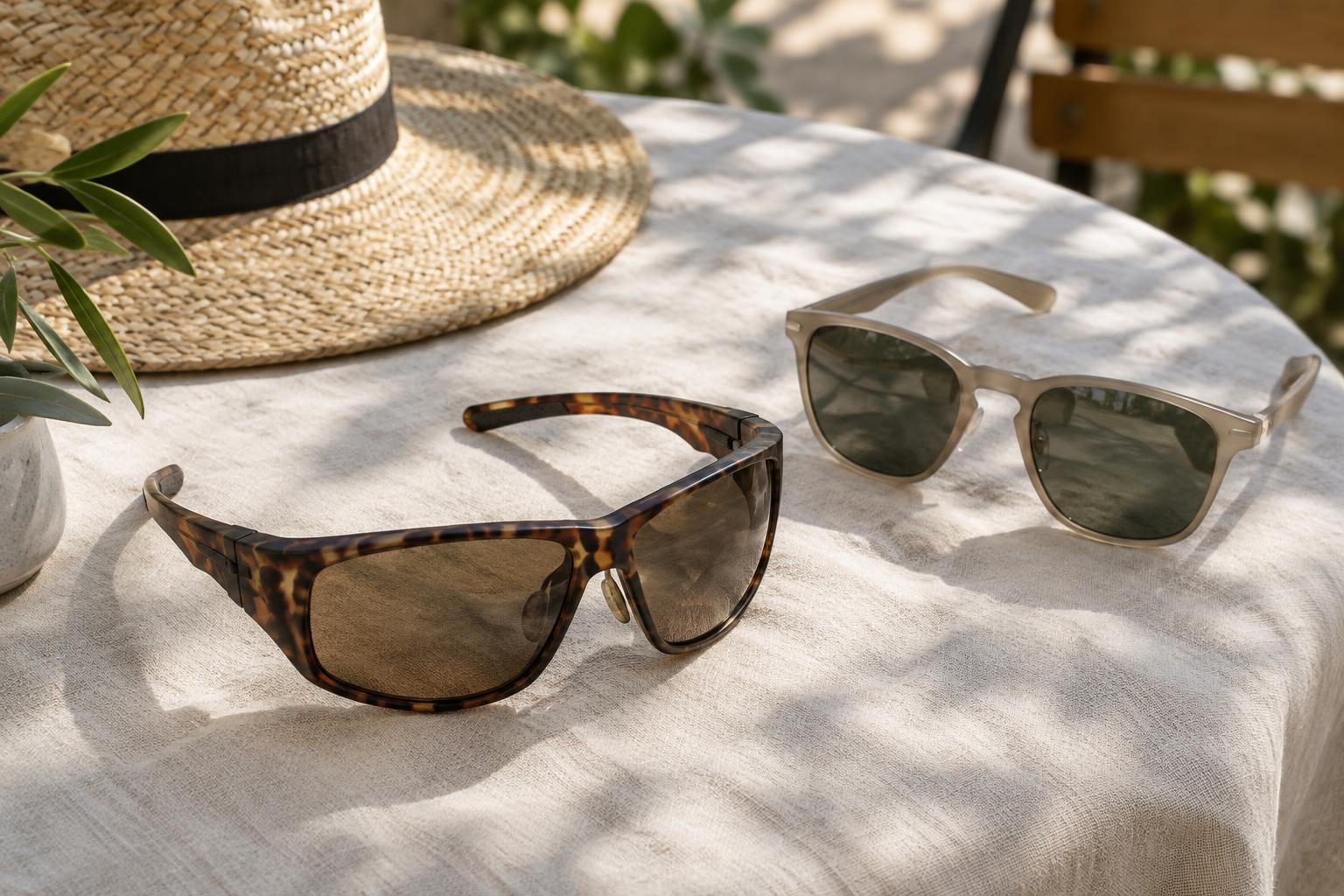
Think about where you will wear your sunglasses. A lightweight pair with moderate coverage may be easy to carry for short errands, while a more encompassing frame might feel preferable for long walks in bright surroundings. Wide arms can shade the sides of your face, though they may also change how much you can see in your peripheral vision. Try a few shapes and notice the trade-offs rather than assuming the biggest frame is automatically the best one.
Pay attention to fit over time
Sunglasses can feel fine for a minute and uncomfortable after an hour. The frame should stay in place when you look down or turn your head, without squeezing your temples. Check that its weight feels balanced across your nose and ears. If you are shopping in person, wear a pair for several minutes while you browse; if you are shopping online, check the measurements and return policy against a pair you already find comfortable.
Small details matter. Adjustable nose pads may help a frame sit securely, while a lower-profile frame may fit more easily beneath a hat. Smooth temple ends can be more comfortable behind your ears. If a pair is close to right but slips or pinches, an optician may be able to adjust some frames. A good fit makes it easier to keep wearing the glasses when the day changes from a quick outing to a longer one.
Pick lenses for the light you encounter
Lens color changes how the world looks through your sunglasses, so it is worth choosing by preference as well as appearance. Gray lenses tend to keep colors looking relatively neutral; brown or amber lenses give a warmer view. The most useful choice is one that feels comfortable in the conditions you encounter, without making it difficult to see details.
Polarized lenses can cut reflected glare from surfaces such as water, pavement or a car hood. That can be pleasant on bright days, but polarization is a separate feature from UV protection: check for both if you want both. Polarized lenses can also make certain screens or displays harder to read, so test them with devices you regularly use. If you need prescription lenses, ask about sunglass options that match your prescription rather than relying on a pair that makes it harder to see clearly.
Make the choice easy to live with
Before buying, picture a normal week. Will the glasses fit in the bag you usually carry? Do they work with a hat or headphones you often wear? Would you feel comfortable using them on a walk, at an outdoor café and during an ordinary trip across town? A versatile pair does not have to match every outfit, but it should feel natural enough to become part of your routine.
Finally, consider how you will store them. A case helps protect lenses from scratches when they are not in use, and a gentle cleaning cloth makes smudges less tempting to rub away with a sleeve. Start with the essentials—clearly stated UV protection, enough coverage and a fit you can forget about—then let style help you choose among the pairs that meet those needs.