Treat the ending as part of the routine
It is easy to think a creative session ends the moment you stop making something. But the last few minutes can shape how approachable the work feels next time. If you leave an unfinished page, scattered supplies and no memory of what you intended to do, returning may require several decisions before you can begin. A small closing routine gives your future self a clearer place to start.
This does not need to be a formal process or a reward you earn by finishing. It can take three minutes after a brief sketch, a longer writing session or an afternoon of making. The aim is to preserve momentum without demanding that you keep working. Choose one or two closing actions you can manage even when your time or energy runs short.
Leave yourself a specific next step
Before you put your work away, write down the first action you could take when you return. Make it small enough to do without planning: “choose a color for the background” is more useful than “improve the painting.” For a writing project, you might note the next scene to draft or a question a character needs to answer. For sewing, you could place a note beside the piece naming the next seam.
If you stopped because you were uncertain, record the uncertainty rather than trying to solve it on the spot. A note such as “try two arrangements for this page” turns a vague problem into an experiment. Keep the note with the project or in a place you reliably check. You are not promising to follow it exactly; you are offering yourself an easy way back in.
Reset only what will help you return
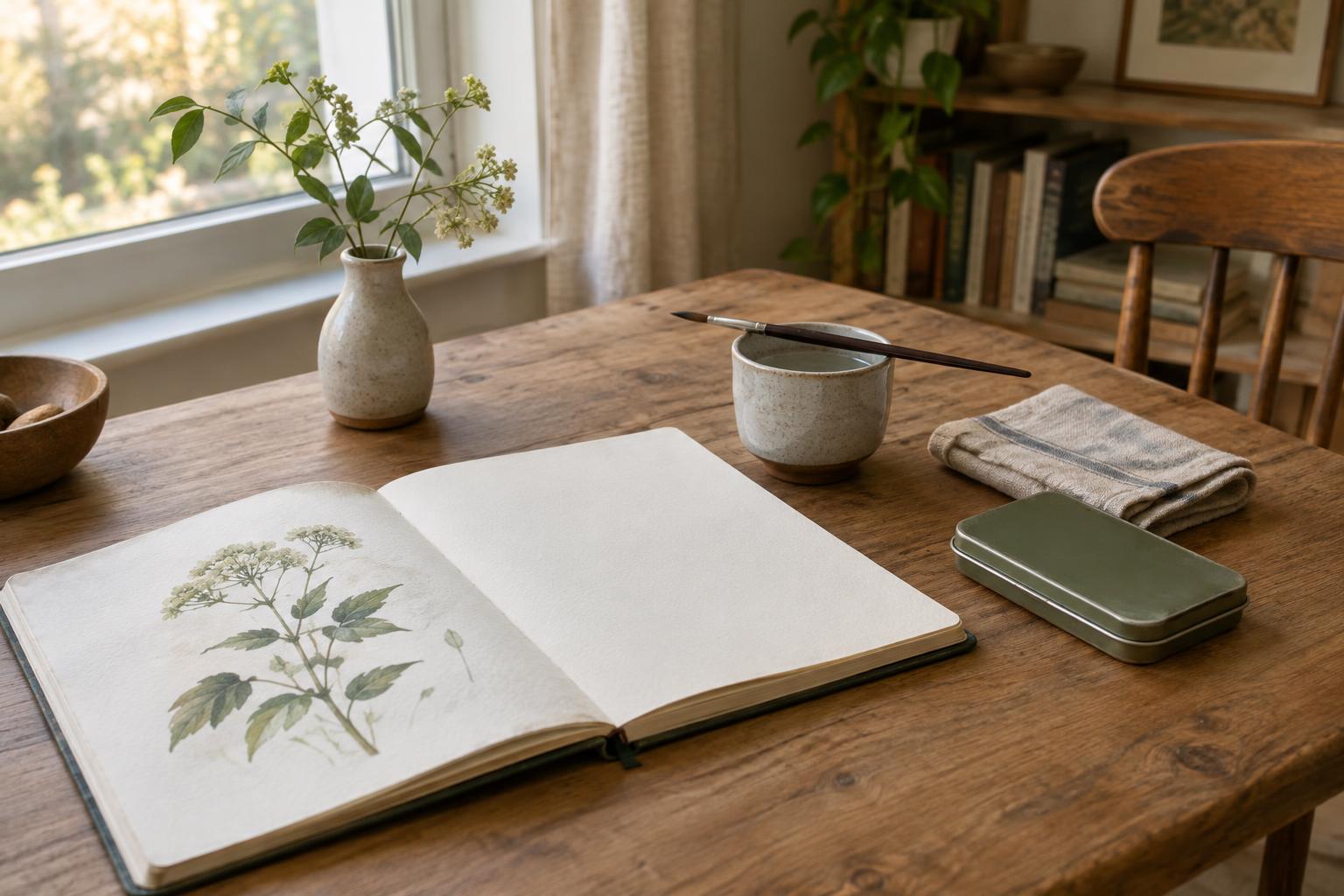
A tidy workspace can be inviting, but a complete cleanup may make a short creative session feel like too much trouble. Decide what needs attention for practical reasons, such as washing a brush or closing a container, and what can wait. If you have room, leave an active project together in a tray or folder. If your space serves several purposes, a small box can make it possible to clear the table without losing your place.
Put the most useful starting tools where you can find them. You might keep a notebook with a favorite pen, store fabric pieces with the pattern you are using, or save digital files with names you recognize. The goal is not a perfect-looking space. It is to reduce the number of things you must search for or sort out before your next attempt.
Notice one thing without grading the result
A brief observation can help you learn from a session without turning it into a verdict on your ability. Ask what held your attention, what felt awkward or what you would like to try differently. “I enjoyed working with the smaller shapes” gives you more to work with than “that was good.” Even a difficult session may reveal something useful about the conditions you prefer, such as quieter surroundings or a shorter stretch of time.
You do not need to keep a detailed record. A sentence in a notebook, a note on your phone or a few words on the back of a sketch can be enough. If recording your thoughts interrupts the pleasure of making, skip it. The closing routine should serve your practice, not become another task you feel obliged to complete.
Make room for an imperfect exit
Some sessions end abruptly. You may be called away, run out of time or simply feel done. On those days, choose the smallest useful closing action: cap the pen, save the file or leave a single word to remind yourself where you were. A routine that works only on spacious, orderly days is unlikely to help when life is busy.
Try your closing steps for a few sessions and adjust them to the kind of work you do. You may discover that leaving a visible next step matters more than clearing the table, or that putting everything away helps you relax. A good ending does not need to make your next session effortless. It only needs to make returning feel a little more possible.