Start with what the wind changes
Wind affects an outfit differently from a simple drop in temperature. It can lift loose hems, push open an unfastened coat and make exposed areas feel chilly even when the air is fairly mild. Instead of dressing for the temperature alone, think about where you will be walking and how long you expect to be outside. A short trip between buildings may call for a different outfit from an afternoon spent in open spaces.
Look at the clothes you already wear comfortably, then identify the parts most likely to shift. A wide jacket that catches the wind, a scarf that slips or a long skirt that moves around your legs may need a small adjustment rather than replacing the whole outfit. The aim is to feel free to move without spending the day holding your clothes in place.
Choose an outer layer you can fasten
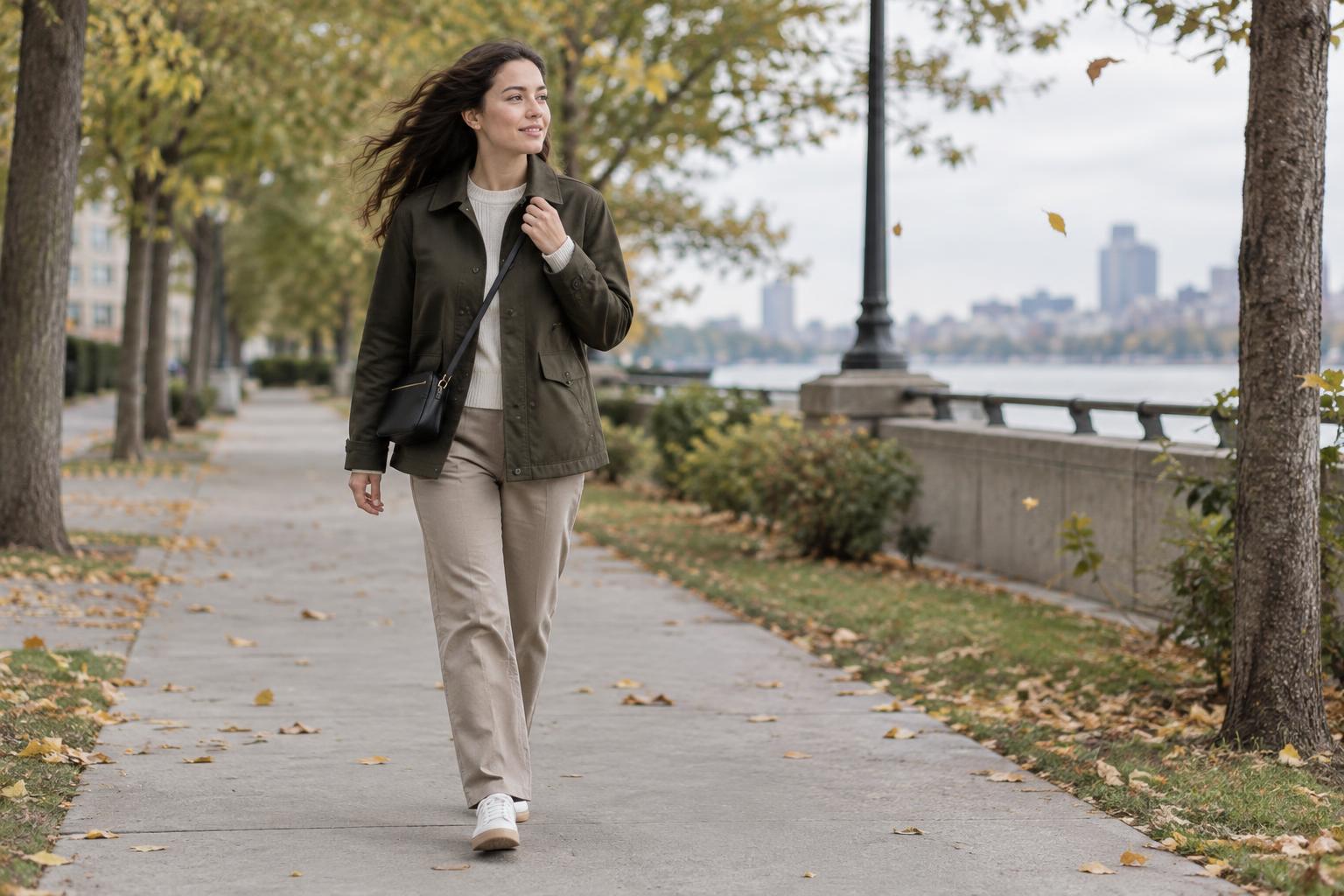
A jacket or coat that closes comfortably is often more useful in wind than one you can only wear open. Try fastening it over the layers you would normally wear, then sit down and raise your arms. If the front pulls or the shoulders restrict you, it may be tempting to leave it undone when you go outside. A comfortable closure gives you the option to keep moving air away from your body.
Pay attention to the shape as well as the weight. A lightweight jacket with a close-fitting hem may feel easier to manage than a heavy, loose coat that flaps as you walk. Adjustable cuffs, a collar that sits where you want it and a hood that does not block your view can also be useful details. You do not need every feature; choose the ones that solve the annoyances you actually encounter.
If you move between outdoors and heated rooms, make the outer layer easy to remove and carry. A coat that works in the wind but feels cumbersome over your arm can become inconvenient during a day of errands. A simple top and removable outer layer often give you more flexibility than relying on one very warm garment.
Keep hems and accessories easy to manage
Wind does not rule out loose trousers, skirts or dresses, but it is worth noticing how they behave when you walk. A fabric with a little weight may stay closer to the body than a very light one. With a skirt or dress, a length you can move in confidently may be more comfortable than one you need to keep checking. If you prefer a flowing shape, try it on with the shoes and outerwear you plan to wear; those pieces can change how the whole outfit feels.
Accessories deserve the same practical check. A scarf tucked inside a fastened coat is less likely to slip than one left trailing outside it. A hat should stay put when you turn your head, and a bag with a secure closure can be easier to carry than an open tote when you need both hands free. Choose one or two adjustments that make a difference rather than treating every accessory as a problem to solve.
Hair can affect comfort, too. If it repeatedly blows across your face, a clip, tie or style that keeps it clear may make the day feel calmer. Keep whatever you choose comfortable enough to wear for the time you will be out; an accessory that pinches soon becomes another distraction.
Do a quick movement check before leaving
Once dressed, walk around your home in the complete outfit. Fasten your coat, put your bag on your shoulder and try bending, reaching and turning. Notice whether a sleeve rides up, a scarf shifts or your bag pulls at your outer layer. This brief check is especially helpful when you are combining pieces you have not worn together before.
Then make the smallest useful change. You might tuck in a loose top, switch to a shorter scarf or choose shoes that feel steadier for your route. On a windy day, a successful outfit does not have to look different from your usual style. It simply needs to let you go about your plans without repeatedly adjusting it.