Start with the day, not the accessories
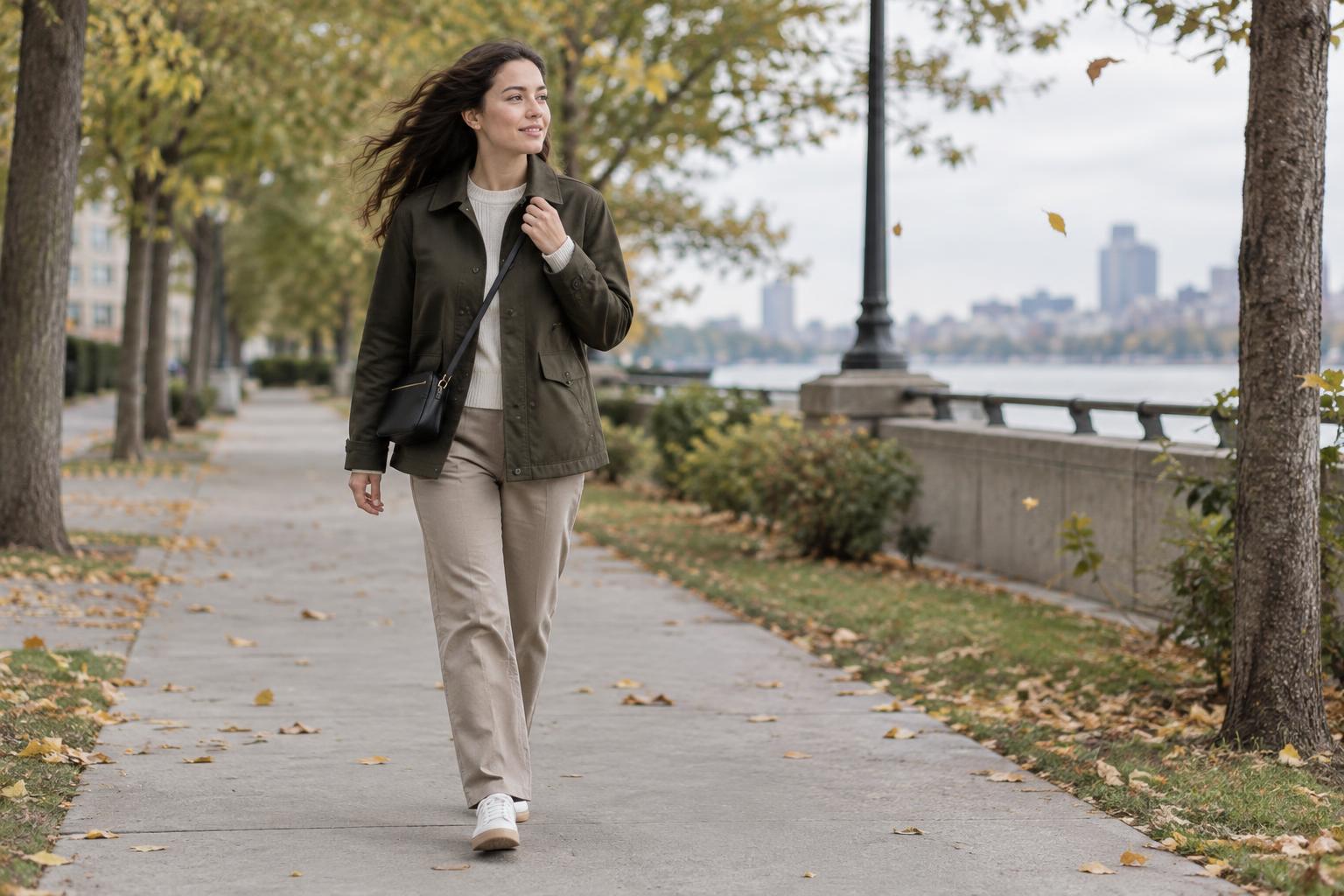
Some days have a clear dress code and a predictable finish. Others begin with a commute, include work or errands, and end somewhere you did not have time to dress for separately. On those days, the most useful accessories are not necessarily the most versatile ones in theory. They are the ones you can wear comfortably through the parts of the day you cannot skip.
Before choosing anything, picture the practical details. Will you be walking far, sitting for hours, carrying groceries or moving between warm and cool spaces? Will you need your hands free? These questions make it easier to narrow your choices. An accessory that looks right for dinner but gets in your way all afternoon may be better saved for a day when you can put it on later.
Choose a comfortable starting set
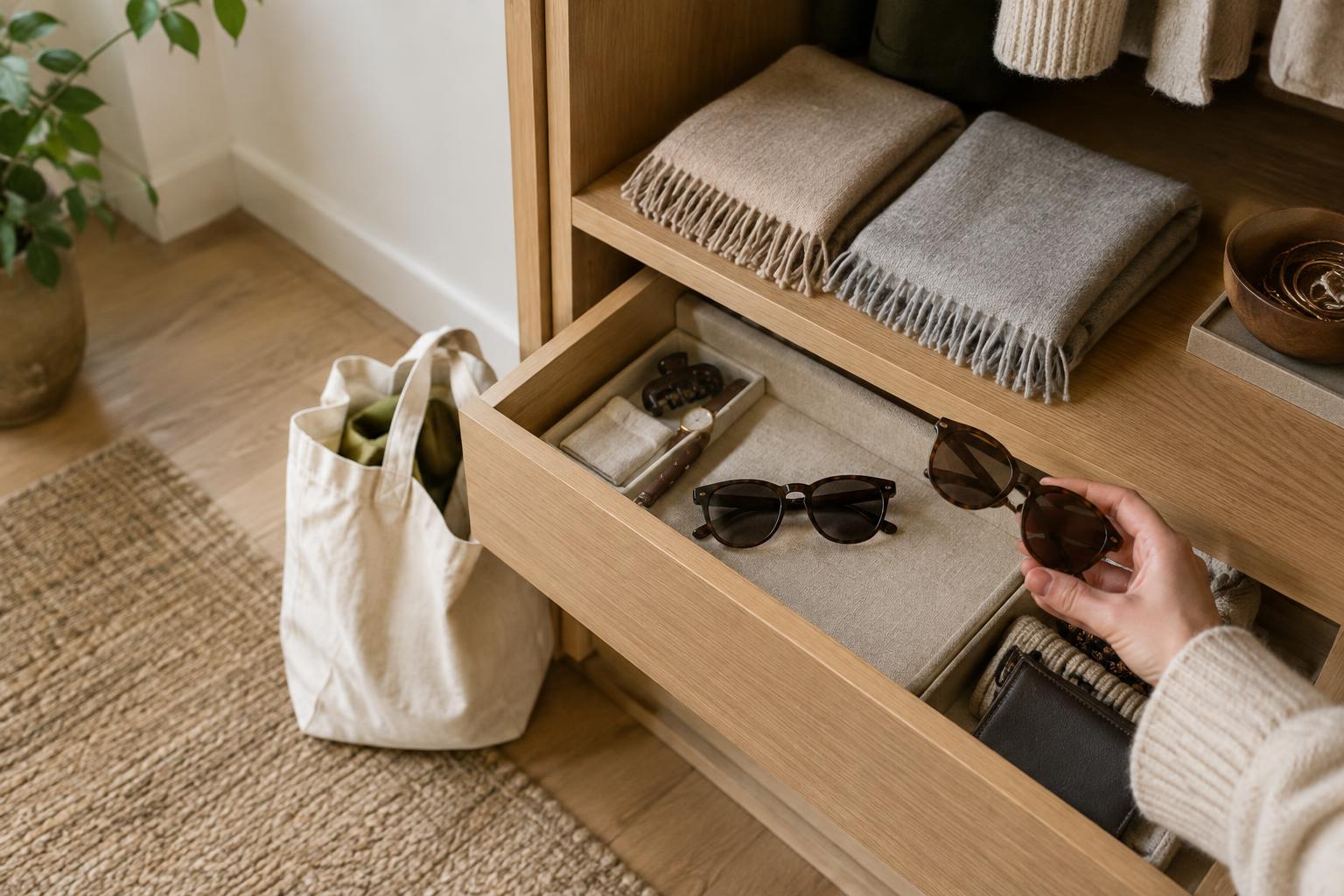
Build the day around a small starting set you can leave on without thinking about it. That might mean earrings that do not catch on a collar, a watch you are happy wearing at a desk, or a belt that stays comfortable when you sit. You do not need all three. The aim is to avoid spending the day adjusting pieces that were meant to make getting dressed easier.
Consider how each accessory works with your clothes as they change. A scarf may look good over a coat but feel unnecessary indoors. Jewelry that sits neatly against a simple neckline might compete with a patterned layer you plan to add later. If your outfit has several possible versions, try the accessories with each one before you leave. A quick check in the mirror can reveal a clash or an awkward fit that is easy to miss when you look at individual pieces.
Plan one easy change
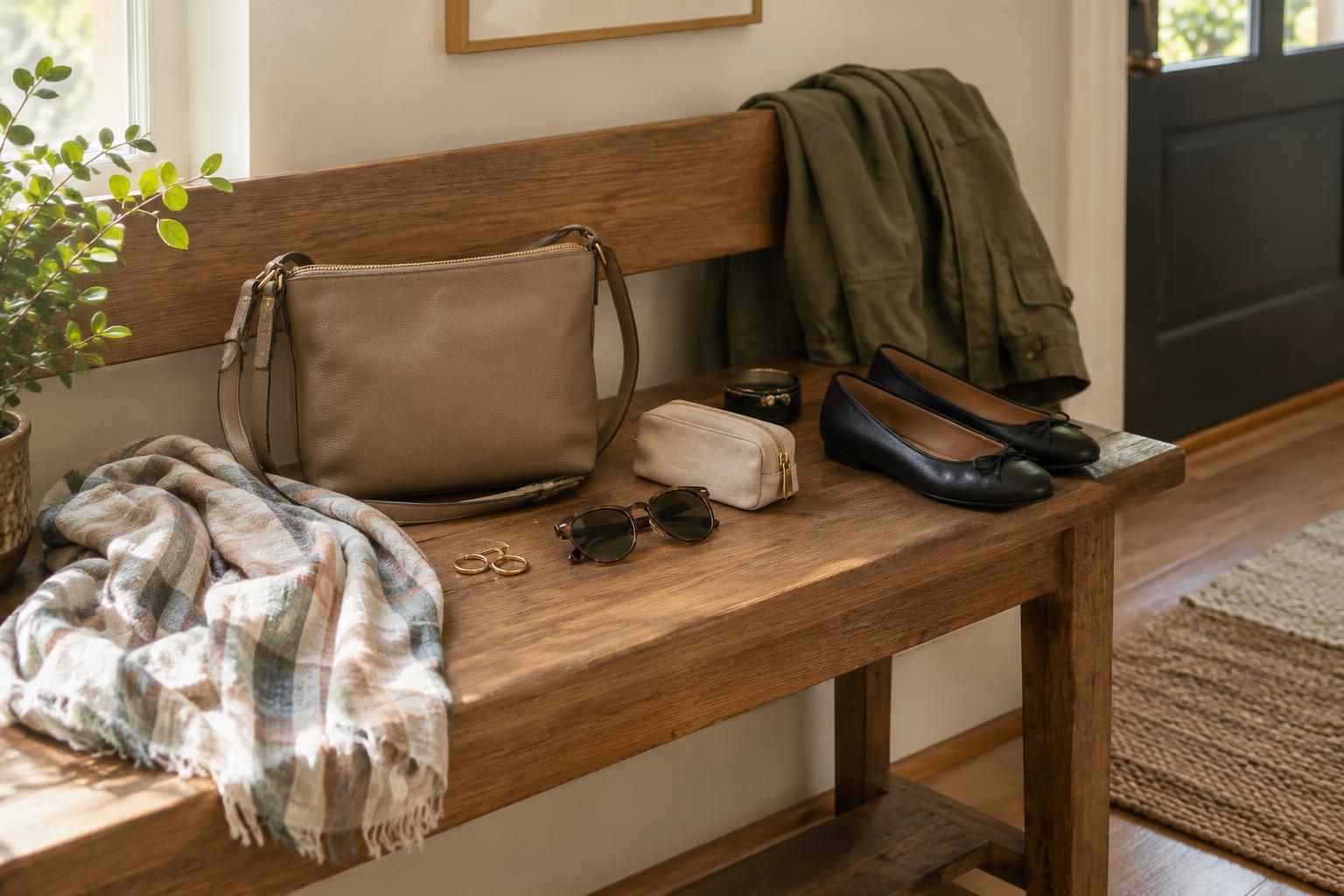
You do not have to carry a second set of accessories to feel ready for an evening plan. One small change can be enough: swapping simple earrings for a more noticeable pair, removing a practical scarf, or adding a hair accessory after a windy walk. Choose the change based on what would make you feel more comfortable or put together, rather than on a rule about what evening outfits should look like.
Make that change easy to manage. If you take something off, give it a safe place to go, such as a small pouch or a designated pocket. Think about whether you will have a mirror, a spare moment or clean hands when you need to switch. A fiddly clasp may be perfectly fine at home and frustrating on a crowded train. If changing accessories sounds like another task in an already busy day, wearing the same pieces from start to finish is a good plan too.
Leave room for the unexpected
Changing plans often reveal what an accessory needs to do. A bag that is comfortable at the start of the day may feel less convenient when you are carrying an extra layer. A bracelet you hardly notice at home may catch on a sleeve as you move around. You cannot anticipate everything, but you can choose pieces that are easy to remove, adjust or put away.
It helps to distinguish between useful preparation and carrying things just in case. If you regularly need a hair tie, a compact scarf or a place to protect removed jewelry, make room for it. If an item has spent many outings untouched, you can probably leave it at home next time. Over time, these small observations will give you a better guide than any fixed list of essential accessories.
The goal is not to make one outfit work for every possible occasion. It is to feel at ease through the day you are most likely to have, while keeping a little flexibility for the day it becomes. Start with comfort, add only what earns its place, and let your routine tell you what is worth bringing along.