Begin with what comfort means in that room
Before moving anything, spend a few minutes noticing what you do in the room. A living room might need to support conversation, quiet reading and a place to put a cup. A bedroom may feel better when the route to the bed is clear and the things you use at night are easy to reach. Comfort is less about achieving a particular look than making those ordinary moments easier.
Choose one small frustration to address first. Perhaps you have to stand up to switch off a lamp, the chair you use most has nowhere to rest a book, or a pile of belongings catches your eye whenever you sit down. Solving one of these problems can make a more noticeable difference than rearranging everything at once. It also gives you a way to judge whether a change is helping: does the room work better for you?
Make the light easier to live with
Lighting affects how welcoming a room feels, but you may not need a new fixture. Try opening curtains fully during the day, cleaning a dusty lampshade or moving an existing lamp closer to the place where you read or work. In the evening, turning on a smaller lamp instead of relying only on an overhead light can make it easier to create a calm corner while keeping enough light for what you are doing.
Think about glare as well as brightness. If a screen reflects a window or a lamp shines directly into your eyes, changing the angle of a chair or lamp may help. Keep walkways and steps adequately lit, especially if someone in your household needs a clearer view. The aim is not to make every part of the room equally bright; it is to have useful light where you need it.
Give the places you sit a little support
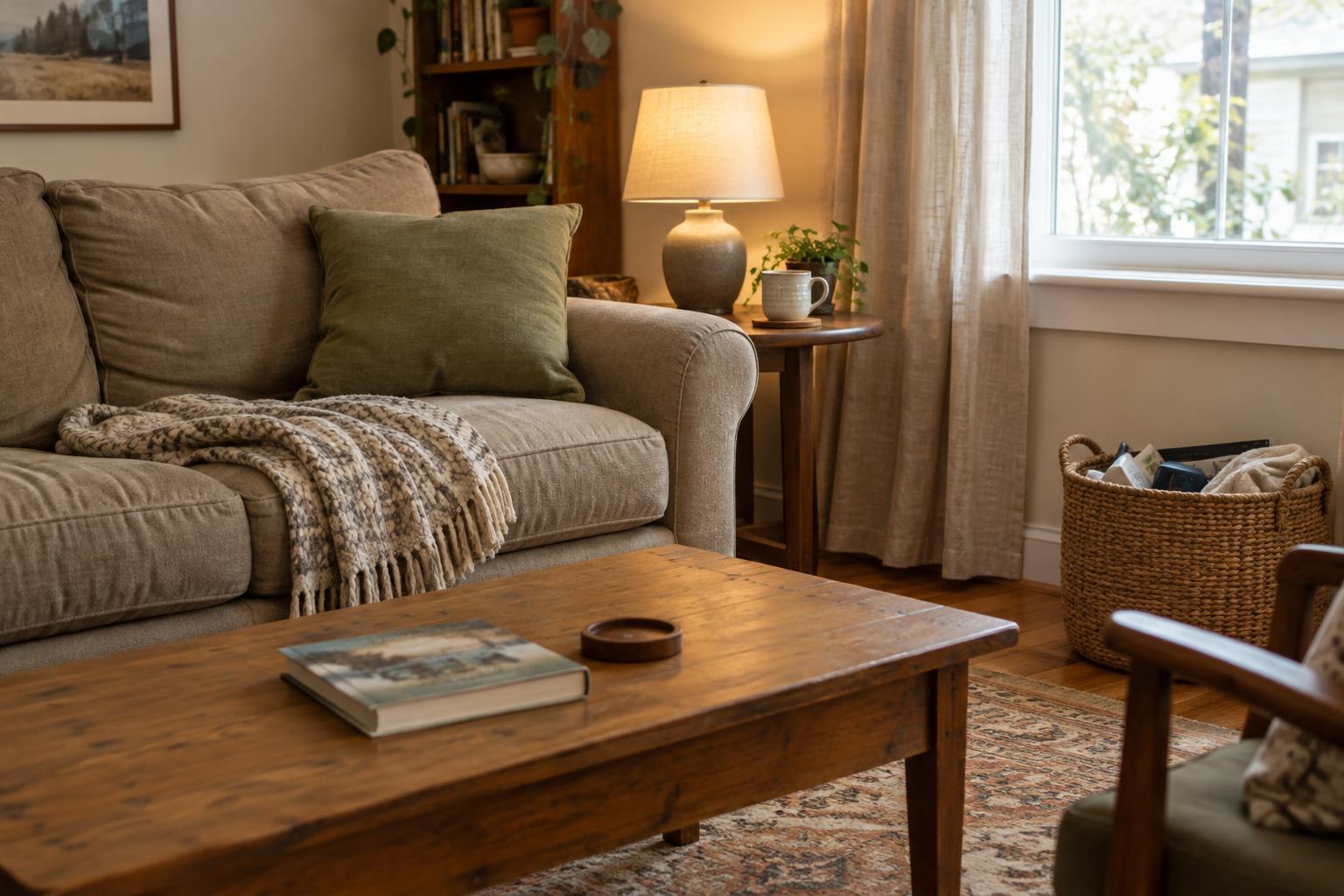
A room can look inviting yet feel awkward once you settle in. Sit in the spots you use most and notice what is missing. Is there a reachable surface for a drink? Would a cushion already in another room make the chair more pleasant? Is a blanket stored too far away to use? Bringing useful things within easy reach can make a familiar space feel more considerate.
You can also test small changes to the furniture you have. Turn a chair slightly toward another seat to make conversation easier, or shift a side table so it serves the sofa instead of sitting against a wall. Leave enough space to move around comfortably, and avoid placing loose items where people are likely to trip. A better arrangement is one that supports your habits, not one that looks perfect from the doorway.
Clear a few surfaces, not the whole room
Visual clutter can make it harder to relax, but a comfortable room does not have to be bare. Start with one surface you see or use every day, such as a bedside table or the end of a sofa. Remove anything that belongs elsewhere, then put back the items that are helpful or genuinely pleasant to have nearby. A book, a lamp and a place for your glasses may be all that surface needs.
Give recurring clutter an easy destination. A small basket you already own could hold a current project; a tray could keep remotes together. If an item repeatedly ends up in the same place, that may be where it is most convenient to store it. Work with that habit when you can. A simple system you will use is more valuable than a tidy arrangement you must constantly rebuild.
Use comfort as a daily practice
The feeling of a room also comes from its upkeep. Airing it when practical, folding a throw after use or clearing yesterday’s cups can offer a fresh start without becoming a major chore. If scent matters to you, consider whether an existing source, such as cooking or laundry, is pleasant or distracting before adding fragrance; people can have different sensitivities.
Make changes one at a time and live with them for a few days. You may find that a lamp works better in its old position or that a cleared table quickly becomes a useful landing spot again. That is not a failure. It is information about how you use the room. Keep what makes everyday life easier, adjust what does not, and let comfort develop from the things you already have.