Start with what you already have
Paper collage is an inviting way to make something without needing to draw or buy a set of matching supplies. A used envelope, a strip of gift wrap, a patterned paper bag or the blank edge of a flyer can all become material. The pleasure often comes from noticing an interesting color or shape in something you might otherwise discard.
Set aside one small folder or box for clean, dry scraps. Include a mix of plain paper, printed textures and a few pieces of sturdy card. If you are using mail or other personal documents, remove names, addresses and account details before adding anything to the pile. Keep the collection small enough to browse easily; a full drawer can make a quick activity feel like a sorting job.
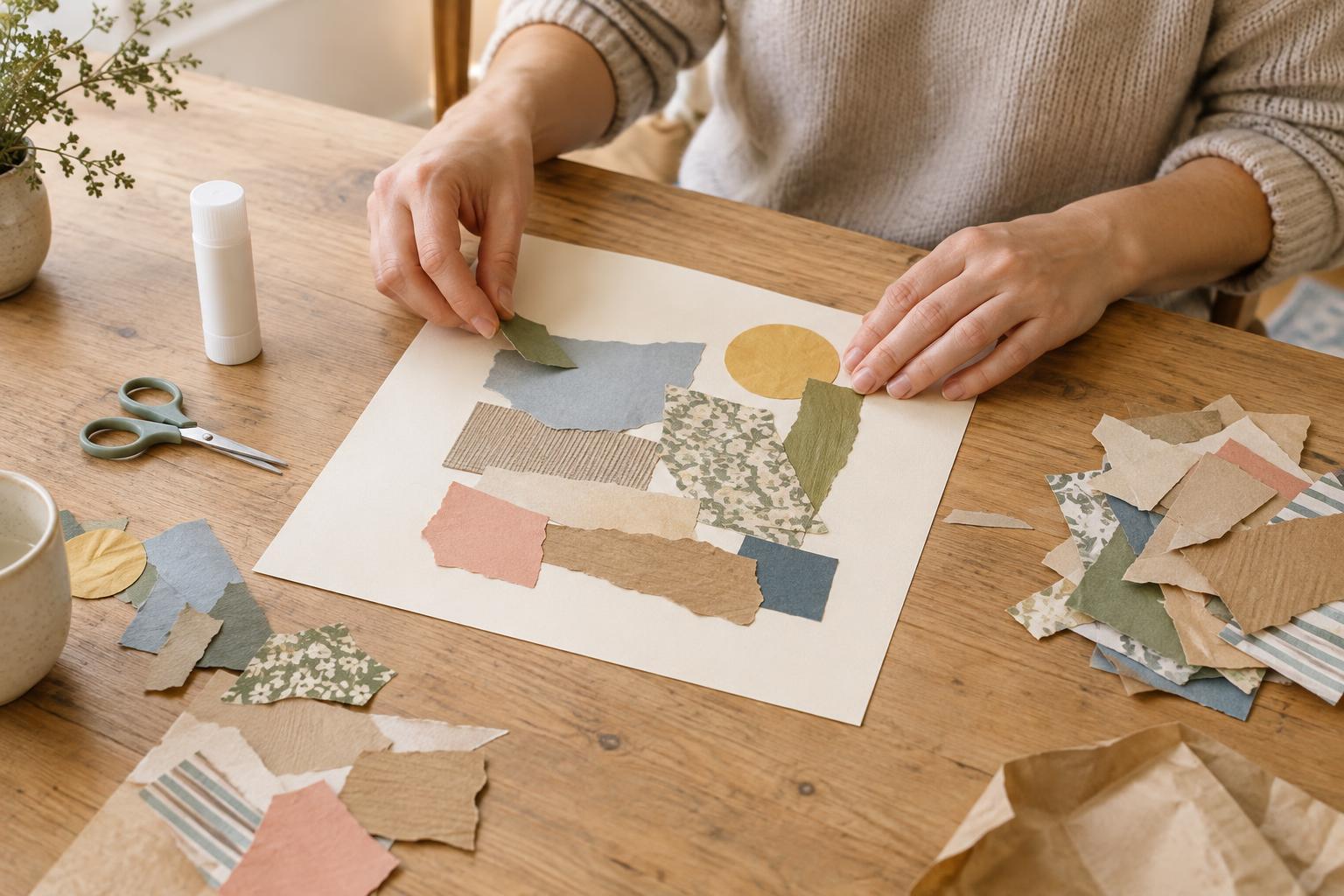
For your first collage, gather a base sheet, scissors, a glue stick and a piece of scrap paper to protect your table. A notebook page or the back of a cereal box makes a useful base. You do not need special tools, though a pencil can help you test a shape before cutting it.
Give yourself one gentle prompt
A blank page can feel less daunting when you choose a loose direction. Try a color, such as warm yellows and browns, or a familiar scene, such as a windowsill, a garden path or a table set for tea. Your finished piece does not have to resemble the prompt closely. Its purpose is to help you choose among your scraps.
Set a short, comfortable window of time and look for five to ten pieces that fit your idea in some way. Select a few larger shapes to anchor the page, then smaller pieces for contrast. Torn edges can feel soft and irregular; cut edges can make a crisp border. You can use both, rather than trying to make every piece look alike.
If choosing a theme still feels like too much, start with a single scrap you like. Place it on the base and look for two pieces that make its color, texture or shape stand out. That is enough of a starting point.
Arrange before you glue
Lay the pieces on your base without attaching them. Move the larger shapes first, leaving some of the background visible. Try overlapping one piece with another, then separating them again. A scrap that looks unremarkable on its own might become interesting when it sits beside a contrasting color.
Turn the page around as you work. This can make it easier to notice whether all the visual weight has gathered in one corner or whether a shape needs a little more room. There is no requirement for symmetry. Aim for an arrangement that holds your attention, even if you cannot say exactly why.
When you are happy enough with the layout, take a quick photo if you want a reminder of where everything sits. Then lift a few pieces at a time and glue from the back toward the front. Apply glue near the edges, press each piece down gently and let the page rest flat while it dries. If a corner lifts later, you can add a little more glue rather than starting over.
Make finishing part of the routine
It is easy to keep adjusting a collage long after it feels complete. Try giving yourself a simple stopping point: once the main shapes are attached, add no more than three small details. A narrow strip, a tiny circle or a bit of handwritten text can be enough. Leaving open space is also a choice; you do not need to cover every part of the page.
Give the piece a place to go, even if it is only inside your notebook. You might slip it into a folder, prop it on a shelf for a week or use it as the start of a handmade card. Keeping a collage does not mean it has to become a permanent display. The time spent making it can be worthwhile on its own.
Before you leave the table, put usable offcuts back in your scrap box, recycle what you do not want and wipe any glue from your work surface. A brief reset makes it easier to begin again without turning a creative break into a larger cleanup.
Let the habit stay small
A repeatable collage routine can be as simple as collecting a few scraps during the week and making one small piece when you have a quiet moment. Keeping your base sheets and glue near the scrap box removes one more decision. On busy days, sorting paper by color or tearing a few shapes can count as preparation rather than a failed attempt to make something finished.
As you make more collages, notice what you enjoy: careful cutting, surprising combinations, arranging a scene or working quickly without a plan. Let that preference guide your next session. There is no need to improve on every page. A modest pile of paper and a few minutes to experiment are enough to keep this creative routine welcoming.