Start with the job the belt needs to do
A belt can hold trousers in place, give a loose garment some shape or simply add a finishing detail. Deciding which job matters most makes the choice easier. A belt worn through trouser loops needs to fit those loops and stay comfortable as you move. One worn over a dress or cardigan may sit higher on the waist and need a different length.
Think about the clothes you would actually wear with it. A belt that works over a thin shirt may feel tight over a chunky knit. Likewise, a belt chosen for high-waisted trousers may not reach comfortably around your hips. If you want one belt to serve several outfits, try it at each intended position rather than assuming one fit will do everything.
Measure where you plan to wear it
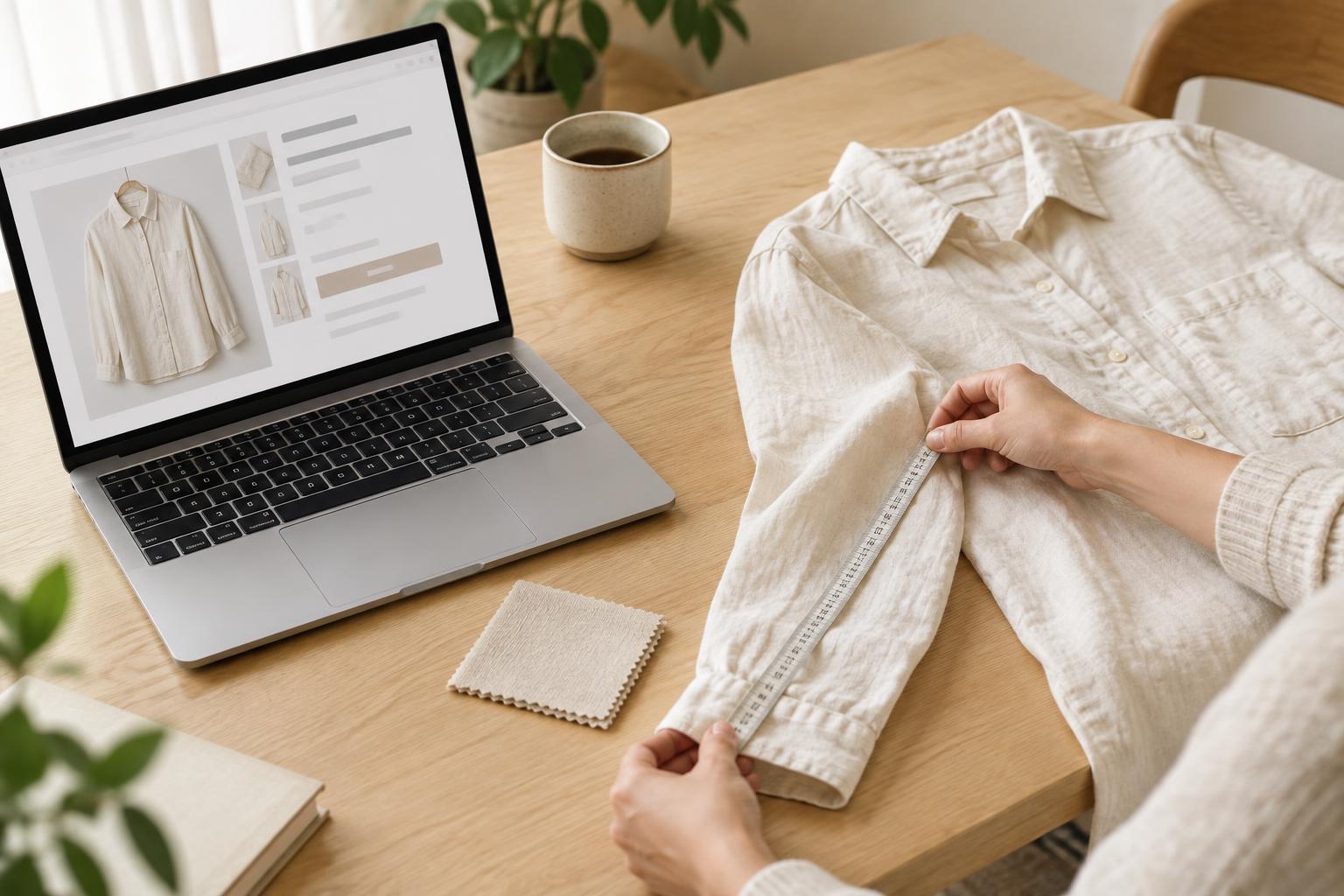
Belt sizes are not always labeled in the same way, so a trouser size alone may not be a reliable guide. For a useful starting measurement, put on the outfit or a similar layer, then wrap a flexible tape measure around the place where the belt will sit. Keep the tape comfortably snug, not pulled tight. If you will wear the belt through loops, guide the tape through them.
A belt you already enjoy wearing can be an even better reference. Lay it flat and measure from the point where the buckle pin meets the strap to the hole you use most often. Do not measure from the far end of the buckle to the tip of the belt unless the maker specifically asks for that measurement. Buckle designs and sizing methods vary, so compare your measurement with the seller’s guide when one is available.
Ideally, your usual fit will leave room to adjust in either direction. A middle hole often gives you that flexibility, although belts with fewer holes or a sliding closure work differently. If you are between sizes, consider whether you will mainly wear the belt over light clothing or thicker layers before choosing.
Choose a width and buckle you can live with
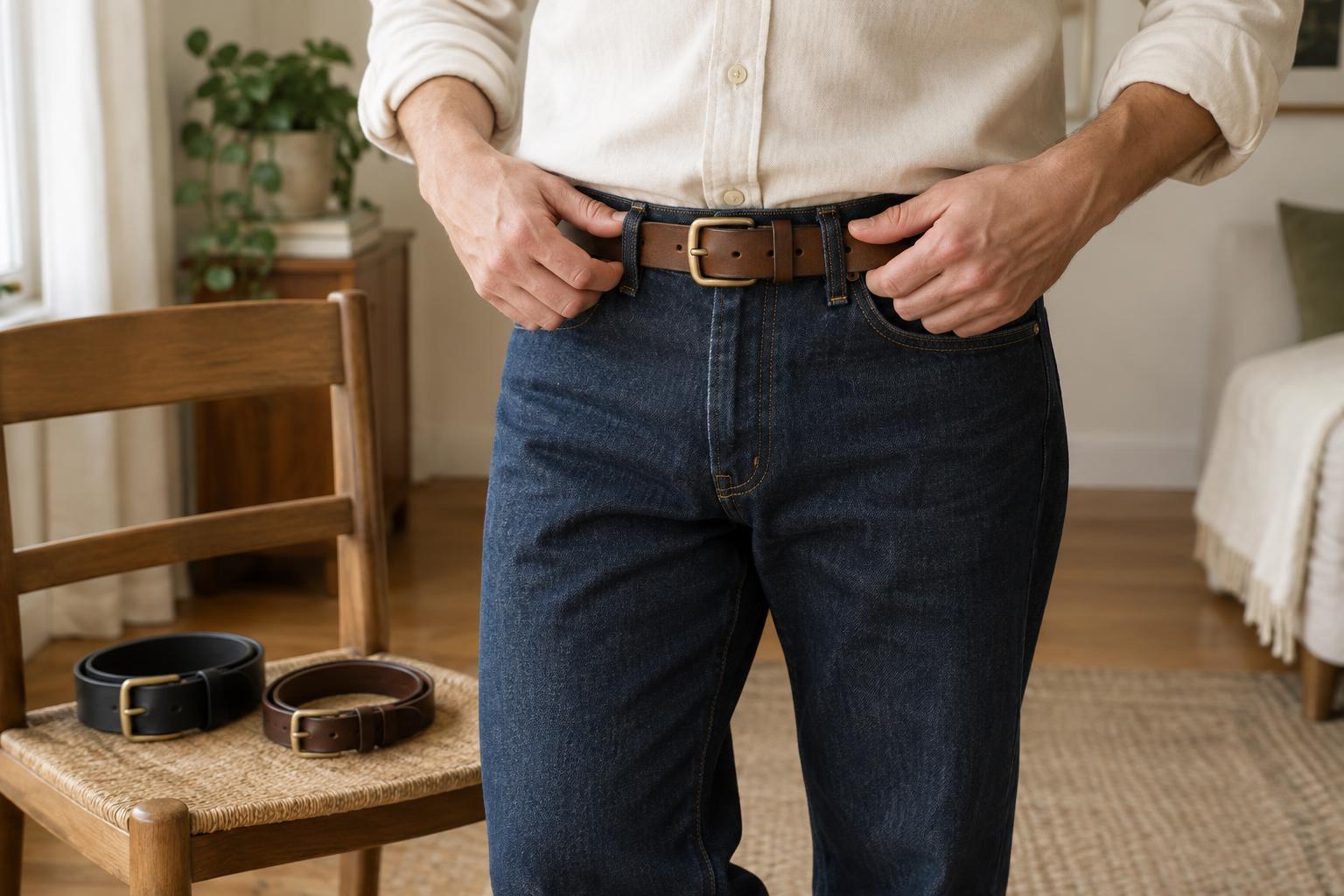
For trousers, check the belt loops before falling for a particular design. The strap should slide through without folding or catching, while still feeling substantial enough for the garment. A narrow belt can be a subtle accent; a wider one may make more of a statement. Neither is automatically more comfortable. The best choice depends on how it sits against your body and clothing.
Pay attention to the buckle as well as the strap. A large buckle may press against your stomach when you sit or lean forward, even if it looks fine while standing. Feel the back of the hardware for rough edges, and notice whether the buckle stays flat or twists. If you often sit at a desk, drive or bend throughout the day, try those movements before deciding.
Consider the feel of the material
Firm leather and other structured materials can give a neat outline, but they may feel stiff at first. Softer leather, woven straps and some fabric belts can move more easily with your body. A stretch section may offer flexibility, though it should not need to be pulled hard to keep a garment secure. The aim is gentle support, not constant pressure.
Look closely at the edges and the area around the holes or fastening. Smooth edges are less likely to catch on clothing, and tidy stitching or secure hardware can help a belt withstand regular use. If a strap feels sharp, scratchy or unusually rigid in your hands, consider whether you would enjoy wearing it for hours.
Test the fit beyond the mirror
When trying on a belt, fasten it as you normally would and check that your trousers stay in place without being drawn into tight folds. You should be able to breathe and move naturally. Sit down, stand up, reach and bend a little. If you immediately want to loosen it, the fit or position may be wrong, even if the size appears correct.
Finally, look at the loose end. It should reach a keeper or sit neatly without an awkward length hanging free. If everything else feels right but the tail is too long, a different size or an adjustable design may be more practical. A good everyday belt is one you can fasten without fuss, wear comfortably through your routine and pair with clothes you already reach for.