Start with the day you actually have
A rainy forecast does not call for the same outfit every time. A short walk between home and a car asks less of your clothes than a long commute on foot. Before getting dressed, think about how much time you will spend outdoors, whether you will be carrying bags and where you need to go afterward. An outfit that keeps you dry but feels uncomfortable indoors is not much help.
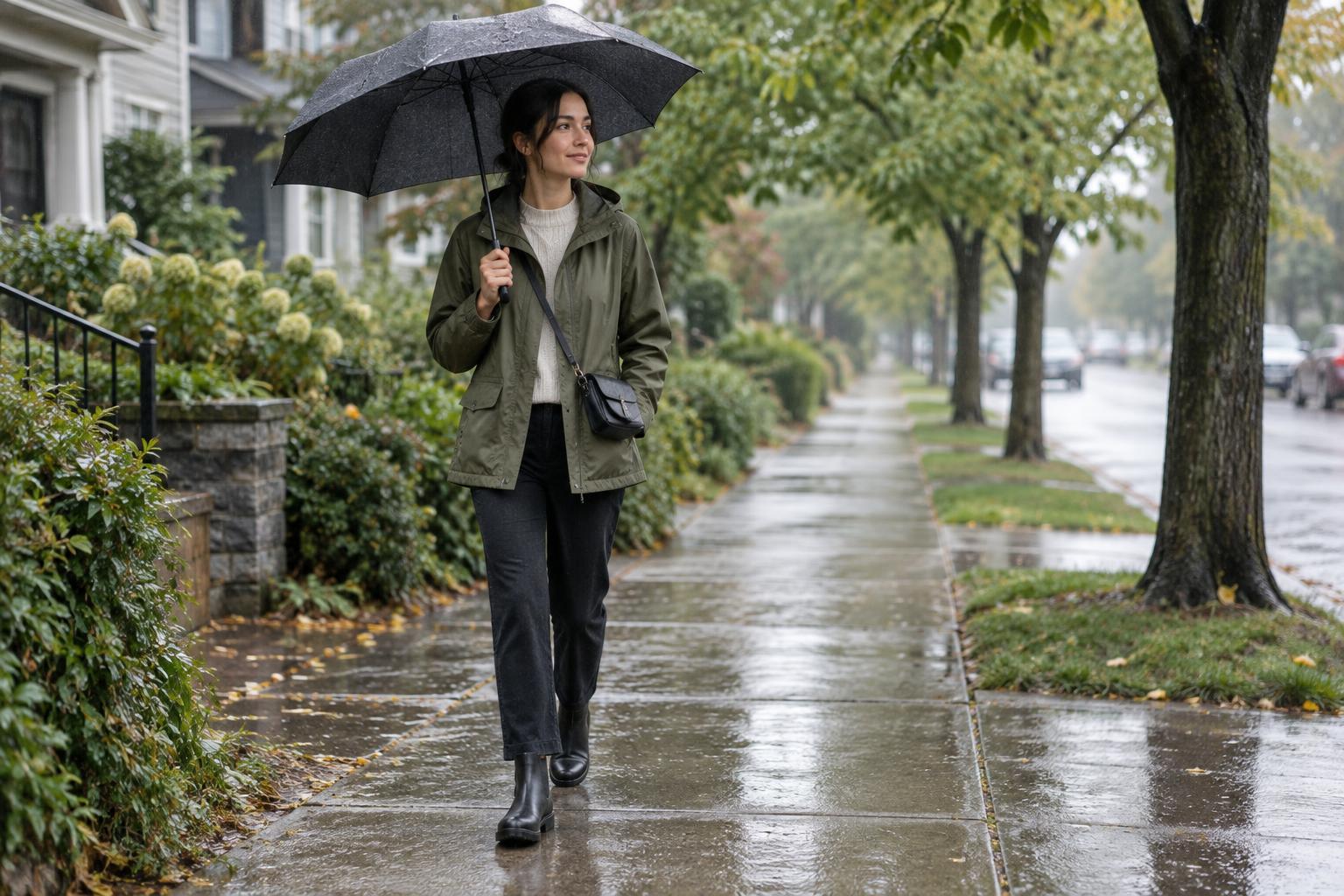
It is also worth distinguishing light, occasional rain from a day of steady showers. For a brief errand, an umbrella and a jacket that sheds light moisture may be enough. If you expect to be outside for longer, prioritize a coat designed to handle rain, shoes that can tolerate wet pavement and a way to keep your belongings covered. This small pause can save you from wearing more gear than you need.
Choose an outer layer you can move in
A useful rain jacket should fit over your usual layers without pulling across the shoulders or restricting your arms. Try raising your hands, sitting down and carrying your everyday bag while wearing it. Look for a hood that stays in place and a length that protects the parts of your outfit most likely to get wet. Pockets that close securely are helpful when you want to put away keys or a phone quickly.
The right jacket also depends on temperature. A lightweight shell leaves room for a sweater on chilly days and may feel less cumbersome when it is mild. A warmer coat can be welcome in colder weather, but it may feel too heavy once you step inside. If you already own a comfortable coat, consider whether pairing it with an umbrella will serve you better than buying another layer.
Give your shoes and hems some attention
Wet feet can make a short outing feel much longer. Choose footwear based on the ground you will cross, not just the rain falling from above. Shoes with soles that grip reasonably well and uppers that can be wiped clean are often practical for damp sidewalks. For deeper puddles or extended time outdoors, rain boots may be more useful. Whichever pair you choose, make sure it is comfortable enough for the distance you plan to walk.
Trouser length matters, too. Long hems can brush against wet pavement and stay damp after you come inside. A slightly shorter or neatly cuffed pair can avoid that problem, provided the cuff does not collect water. If your destination calls for different shoes, changing into them on arrival can be simpler than trying to find one pair that works for every part of the day.
Build layers around indoor comfort
Rainy weather can be cool outside and warm inside, particularly when you are moving between buildings. Instead of relying on one thick piece, try a comfortable base layer, a removable sweater or overshirt, and your outer layer. You can then adjust without rebuilding the entire outfit. Fabrics that feel comfortable against your skin are especially important when a coat traps warmth during a walk.
Think about what happens if a sleeve or hem gets splashed. An outfit with pieces that dry reasonably easily may be more convenient than one that needs careful attention after every shower. Dark colors can make splashes less noticeable, but they are not required. If brighter clothes lift your mood, keep them in the mix and use your outerwear and footwear to handle the wettest parts of the journey.
Keep the small essentials easy to reach
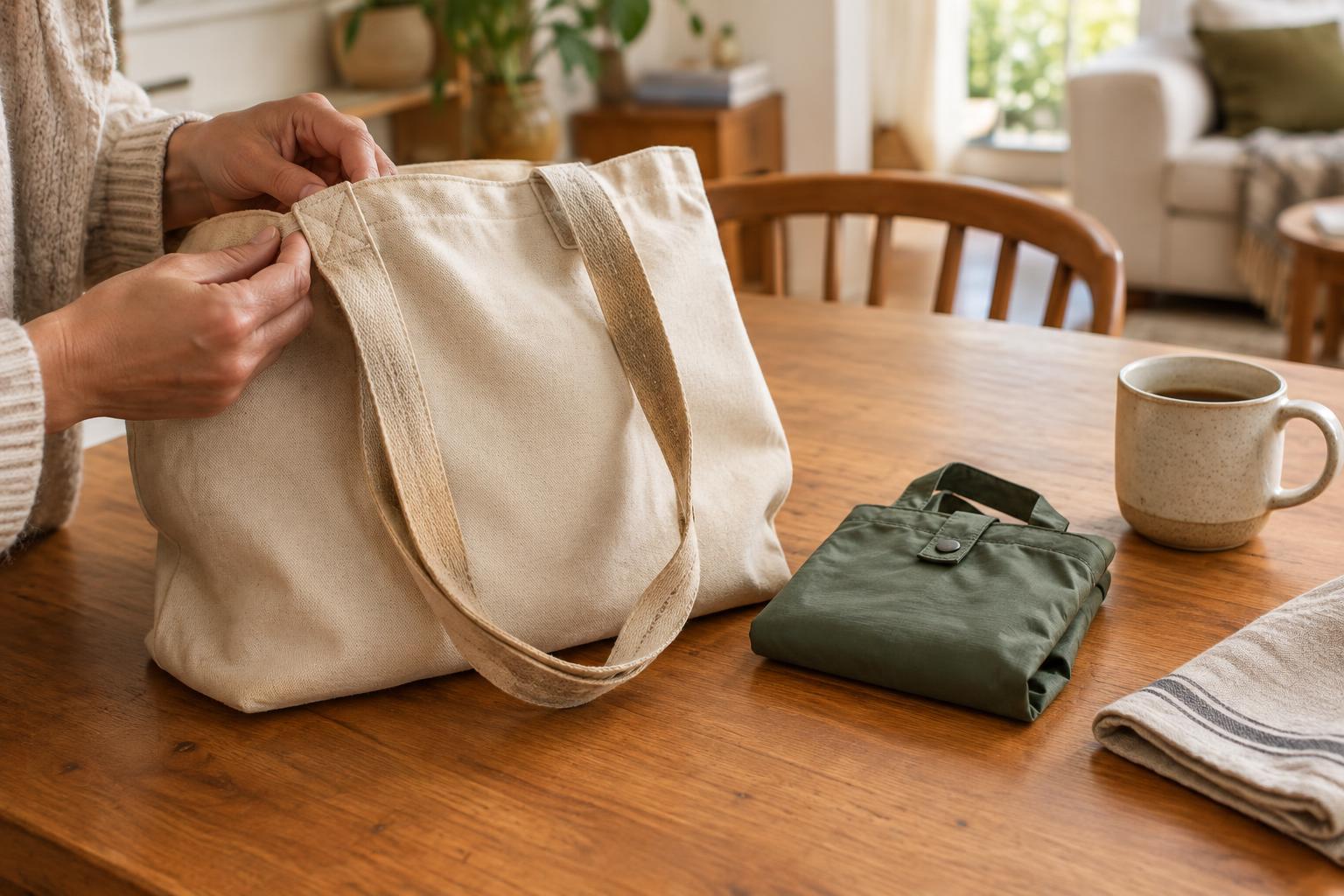
A compact umbrella is useful when you can carry it comfortably and have a place to put it when you arrive. A larger one may provide more coverage if you often walk with a tote or backpack, though it can be awkward in crowded spaces or wind. A bag with a secure closure helps protect what you carry; for items that should stay especially dry, a small reusable pouch adds another layer of protection.
When you get home, let damp coats, shoes and umbrellas dry before putting them away. Keeping a spot near the door for wet items makes that routine easier and helps the rest of your home stay comfortable. Rainy-day dressing works best when it suits your habits: a few dependable pieces, chosen for your route and your comfort, are more useful than a complicated outfit planned around the forecast alone.