Make a small space for the work
A memory scene is a brief account of one moment you can picture, rather than a summary of an entire period of your life. It might begin with bringing groceries into a childhood kitchen, waiting for a friend outside a cinema or opening a window on the first warm morning of spring. The moment does not need a dramatic ending. A person, a place and something happening are enough to begin.
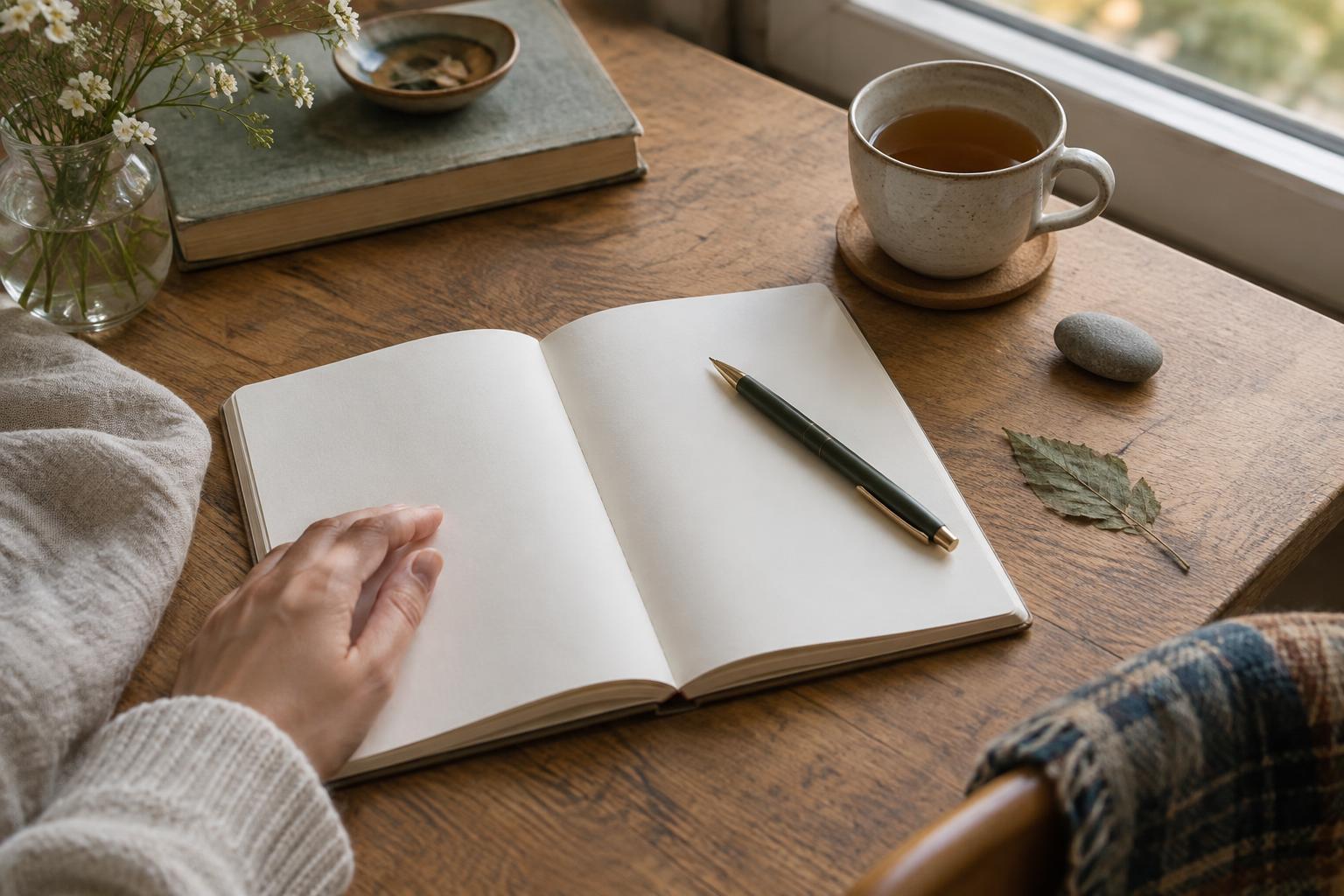
Set aside a short, manageable stretch of time and use whatever is easiest to reach: a notebook, a notes app or a blank document. You might keep a separate page for possible memories so you do not have to search for an idea each time you sit down. The point of a routine is to make starting feel ordinary, not to create another task that needs the perfect desk or a free afternoon.
Choose one moment, not a whole story
Start by listing three small moments that come to mind. Look for a memory with a clear setting and an action you can describe. Instead of trying to write about every summer at a relative’s house, choose the afternoon you helped set the table outdoors. Instead of covering an entire move, choose the moment you found your favorite mug in a box. A narrow focus gives you room to notice what made that moment particular.
Before drafting, write a one-sentence reminder of what happens: I walk into the kitchen and find everyone preparing dinner. This is a guide, not a promise that the finished scene must follow a strict plan. If a more vivid detail draws your attention as you write, follow it for a while. You can decide later whether it belongs in the piece.
Gather details before writing sentences
Give yourself a few minutes to make an informal detail list. What could you see from where you stood? What was someone doing with their hands? Was there a sound in the next room or a texture you remember touching? Concrete details can help a reader enter the scene: a sleeve damp from washing dishes often conveys more than saying the kitchen felt busy. Choose the details you recall, rather than trying to fill every sense.
Memory is uneven, and you do not have to pretend otherwise. If you cannot remember the color of the walls or the exact words someone said, leave them out or describe the impression you do remember. You can write that a conversation made you laugh without inventing dialogue. Keeping a little uncertainty in the scene is often more comfortable than forcing it to sound complete.
Draft from the middle of the action
Begin where something is already happening. You might start with a door opening, a plate being passed across a table or your hands searching a coat pocket. Write forward from there for a few paragraphs. Let the reader learn where they are through the actions and details you have chosen, rather than explaining all the background first. If context is needed, a sentence or two can be added once the scene has taken shape.
As you write, notice what changes within the moment. Perhaps you arrive feeling rushed and slow down when someone offers you a seat. Perhaps you expect an awkward conversation, but you end up talking easily while doing a simple chore. The change can be quiet. If nothing seems to shift, focus on what you noticed by the end that you had missed at the beginning. Stop the draft when that small movement feels complete.
Return once, then let it rest
After a break, read the scene once for clarity. Check whether a reader could tell where they are, who is present and what happens. Remove any explanation that repeats what the details already show. If one sentence feels especially alive, look at the sentences around it: they may need a clearer action or a more precise object. You do not need to polish every line for the scene to be worth keeping.
Give the piece a simple title if you like, then save it and add another memory to your idea list. Over time, this routine can become a way to pay attention to the ordinary moments you want to remember. Some scenes may stay private; others may be shared after you have considered whether the people in them would be comfortable being included. Either way, a short scene is a place to spend a little more time with a moment that might otherwise pass by.