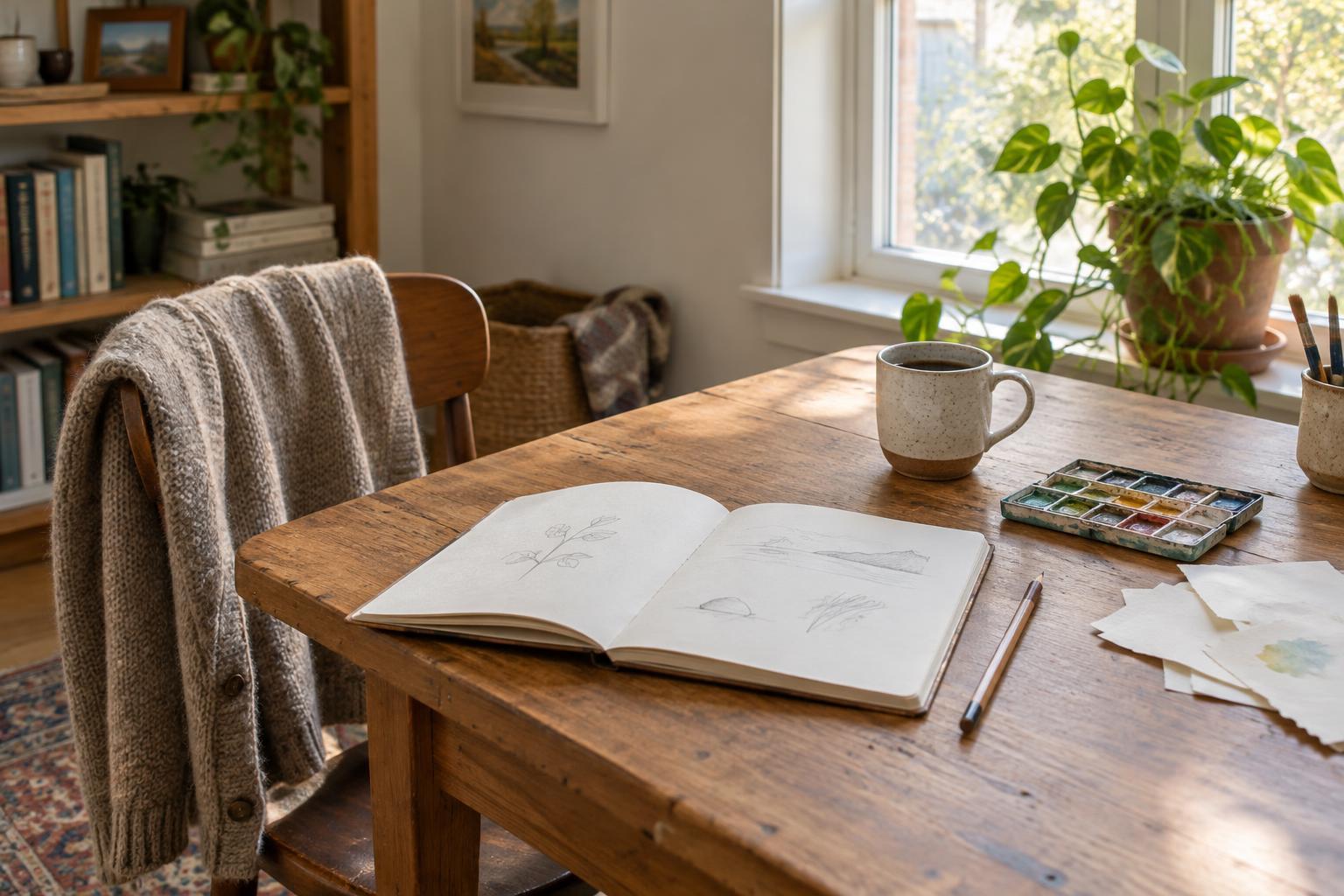
Making every session too ambitious
A new creative routine often begins with an appealing plan: write for an hour every morning, finish a sketch each evening or complete a project every weekend. The plan may suit an unusually quiet week, then become difficult to maintain when work, errands or family needs take up more space. If a session only counts when it is long and productive, it is easy to skip a shorter opportunity altogether.
Give the routine a small version as well as an ideal one. You might write a few sentences, make a quick color study or spend ten minutes arranging materials for a project. These modest sessions are not substitutes for more spacious creative time; they are a way to stay connected to the work when time is limited. A useful starting point is something you can do on an ordinary day, not just on your easiest day.
Waiting for the perfect setting
A tidy desk, uninterrupted afternoon and carefully chosen supplies can make creating feel inviting. They can also become conditions that must be met before you begin. If starting requires a full room reset or a trip to buy materials, the routine carries more preparation than the activity itself.
Look for the smallest comfortable setup that lets you begin. Keep a notebook and pen together, place a few frequently used supplies in a portable box or leave an ongoing project somewhere easy to retrieve. A welcoming space matters, but it does not have to be elaborate. If your surroundings are shared or change from day to day, a routine you can set up and put away quickly may serve you better than a dedicated workspace.
Treating inspiration as a requirement
Creative energy is not equally available every day. Waiting until you have a clear idea can turn a routine into an occasional event, while demanding an original idea on command can make the first few minutes feel intimidating. Many satisfying sessions begin with a familiar action rather than a burst of inspiration.
Prepare a short list of starting points for low-energy days. You could describe an object in the room, redraw a simple shape, rearrange a few photographs or continue a piece you have already begun. These prompts are invitations, not tests. They give you a way to start without deciding in advance whether the result will be worth keeping. Sometimes the session will develop into something larger; sometimes the small act of making is enough.
Judging the routine only by finished work
Finished pieces are satisfying, but they are not the only signs that a routine is useful. Planning, experimenting, revising and noticing what you enjoy can all be part of a creative practice. If you measure every session by what it produces, an afternoon of trying unfamiliar techniques may feel like a failure even when it teaches you what to try next.
Try naming the purpose of a session before you begin. Some days are for finishing; others are for exploring, practicing or simply returning to a project. You might keep a brief note about what you tried and what you would like to revisit. This makes it easier to recognize progress without turning every creative moment into a performance review. It also gives unfinished work a place in the routine.
Building a schedule with no room for change
A fixed time can help you remember to create, but an all-or-nothing schedule is vulnerable to ordinary disruptions. Missing one planned session may feel like breaking a streak, and that disappointment can make the next session harder to start. A routine is more sustainable when it includes a way to return after a pause.
Choose a rhythm that fits your life, then decide what you will do when it does not. A weekday session might move to the weekend; a longer project might become five minutes of notes. You can also check in periodically to see whether the routine still feels useful or whether your interests have shifted. Changing the plan is not the same as giving up. The aim is to make creativity easier to return to, in whatever form you can make room for now.