Start with the kind of making you want to do
A creative rhythm is simply a way to make room for something you enjoy, whether that is sketching, writing, sewing, taking photographs or arranging flowers. The best schedule is not necessarily the most frequent one. It is the one that helps you return to the activity without turning it into another obligation.
Begin by noticing what your chosen activity asks of you. A notebook and pencil can be ready in moments; a sewing project may need space to spread out. Some people enjoy picking up a project midstream, while others need time to settle in before ideas begin to flow. Your available space, energy and responsibilities all matter as much as your enthusiasm.
It can help to separate the pleasure of making from the pressure to finish. If you love the process but rarely have an uninterrupted afternoon, small sessions may be enough. If setting up supplies takes longer than the activity itself, a longer block may feel more welcoming. Neither approach says anything about how creative you are.
What a daily practice can offer
Daily practice works well when an activity can fit into a short, repeatable pocket of time. A few lines in a journal, a quick color study or a photograph taken on a walk can keep your attention connected to an idea. You do not need to produce something worth sharing each time. The value may be in noticing details and staying curious.
A daily habit is easier to keep when the starting point is small. Leave your notebook beside the chair where you drink tea, or place a simple set of supplies where you can reach it. You might give yourself permission to stop after five minutes. On days when you want to continue, the small beginning has already opened the door.
The drawback is that a daily promise can become a source of guilt if your days vary widely. Missing a day does not erase the time you have spent making things. If a streak starts to feel more important than the activity, try thinking of daily practice as an invitation rather than a rule.
Why a weekly session may suit you better
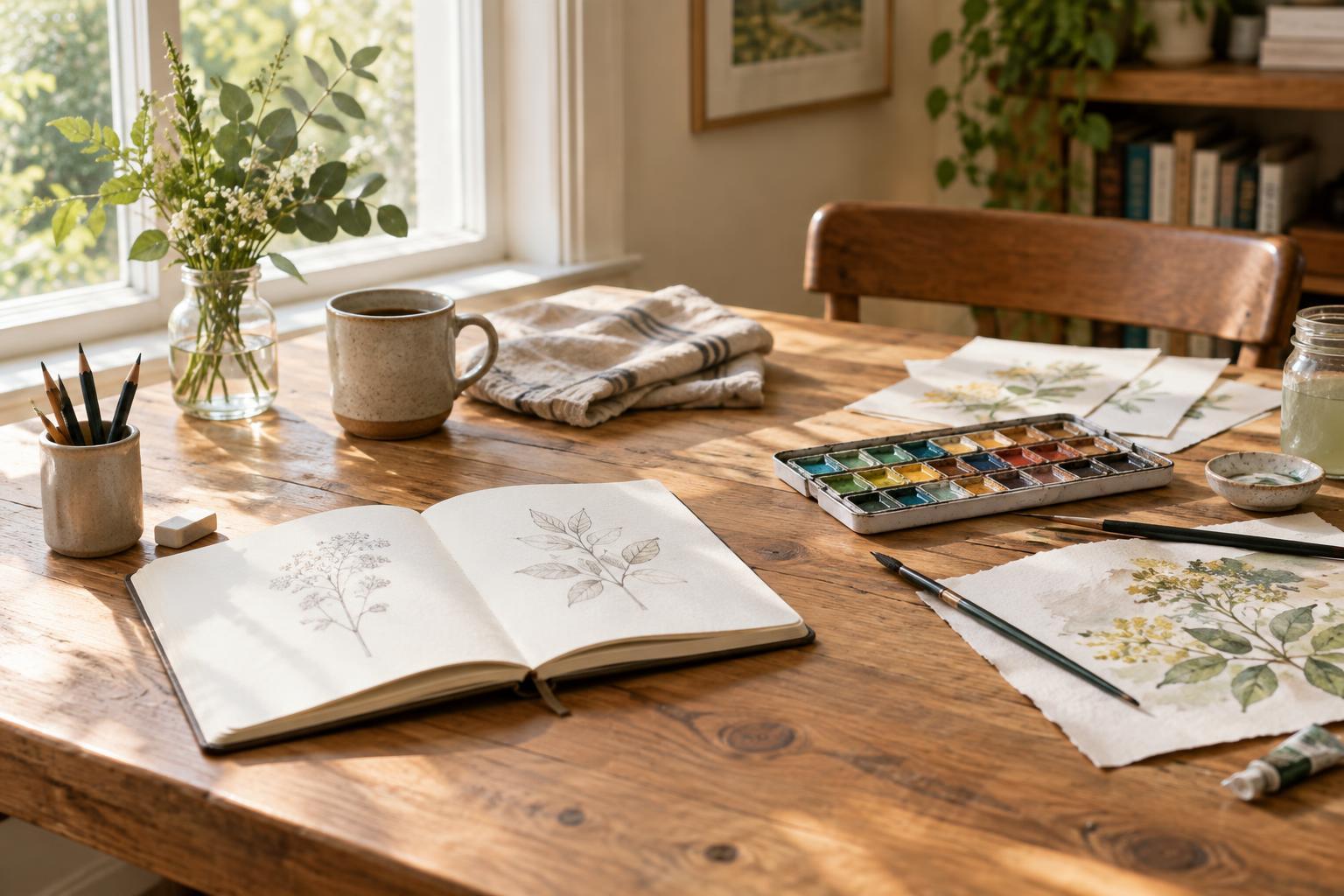
A weekly session gives you room to gather materials, experiment and follow an idea beyond its first few minutes. It can be especially useful for activities that need preparation or cleanup, such as painting, baking something new or working on a larger craft project. Knowing that a block of time is set aside may also make it easier to leave unfinished work alone during the week.
Try choosing a time you can usually protect without depending on a perfect day. Decide in advance what would make the session easy to begin: a cleared table, a list of possible projects or materials gathered in one basket. You can still change your plan once you start. The preparation is there to reduce friction, not to make your leisure time rigid.
A weekly rhythm has its own challenge. If one session falls through, it can feel as though a long time will pass before you return. A small backup option, such as ten minutes of planning or collecting ideas, can keep the connection alive without asking you to replace the whole session.
Let your energy guide the choice
Look beyond the number of free minutes on your calendar. When do you feel most willing to explore, make mistakes or concentrate? Someone with quiet mornings may enjoy a brief daily ritual. Someone whose weekdays are full may prefer a weekend session with fewer interruptions. You may also want different rhythms for different activities.
Consider your natural stopping points. If you find it satisfying to complete one small page at a time, daily practice could feel rewarding. If being interrupted just as you get absorbed is frustrating, you may be happier making less often for longer. Neither preference needs to be fixed: your rhythm can change with the season, your household or the project in front of you.
A hybrid can offer the best of both approaches. You might save a longer session for making and use short moments during the week to jot down ideas or prepare supplies. Those smaller moments support the work without requiring every day to become a full creative appointment.
Try a rhythm, then adjust it
Choose an approach to try for a few weeks, keeping the commitment gentle enough to fit an ordinary week. For daily practice, decide on a tiny action and a convenient place to do it. For weekly sessions, set aside a realistic block and prepare a clear first step. If the plan depends on unusually high energy or a perfectly tidy home, make it simpler.
Afterward, ask what happened rather than whether you succeeded. Was it easy to begin? Did you enjoy the time once you started? What got in the way, and could one small change help? Perhaps the daily activity needs to be shorter, or the weekly session belongs at a different time. You can also keep a rhythm that works most weeks and let the exceptions be exceptions.
A useful creative routine leaves space for both intention and real life. It helps you come back to what interests you, even after a pause. Whether that happens for a few minutes each day, in one generous weekly session or somewhere between the two, the rhythm is yours to shape.