Start with preference, not a rule
Advice about gold-tone and silver-tone jewelry often begins with a rule: one finish is supposed to suit you better than the other. But jewelry sits close to your face, moves with you and becomes part of an outfit. How you feel wearing it matters at least as much as how it looks in isolation. A finish that makes you want to put on your favorite earrings again tomorrow is a good choice, even if someone else would have chosen differently.
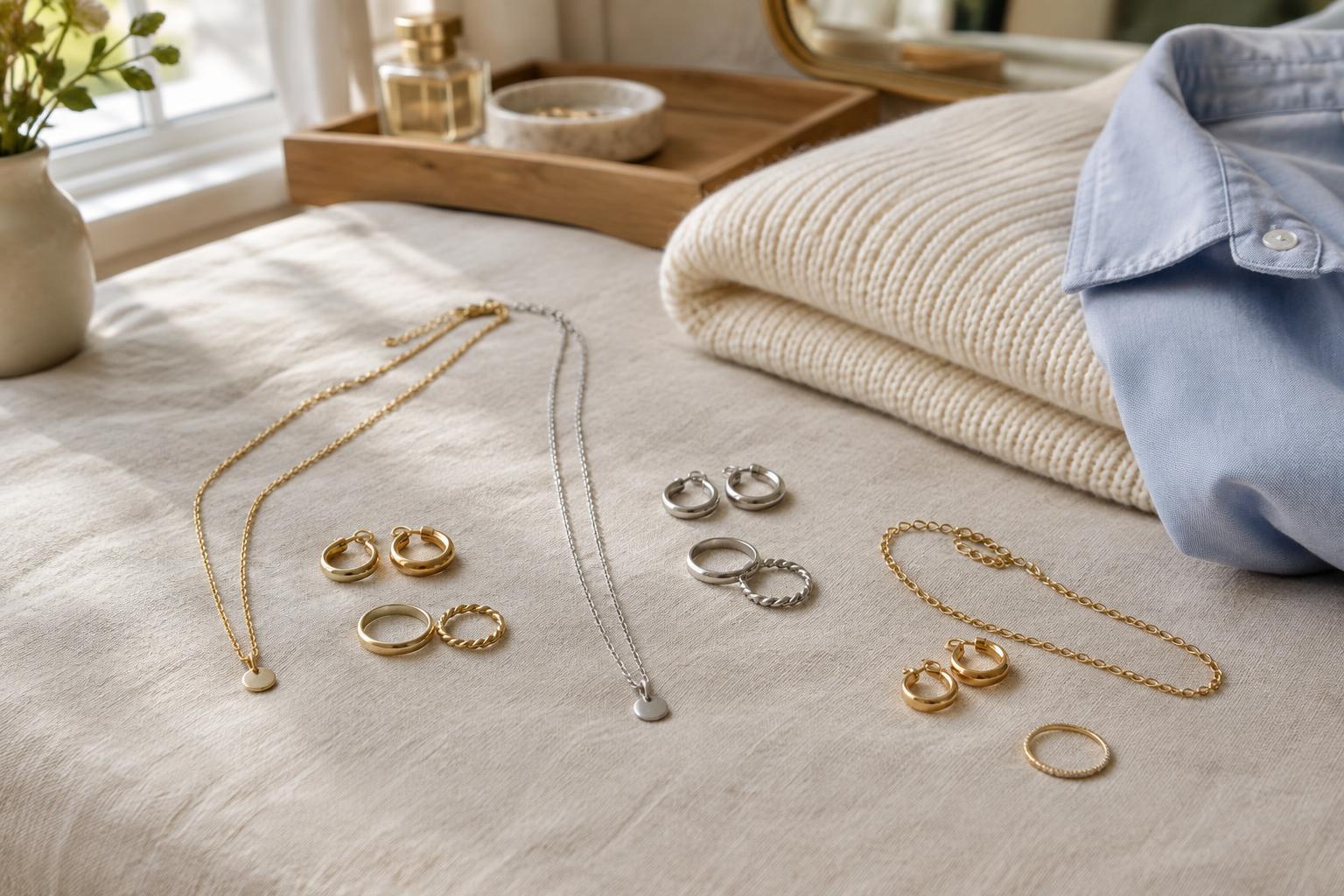
Try comparing pieces you already own in ordinary daylight. Hold a gold-tone earring or necklace near your face, then try a similar silver-tone piece. Rather than asking which one is objectively more flattering, notice what catches your eye. Does one feel warm and soft, while the other feels crisp and bright? Do you like the contrast, or would you rather the jewelry blend in? Your answer can change with your clothes, mood or the season.
Look at the clothes you actually wear
Your everyday wardrobe gives you a useful starting point. Lay out a few outfits you reach for often, including a coat or cardigan if you wear one regularly. Try the same simple jewelry shape in each finish with those outfits. Gold-tone pieces may bring warmth to cream, brown or earthy colors; silver-tone pieces may echo cool gray, blue or black. These are possibilities to test, not pairings you need to obey. Either finish can create an appealing contrast.
Pay attention to the smaller details you already like: a bag clasp, shoe buckle, watch, eyeglass frames or buttons on a favorite jacket. Matching jewelry to those details can make an outfit feel quietly coordinated, but it is optional. You may prefer a silver-tone necklace against a warm-colored sweater precisely because it stands apart. If you want an easy default for rushed mornings, choose the finish that works with the largest number of outfits you enjoy wearing.
Consider shape, shine and scale
The color of the metal is only one part of the effect. A slim gold-tone chain can look understated, while broad, polished gold-tone hoops make a stronger statement. Brushed silver-tone jewelry may feel softer than a highly reflective silver-tone piece. When comparing finishes, try similar shapes and sizes so you can tell what you like about the color itself. Then experiment with texture and scale to refine the look.
Think, too, about where a piece sits. Earrings and necklaces frame your face, while rings and bracelets tend to appear alongside sleeves, hands and everyday objects. You might prefer silver-tone earrings but reach for a gold-tone ring every day. There is no need for your preferences to be consistent across every type of accessory.
Make room for comfort and easy care
A piece you enjoy looking at still needs to work for your day. Check whether earrings feel comfortable after a few hours, whether a bracelet catches on a sleeve and whether a necklace sits where you want it to. If certain jewelry has irritated your skin, look at the listed materials rather than relying on its color: “gold-tone” and “silver-tone” describe appearance, not necessarily what a piece is made from. Material information and your own experience are more useful than assumptions about a finish.
Finishes can also change with wear, especially on pieces with a surface coating. If you are choosing something for frequent use, consider how much care you are willing to give it. Storing pieces separately can help prevent scratches and tangles, and following any care guidance that comes with a piece is a sensible habit. Choosing fewer pieces that feel comfortable and suit your routines can be more satisfying than building a collection around a color rule.
Try both, or choose a simple signature
You do not have to settle the question once and for all. Mixed-metal pieces offer an easy bridge if you enjoy both finishes. You can also combine a familiar watch or ring with jewelry in another tone; repeating each finish in two small places may make the mix feel intentional. Start with pieces you already own before buying anything to complete the look.
If a simpler approach appeals to you, pick one or two pieces you instinctively reach for and use them as your starting point. A small pair of earrings and a necklace in your preferred finish can become an effortless everyday combination. Over time, you can add another tone if it brings something different to your wardrobe. The best answer is not necessarily gold or silver. It is the jewelry you feel comfortable wearing, can easily use and are pleased to see when you get dressed.