Start with what happens in the room
Before moving furniture, think about a typical week in your living room. Do you usually read alone, watch a screen with others, host friends or spread out a game? A room can serve several purposes, but knowing which activities happen most often helps you choose a starting point. If conversation matters, give people a natural way to face one another. If the room is also a quiet retreat, preserve a comfortable spot for reading or resting.
Notice the room’s fixed features, including doors, windows, radiators, outlets and the path people take through the space. You do not need a perfect diagram. A quick sketch can help you see where a sofa might fit and which corners would feel cramped. Consider moving lightweight pieces first so you can test a layout before shifting anything heavy.
Build a conversation area that feels easy
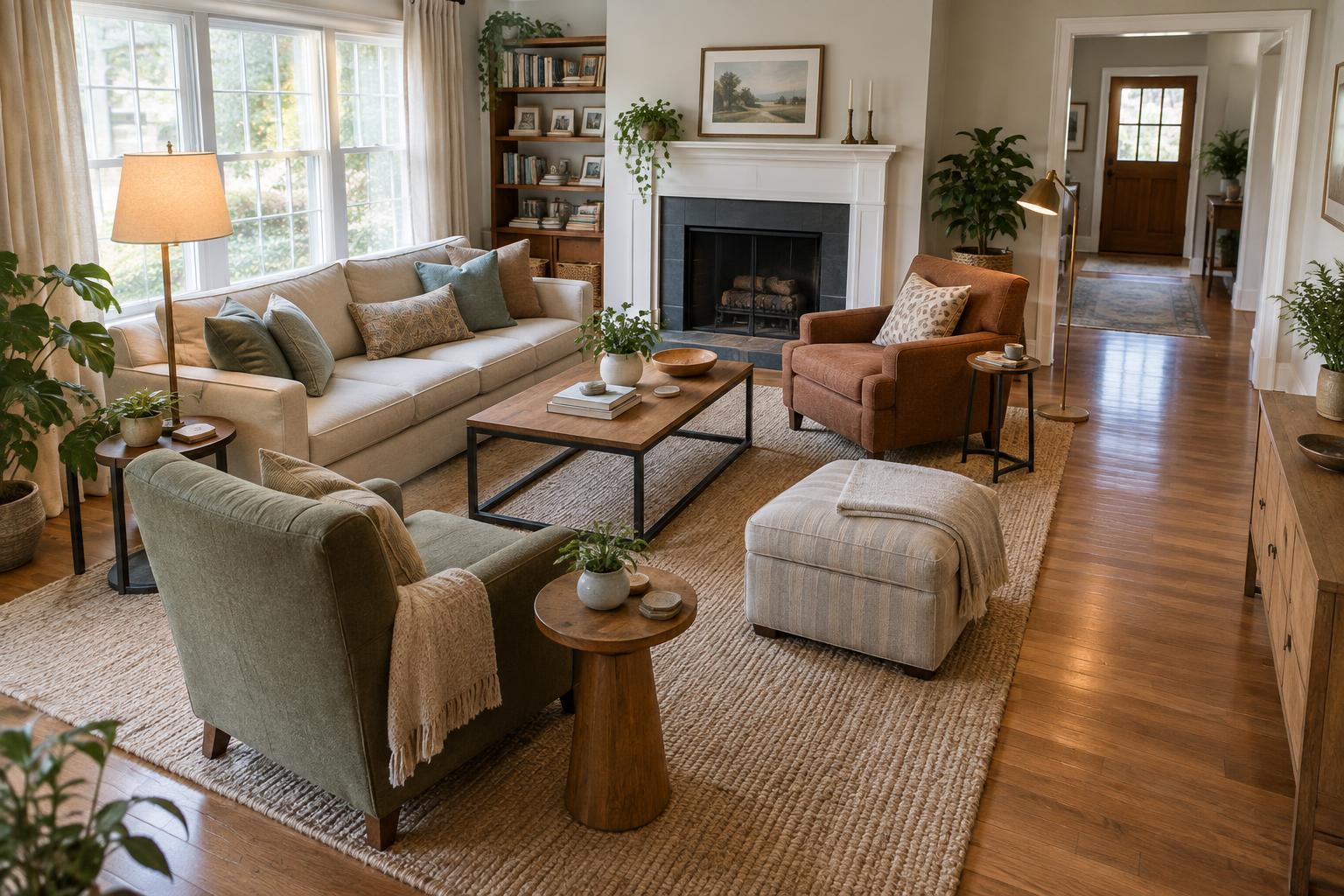
A sofa facing one or two chairs often feels more inviting for conversation than a row of seats aimed in the same direction. The pieces do not have to match. What matters is that people can turn toward each other without twisting awkwardly or speaking across the entire room. In a smaller living room, even one chair angled toward the sofa can make the arrangement feel more sociable.
Use a coffee table, ottoman or small side tables to give the group a shared center. Keep surfaces close enough to be useful, while leaving room for knees and an easy way in and out of each seat. If a television is part of daily life, try angling a chair or choosing movable seating rather than making every piece face the screen. That way, the room can shift between watching and talking without a complete rearrangement.
Protect the everyday routes
An appealing seating group can still feel inconvenient if everyone has to squeeze behind a chair to reach the door. Walk the routes you use most often: from the entrance to the sofa, from the sofa to a lamp or bookshelf, and across the room to any adjoining space. Make sure doors open freely and that people can pass without stepping around loose objects. If the layout feels tight, try pulling a chair closer to the main seating group or choosing a smaller table.
You can also separate a walkway from the conversation area without putting furniture against every wall. A sofa placed slightly into the room may define a seating zone and leave a clearer path behind it. Test the arrangement in ordinary use for a few days. A route that looks generous on paper may feel different when someone is carrying a laundry basket or a cup of tea.
Make each seat comfortable to use
Look at the room from each seat rather than judging it only from the doorway. Is there somewhere to set down a drink or book? Can a person reach a light without crossing the room? Does a chair feel included in the group, or is it tucked so far into a corner that its occupant has to lean forward to join in? Small adjustments often matter more than buying another piece of furniture.
Lighting can help a seating arrangement work at different times of day. A floor lamp beside a reading chair, a table lamp near the sofa or softer light across the room can offer alternatives to a single bright overhead fixture. Cushions and throws may add comfort, but leave enough clear seating for people to settle in without moving a pile of accessories first.
Leave room for the layout to change
A useful living room does not need to stay arranged for guests all the time. A light chair, nesting tables or an ottoman can move closer when friends visit and return to their usual places afterward. In a compact space, this flexibility may be more valuable than fitting in the maximum number of permanent seats. Choose pieces you can comfortably move and give them a sensible place to live between uses.
Once you have a layout, live with it before deciding it is finished. Notice where people naturally sit, which table gathers everyday items and where the walking paths actually form. Adjust one piece at a time so you can tell what helped. The goal is not a room that looks arranged for a photograph; it is a place where conversation feels natural and ordinary days feel comfortable.