Start with the time you actually have
It is easy to imagine creative time as a long, uninterrupted stretch: a clear desk, a fresh notebook and no one asking for anything. If that stretch rarely appears, creativity can begin to feel like something reserved for another season of life. Ten minutes offers a smaller, more usable invitation. It is enough time to sketch a shape, arrange a few photographs, write a paragraph or try one color combination.
The aim is not to complete a project every day. It is to make returning to one feel familiar. Look for a pocket of time that sometimes exists already, such as the quiet after breakfast or the moment before settling in for the evening. It does not have to happen at the same hour each day. A routine can be a repeatable way of beginning, even when the opening moves around.
Choose a project with a small doorway
Some projects ask too much of a short session. Starting a large painting or reorganizing an entire room may leave you spending most of your ten minutes getting ready. Instead, choose an activity with a first step you can name clearly. You might write three lines about the day, make one tiny collage, practice a few stitches or photograph an interesting patch of light at home.
A continuing project can work well if you divide it into pieces. Rather than “make a photo album,” try “choose one picture.” Rather than “write a story,” try “describe the room where it begins.” Keep a short list of these next steps wherever you keep your materials. When a free moment arrives, you can pick up an instruction from your past self instead of deciding from scratch what to do.
Make beginning easier than postponing
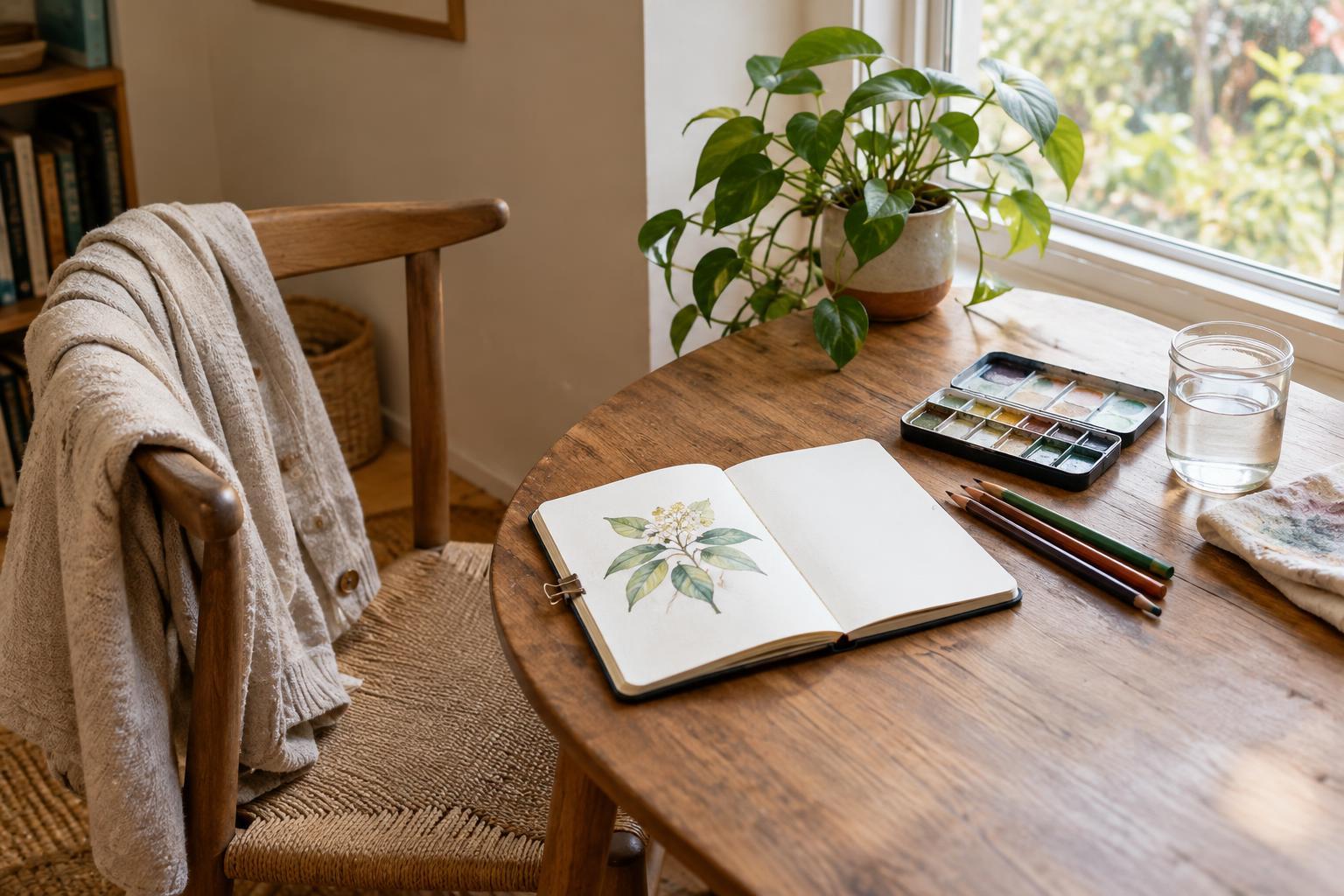
Notice what gets in the way before you begin. If finding a pen, clearing a surface and opening a file take the whole session, simplify the setup. A small tray with a notebook and favorite pencil can live on a shelf. A folder can hold the images you are sorting. If your creative work is digital, leave a clearly named document or album easy to find. The goal is not a perfect workspace; it is a short path into the work.
Pair the session with a modest cue you already recognize. You could sit down after putting the kettle on, after changing into comfortable clothes or after tidying the dining table. Let the cue mean “I can begin,” not “I must produce something good.” On days when ten minutes feels generous, enjoy them. On days when it feels tight, even two minutes spent making the first mark can help keep the doorway open.
Give the ten minutes a gentle shape
A simple structure can keep a short session from disappearing into preparation. Spend the first minute opening your materials and choosing one step. Use the middle minutes to make or explore without editing every decision. Save the final minute to note where you stopped. You do not need to watch the clock closely; these are guides, not rules.
Consider keeping two kinds of activity on your list: one for making and one for noticing. Making might mean drafting a sentence, cutting shapes or testing a pattern. Noticing might mean collecting a phrase you overheard, studying the colors in a room or writing down an idea for later. A noticing session counts. It gives you material to return to when you have more energy or a longer stretch of time.
End in a way that invites you back
Stopping can be as important as starting. Before you put your materials away, leave a small signpost: “add the blue paper,” “describe the window” or “try the second photograph.” If you can, stop before you have used every idea. Having one manageable next move makes the following session less daunting.
Expect the routine to change with the rest of your life. Some weeks you may find ten minutes often; other weeks, rarely. Missing a day does not erase what you made. When you return, choose the smallest available step rather than trying to catch up. Over time, your pages, pictures or experiments may become a record of attention paid in ordinary moments. That is a worthwhile result, whether or not any single session produces something finished.