Start with a project that fits your space
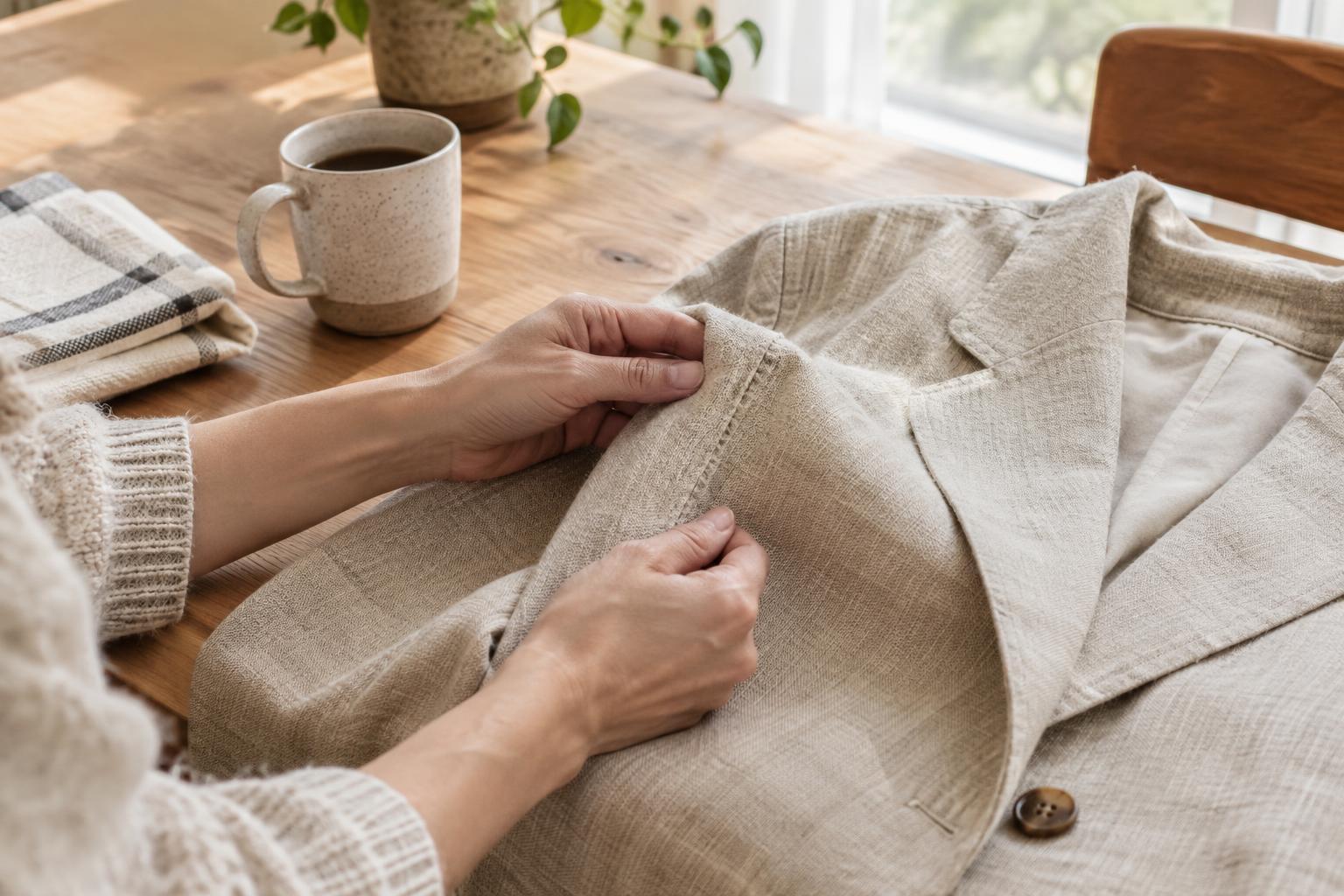
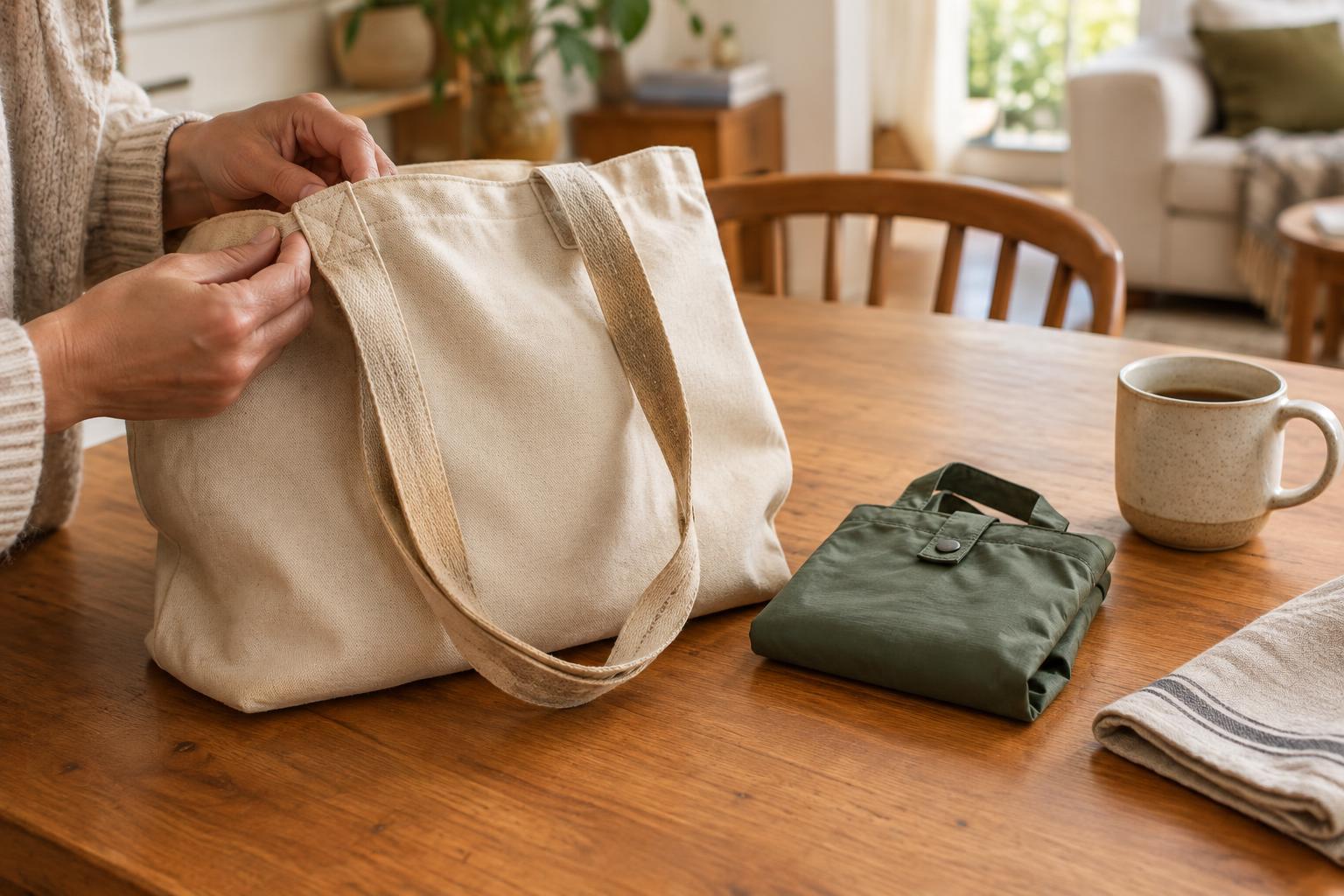
A hand-stitching practice does not need a dedicated craft room. A chair with good light, a small surface for supplies and a place to put everything away can be enough. The easiest way to keep the practice low-mess is to choose a project that is physically small. Mending a loose seam, adding a patch to a tote bag or stitching a simple design on a fabric square gives you something useful to work on without spreading materials across the room.
Choose one project before gathering supplies. If you are new to stitching, a piece of sturdy woven fabric can be easier to handle than something slippery or stretchy. Keep the first design modest: a line, a border or a few repeated shapes. Finishing a small piece helps you learn what you enjoy, and it leaves less unfinished work to store.
Make a kit you can open and close
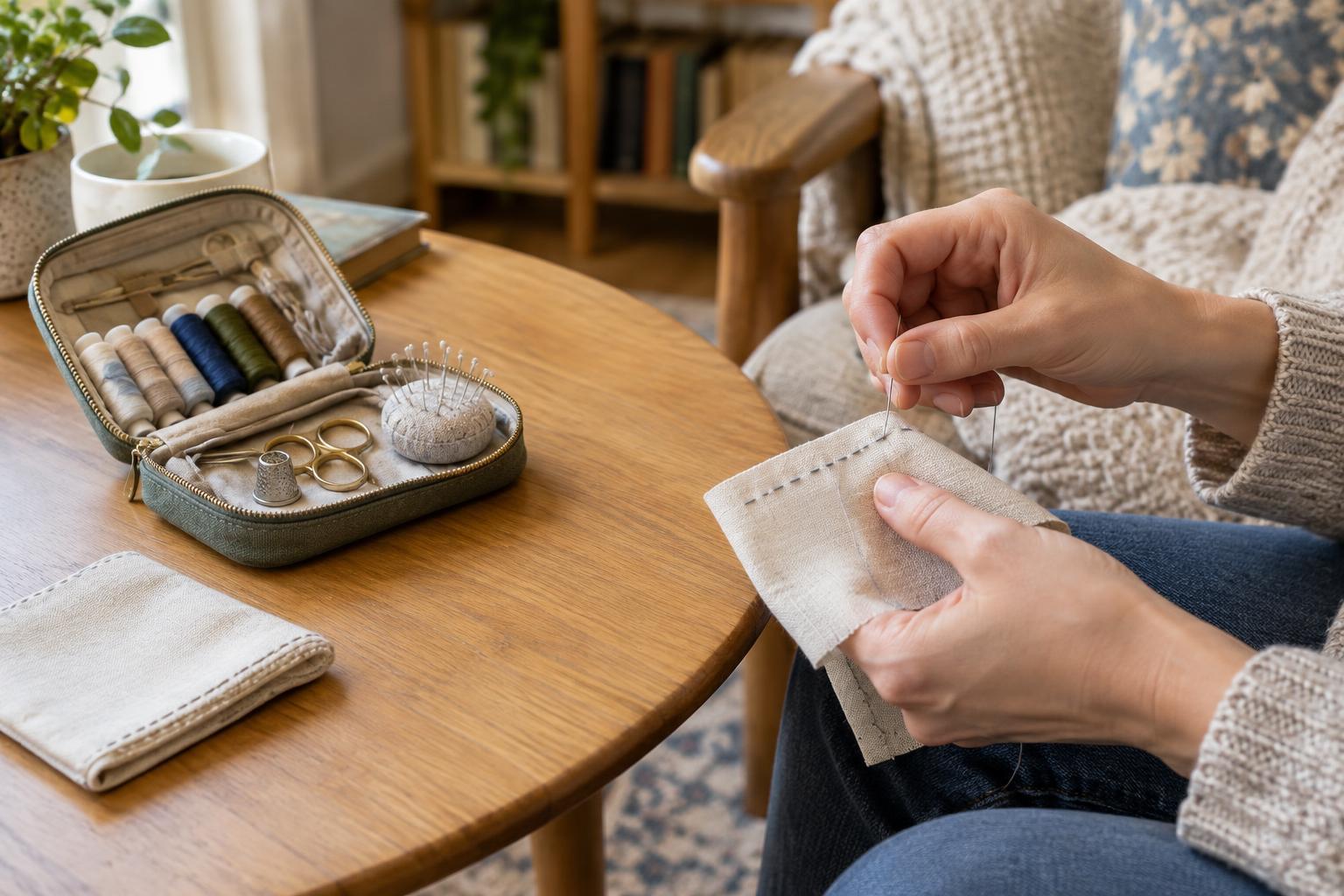
A compact kit removes much of the effort of getting started. Put a few suitable needles, thread, small scissors and your current fabric in a pouch or lidded box. A needle case or pin cushion gives sharp tools a reliable home. If you use an embroidery hoop, choose one that fits both the project and your storage spot. You can add other tools when a particular project calls for them rather than keeping every possible supply at hand.
Keep thread choices limited at first. A small selection of colors you like is easier to manage than a jumble of loose strands. Wind spare lengths around cards or tuck them into separate envelopes so they do not tangle. A tiny container for thread ends is useful, too. It can be as simple as an empty jar that stays open while you stitch and closes when you finish.
Set up for an easy beginning
Before you sit down, decide what one short session will accomplish. You might thread a needle, secure a patch or work along one marked line. A clear stopping point makes it easier to enjoy the work even when you have limited time. If you need to mark a design, do that before settling into your stitching spot and put the marking tool back in the kit.
Comfort matters more than a perfect-looking setup. Sit where you can see the fabric clearly and rest your arms without straining. Keep a lamp nearby if the room light leaves you squinting at the stitches. Cut a workable length of thread rather than pulling out a long strand that may knot as you sew. When interruptions are likely, avoid leaving an unsecured needle in a chair, blanket or loose piece of fabric.
Practice a few stitches instead of many
You do not need a large stitch vocabulary to make or mend something by hand. A running stitch can join or decorate fabric with a simple dashed line. Backstitch makes a more continuous line and can be useful where a seam needs to hold. A whipstitch can secure an edge or attach a patch. Try each one on a scrap before using it on a favorite item; the practice piece can stay in your kit as a reminder.
Aim for stitches that are secure enough for the task, not perfectly identical. If the fabric bunches, pause and ease the thread rather than pulling harder. If the thread knots, it may be quicker to cut it and begin again. These small adjustments are part of learning. They also keep a relaxing activity from turning into a long attempt to rescue one troublesome length of thread.
Finish with a two-minute reset
A low-mess routine depends on how you end a session. Secure the thread if you have reached a natural stopping point. Otherwise, leave yourself a clear note about the next stitch or place to begin. Return the needle to its case, collect thread ends and close the scissors. Fold or roll the fabric gently, then put the whole project into its pouch or box.
Store the kit somewhere easy to reach but out of the way of everyday spills and clutter. Keeping the current project together means you can begin again without searching for a missing needle or matching thread. Over time, you may discover that you prefer ten quiet minutes now and then, or a longer session on an unhurried afternoon. Let the routine follow your life: the goal is a creative practice that feels inviting to return to, not another task to keep up with.