Start with the day you actually have planned
A winter outfit can feel perfect on the doorstep and far too warm once you reach a heated room. Before getting dressed, think about how much time you will spend outside, whether you will be walking or standing still, and what you can comfortably carry when you take a layer off. A short trip between warm spaces calls for a different outfit from an afternoon outdoors.
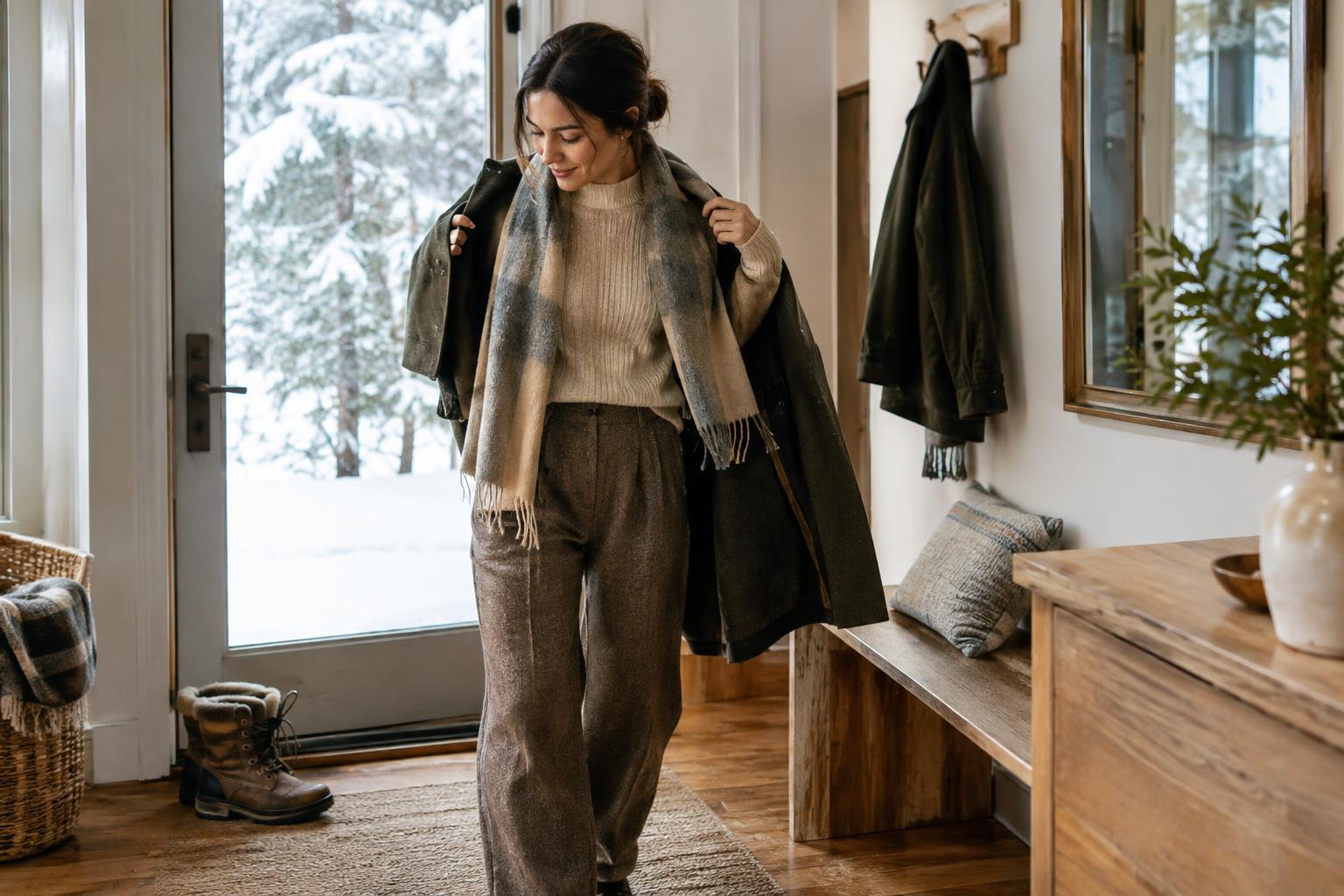
It helps to build around an indoor outfit you would be happy to wear on its own. That might be trousers and a soft long-sleeved top, or a dress with tights and a comfortable cardigan. Then add the warmth you need for the journey. Starting this way makes it easier to remove your coat without finding that the clothes underneath are too thin for the room or too bulky to sit in.
Make each layer easy to adjust
A useful layering system has three jobs: a base that feels comfortable against your skin, a middle layer that adds warmth, and an outer layer that protects you from the weather. The pieces do not need to be technical. A breathable long-sleeved top, a knit or fleece, and a coat may be enough for an ordinary day. If you tend to get warm indoors, choose a middle layer you can open or remove without disturbing the rest of the outfit.
Pay attention to fit as well as thickness. A coat that pulls across the shoulders over a sweater may feel less comfortable than a roomier coat over two lighter layers. Likewise, several tight layers can restrict movement. Try the whole outfit on together and do a few everyday things in it: sit down, reach for a bag, and walk around. Small adjustments at home are simpler than managing a slipping scarf or bunching sleeves later.
Choose fabrics and shapes for comfort
The warmest-looking item is not always the easiest to wear all day. A chunky sweater may be lovely for a chilly room but awkward beneath a fitted coat. A lighter knit can offer more flexibility if you will move between indoors and outdoors. Choose textures that feel pleasant against your skin, and consider a thin layer under wool or other fabrics that you find itchy.
For bottoms, think about where you notice the cold. Some people prefer lined trousers or tights under a skirt; others are comfortable in regular trousers with warmer socks. If you add a layer underneath, check that the waistband and knees still move freely. An outfit you can walk, sit and relax in is more useful than one that only feels right while you are standing in front of a mirror.
Give shoes and accessories a practical role
Cold feet can make an otherwise comfortable outfit feel inadequate. Pick shoes for the route as well as the destination, especially if you may encounter wet or slippery ground. Socks should fit inside your shoes without crowding your toes. If you will change into indoor shoes, make sure they are easy to carry and that your outdoor pair has somewhere to go.
A scarf, hat and gloves add warmth outdoors without forcing you to wear a heavier indoor outfit. They are also easy to remove when you come inside. Choose accessories you can manage while holding a bag or opening a door, and give them a consistent place in your coat pocket or bag. That small habit can make transitions between cold air and warm rooms feel less fussy.
Create a few repeatable outfit combinations
You do not need a new formula every morning. Put together two or three combinations that suit your usual winter days: perhaps a light knit and coat for errands, a removable cardigan under a roomier coat for visiting friends, and an extra middle layer for longer stretches outside. Keeping the indoor portion of each outfit comfortable gives you a reliable starting point.
Once you have worn a combination, notice what you kept adjusting. If you carried your sweater all day, a lighter one might work better next time. If your hands were cold while the rest of you felt fine, gloves may help more than another top layer. Let those observations guide small changes. The goal is not to dress for every possible winter moment at once, but to move through the day with warmth you can adjust.