Know what your pieces are made of
Costume jewelry is a broad category, not a single material. A necklace might combine plated metal, glass beads and glued-on stones; a pair of earrings might have fabric, enamel or plastic details. Each part can respond differently to moisture and friction. Before cleaning a piece, look closely at its surface and how its details are attached. If you still have care instructions from the maker, follow those first.
A useful default is to treat unfamiliar pieces as delicate. Thin finishes can wear through, soft surfaces can scratch, and moisture may loosen some adhesives. That does not mean your jewelry needs to stay in a box. It means a gentle routine is usually a better starting point than a strong cleaner or an enthusiastic scrub.
Put jewelry on last and take it off first
A small change in the order of getting dressed can reduce everyday wear. Apply lotion, perfume, sunscreen and hair products before putting on jewelry, and give them time to settle. This helps limit the amount of product that lands directly on a finish or gathers around settings. When you get home, remove jewelry before washing up, showering or changing into clothes that might catch on a chain.
It is also worth taking pieces off before swimming, exercising or doing chores that involve water and cleaning products. Even if a necklace seems sturdy, its clasp, coating or decorative details may be less resilient. If you like wearing the same earrings every day, keep a small dish near your usual change-of-clothes spot so removing them becomes easy to remember.
Clean gently, one piece at a time
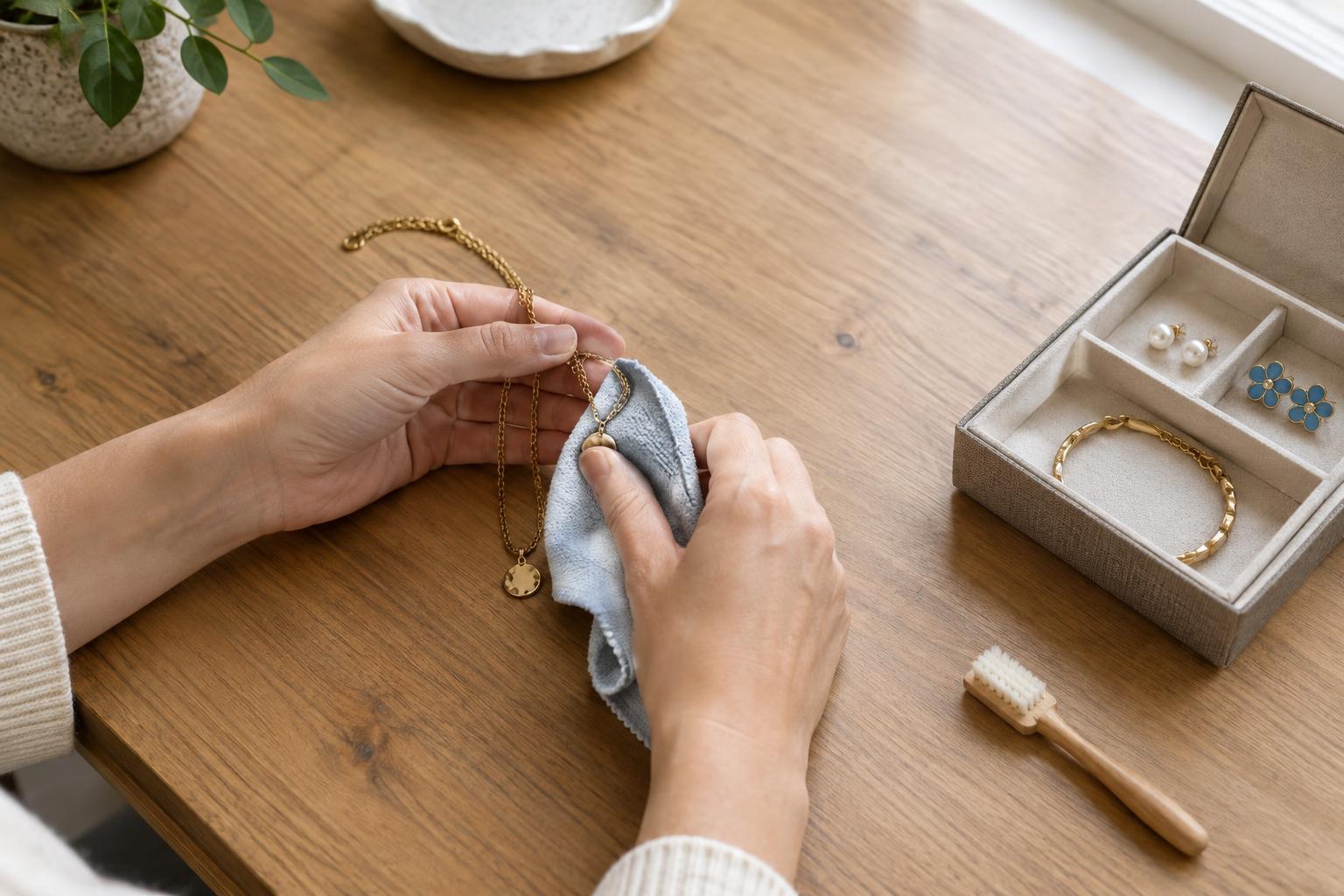
After wearing a piece, a quick wipe with a clean, soft, dry cloth can lift fingerprints and surface residue before they build up. A microfiber cloth works well for many smooth finishes. Use a light touch around stones, painted details and textured areas; rubbing hard may do more harm than good. For crevices, try a soft, dry brush, moving carefully so you do not pull at a setting.
If dry wiping is not enough, check whether the materials and maker’s instructions allow any water. On a suitable piece, you can test a barely damp cloth on an inconspicuous spot, then wipe the area gently and dry it promptly. Avoid soaking jewelry, especially pieces with glued components or unknown materials. Toothpaste, abrasive powders and general-purpose metal polishes can scratch surfaces or remove a finish, so they are poor all-purpose solutions for costume jewelry.
If a piece has a persistent stain or an unfamiliar coating, resist trying several cleaners in succession. Set it aside until you can identify the material or ask a jeweler or repair specialist whether cleaning is appropriate. Some marks reflect wear to a plated finish rather than dirt, and more wiping will not restore the missing layer.
Give each piece a sensible storage spot
Storage protects jewelry from tangles as much as from surface wear. Close clasps before putting necklaces away, and keep chains separated so they do not knot around one another. Small compartments, soft pouches or a divided tray can prevent pieces from rubbing together. Store earrings as pairs, and leave enough room that beads and raised details are not pressed against harder items.
Choose a clean, dry place rather than a bathroom shelf where humidity may vary. Put jewelry away only when it is dry, and keep it out of prolonged direct sunlight if it includes fabric, plastic or colored details. You do not need an elaborate organizer: a few clearly defined spaces are more useful than a crowded box where you cannot see what you own.
Check for small problems before they grow
Every so often, take a moment to look at the pieces you wear most. Check whether a clasp closes securely, an earring back still fits, or a stone feels loose. Catching a problem early can keep a favorite piece from being lost. Keep loose parts together in a small labeled bag rather than leaving them at the bottom of a jewelry box.
Simple findings, such as an earring back, may be easy to replace with the right size and style. For a broken chain, loose setting or damaged coating, a repair specialist can help you decide what is practical. Not every piece will be repairable, but knowing what needs attention makes it easier to choose what to wear. Care is less about keeping jewelry untouched than about making room for the pieces you enjoy in your everyday routine.