Start with what you actually carry
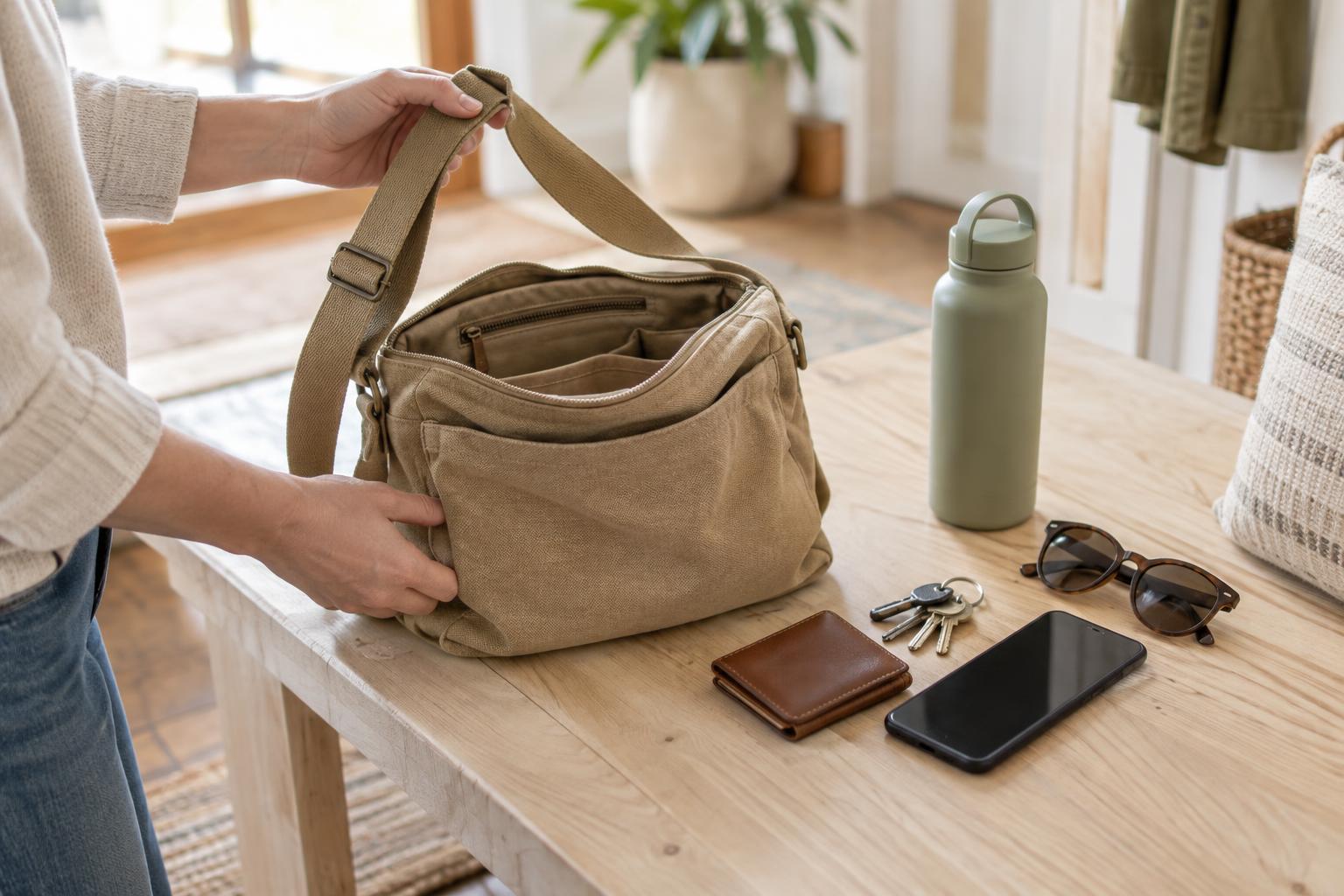
The best daily bag is not necessarily the one with the most room. Extra space can be useful, but it can also invite you to carry things you rarely need. Before comparing styles, empty your current bag and sort its contents into three groups: items you use most days, items you need only for particular outings, and items that have simply stayed there. This gives you a more realistic picture of the space your next bag needs.
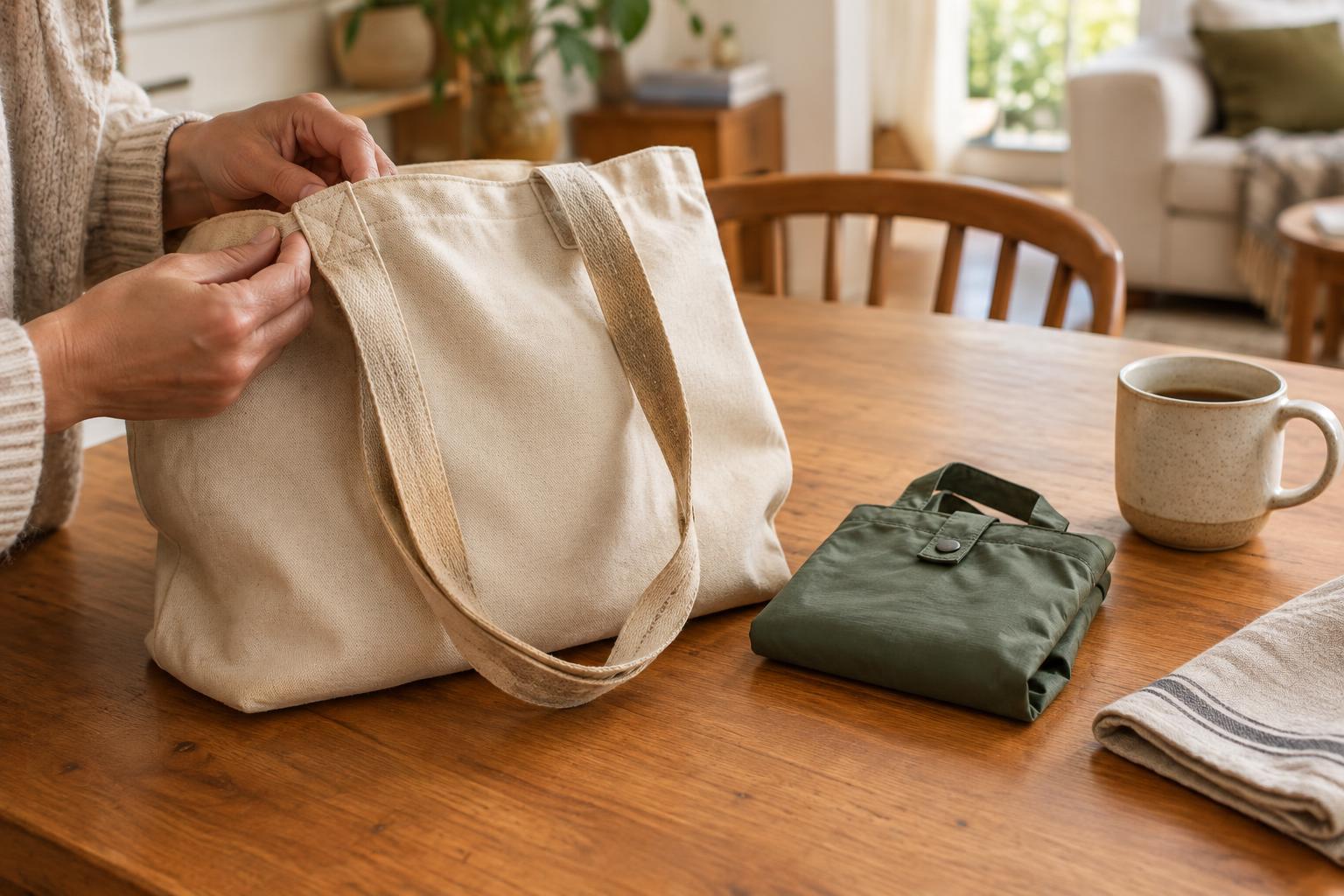
Think about your usual day as well as the contents. A short walk to a café may call for a different bag than a commute with a book, water bottle and lunch. If your routine varies, consider whether one moderately sized bag can cover most days, with a separate tote for occasional extras. You do not have to make your everyday bag large enough for the fullest day of the month.
Choose a size that leaves a little breathing room
A bag should hold your essentials without needing to be packed tightly. When everything fits only in one exact arrangement, it becomes harder to find your keys or put an item away quickly. Look for enough room to reach inside comfortably, plus a little flexibility for a small unexpected addition. At the same time, notice whether a larger bag encourages you to fill it simply because you can.
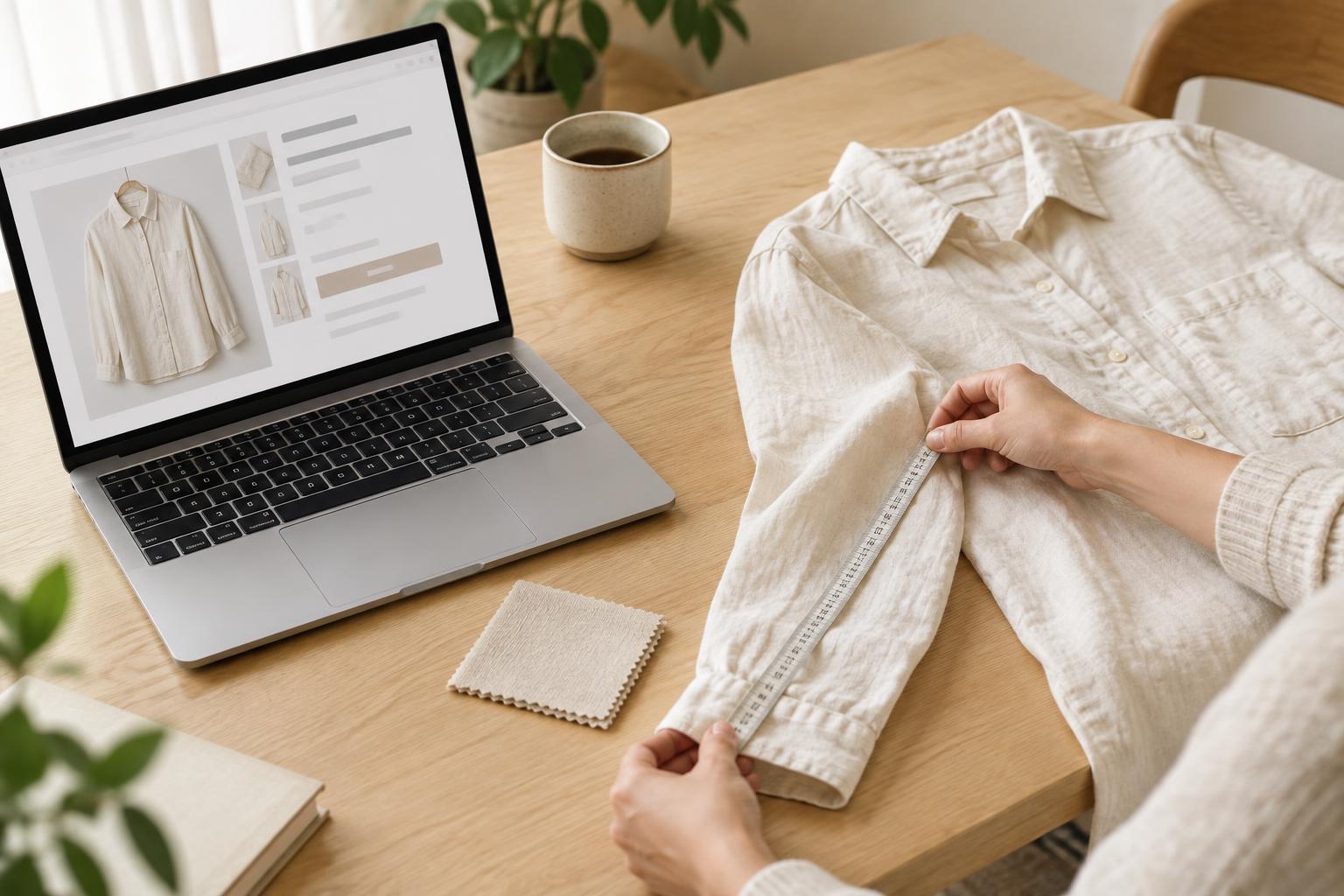
Pay attention to shape, not just listed dimensions. A wide, soft bag may fit plenty but allow small objects to gather at the bottom. A structured bag can keep its shape and make the opening easier to use, though its seams and hardware may add weight. Bring your usual items when trying a bag in person, or measure them against the bag’s interior dimensions when shopping online. An opening wide enough for your largest everyday item matters as much as the bag’s overall capacity.
Make comfort part of the fitting
A bag can feel light when empty and noticeably different once loaded. Test it with the things you would normally carry, then walk around and try the movements you make in an ordinary day. Does it stay in place when you bend down? Does the strap slide, dig in or require frequent adjustment? A wider strap may spread the load more comfortably, while an adjustable strap lets you find a length that works with different layers of clothing.
Consider how you prefer to carry weight. A crossbody bag leaves your hands free and can feel secure on a busy outing, but its position may not suit everyone. A shoulder bag is easy to take on and off; a backpack distributes its contents across both shoulders, though it can be less convenient for quick access. There is no universally best style. Choose the one that feels comfortable during the longest stretch you would regularly carry it, not just for a moment in front of a mirror.
Look for organization you will use
A few well-placed compartments can make a modest bag feel more capable. An easy-to-reach pocket for keys, a secure place for a wallet and enough space to separate a water bottle from paper items may be more helpful than many tiny slots. Think about what you reach for while standing or walking, and what can stay tucked away until you sit down. A closure that you can operate easily matters, too, especially if you open your bag often.
Avoid paying for elaborate organization that does not match your habits. If you already use a small pouch for loose items, a simple open interior may work well. If you dislike moving things between bags, a removable pouch can also make switching styles easier. The aim is to give frequently used objects a predictable place, rather than creating a system you have to think about every time you leave home.
Check the bag itself, then try a lighter routine
The contents are only part of the weight you carry. Notice how heavy the bag feels empty, particularly if it has a thick lining, substantial hardware or a rigid base. Consider the trade-offs of its material: some are easy to wipe clean, while others may need more care. Check that the strap attachments and closure feel sturdy enough for your intended use, and that the bag is comfortable against your body when it contains your essentials.
Once you have chosen a bag, keep it working for you with a brief reset now and then. Remove receipts and items left over from a different outing, refill only what you use, and keep occasional extras separate until you need them. A daily bag does not have to carry every possibility. It only needs to support the life you are likely to live today.