Start with what you actually carry
Before comparing wallet styles, empty your current one onto a table. Set aside the cards you use regularly, then make a separate pile for those you only need occasionally. Add the cash, coins, receipts and small notes you tend to keep. This gives you a more useful starting point than choosing a wallet for everything you might someday carry.
Think about how you pay in an ordinary week. If you mostly use one or two cards, a slim cardholder may be enough. If you frequently carry cash, look for a bill compartment that lets you put notes away without a struggle. If coins are part of your routine, decide whether they need a secure pocket in the wallet or would be easier to keep in a separate pouch.
Leave a little room for the unexpected, but not so much that your wallet becomes a place to store old receipts. The aim is to give your essentials a reliable home while keeping the wallet comfortable to carry.
Match the wallet to your smallest regular bag
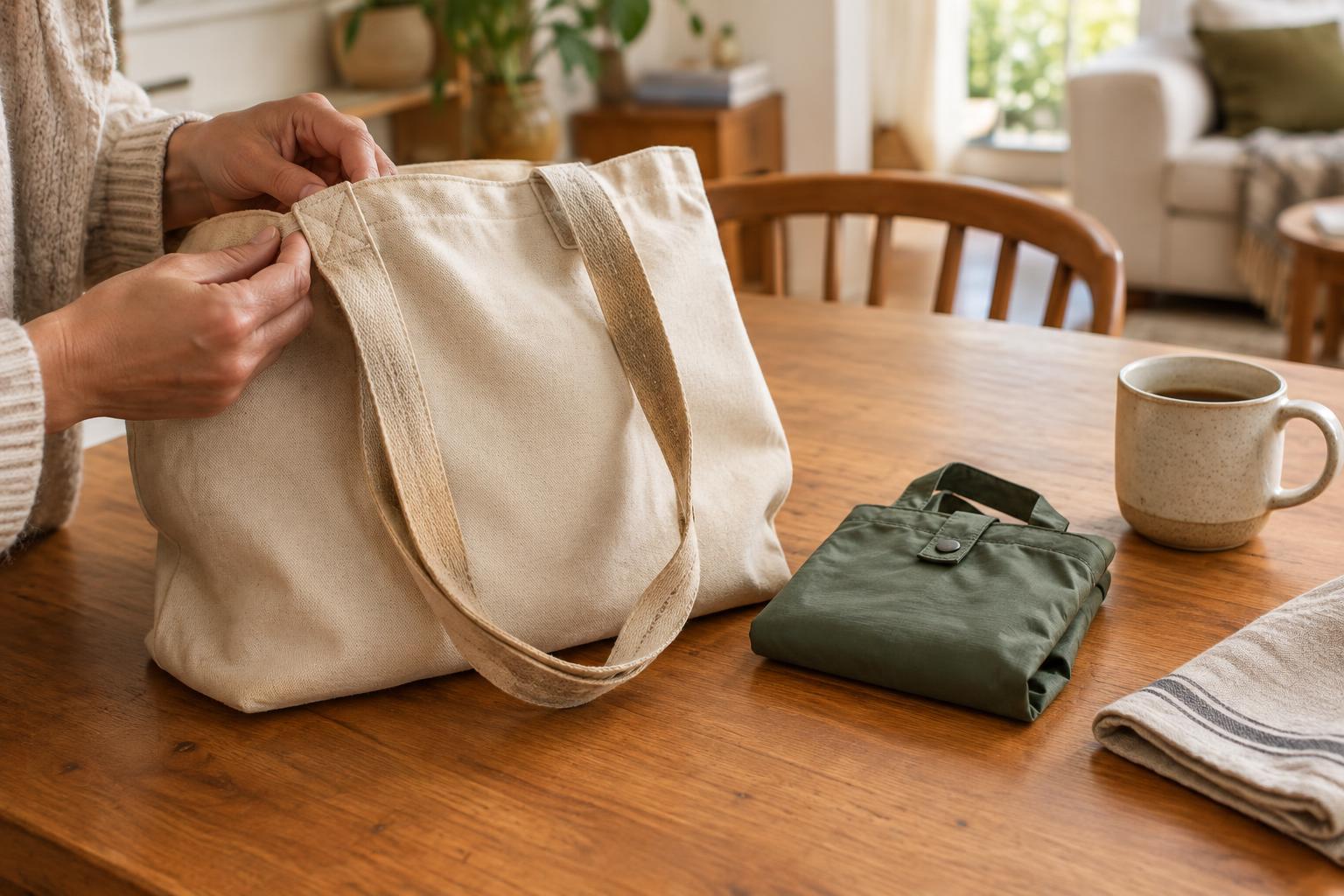
A wallet can look compact on a shelf and still feel bulky inside a bag. Check the interior of the smallest bag you use often, including the width of its opening. A wallet that fits the main compartment but catches on the zipper every time you take it out may not be the right match.
Consider what shares that space. Keys, a phone, sunglasses and a small pouch can make a roomy bag feel crowded. If you switch between a tote and a small crossbody, choosing for the smaller bag may make transfers simpler. You can still use the same wallet in a larger bag, where an interior pocket can help you find it quickly.
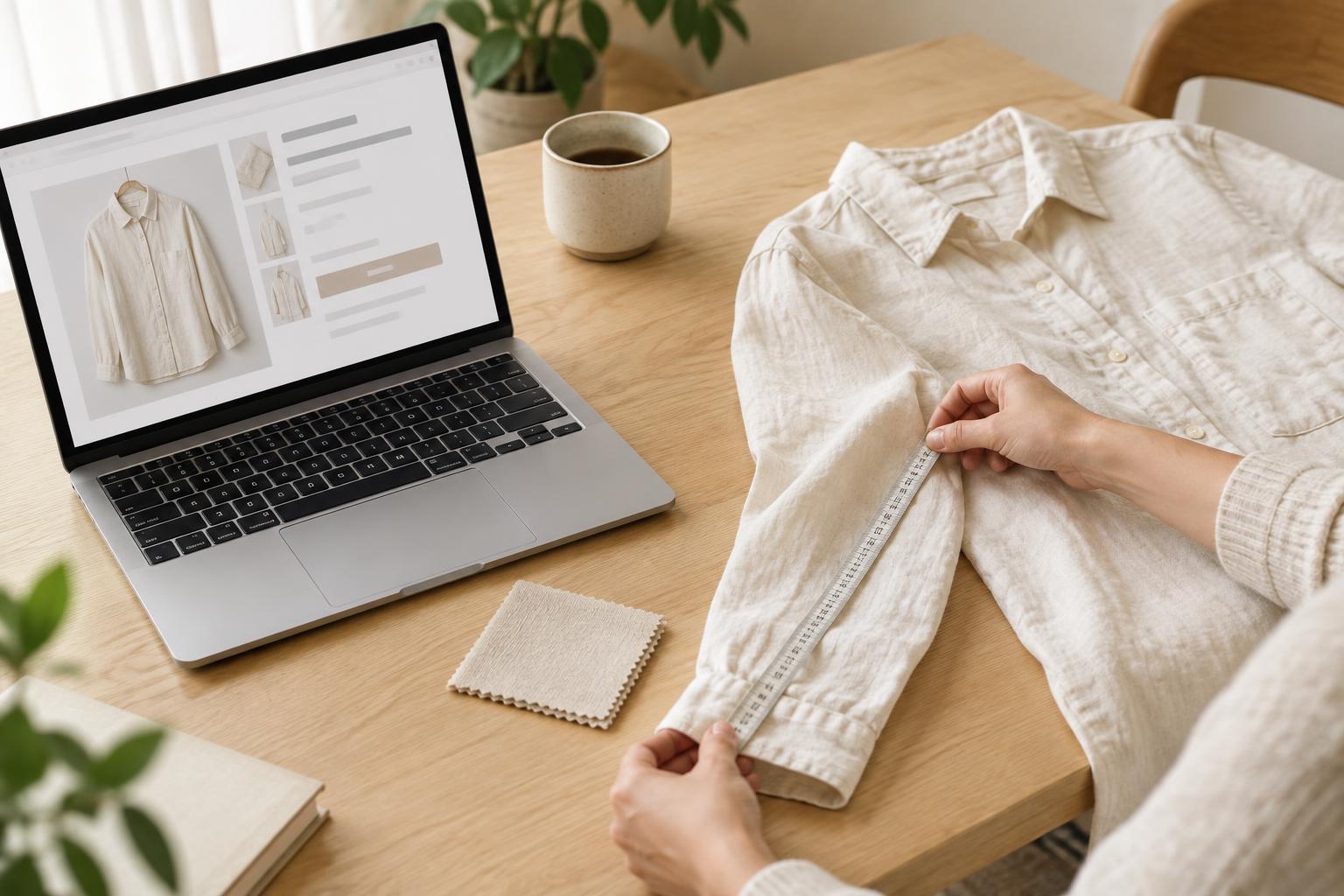
Pay attention to thickness as well as length and width. A wallet with many empty sections may take up more space than you need, while an overfilled slim wallet can become awkward to close. Measure your bag if you are shopping online, and compare its usable space with the wallet’s stated dimensions rather than relying on photos alone.
Choose a layout you can use without thinking
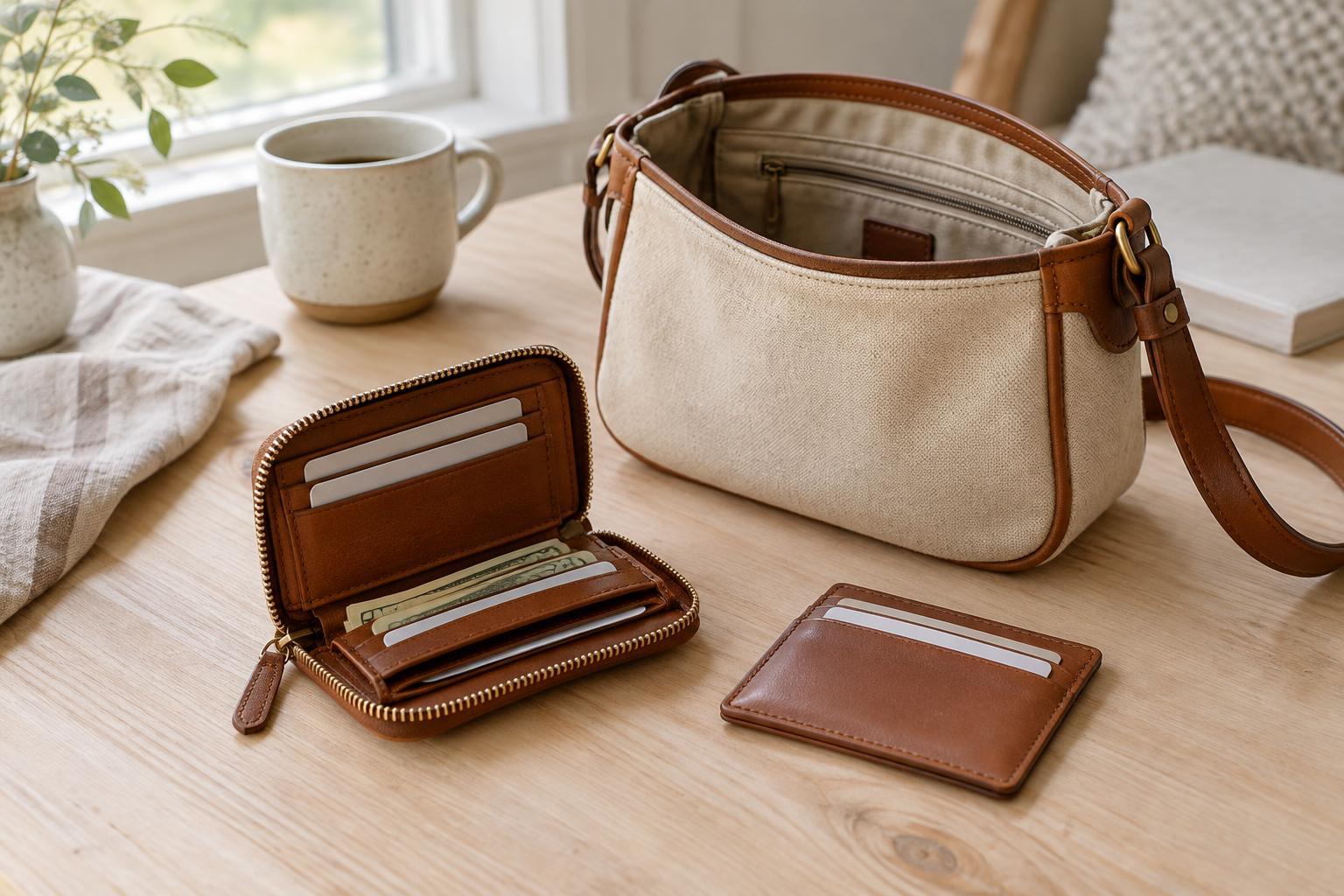
The best layout is one that makes your most-used items easy to reach. Picture yourself paying at a counter or finding a card while standing beside your bag. Would you prefer a few visible slots, or do you like everything enclosed behind a zip or flap? Neither approach is universally better; it depends on how much you carry and whether you value quick access or a contained interior.
Look closely at closures and compartments. A zip-around wallet can keep loose items together, but you may not want to unzip the whole wallet for a single card. A simple cardholder is quick to use, but may not suit someone who regularly carries folded notes and coins. If you keep receipts briefly, a spare pocket can be helpful as long as you clear it out now and then.
Try a small rehearsal before buying. Count the slots you would use, imagine where each item would go and notice whether the layout asks you to fold, stack or squeeze anything you use daily. A wallet that works at its normal capacity is likely to feel easier than one that only works when perfectly packed.
Think about feel, upkeep and visibility
Material affects how a wallet feels in your hand and how much attention it may need. Smooth finishes can be easy to wipe, while textured surfaces may disguise small marks. Softer materials may flex inside a crowded bag; more structured ones can be easier to locate but may take up a little more space. Check the stitching, lining, card slots and closure, since these are the parts you will handle repeatedly.
Colour is practical as well as personal. A wallet that contrasts with your bag lining can be easier to spot, especially in a deep tote. If you often change bags, a familiar, visible colour may also make it easier to notice whether you have transferred your wallet. Choose a finish you will enjoy using, not one you will feel obliged to protect from every ordinary mark.
Make the final choice with a simple test
Narrow your options to the styles that fit your essentials and your regular bag. Then ask three questions: Can I find my usual payment method quickly? Can I put everything away without forcing the closure? Will I be comfortable carrying this on an ordinary day? These questions can be more revealing than a long list of decorative features.
If you are deciding in person, handle the wallet and open it as you would during a purchase. If you are choosing from a product listing, check dimensions, compartment details and any available return terms before committing. Once you have a wallet that works, keep it working by removing old receipts and reviewing the cards you carry from time to time. A good everyday wallet does not need to hold everything; it needs to make the things you reach for feel simple to find.