Start with what the room needs
Before choosing a color or fabric, spend a day noticing how you use the room. Is the window overlooked by neighbors or a walkway? Do you want bright light for reading, or a calmer space for resting? Privacy needs can change from morning to evening, so consider both what you can see through the window and what someone outside might see when your lights are on.
Name your main priority for each window. A living room may need gentle daylight and a little screening, while a bedroom may call for more coverage. You do not have to use the same curtains throughout your home. Repeating a color or texture can create a sense of connection while allowing each room to work in its own way.
Match the fabric to the light
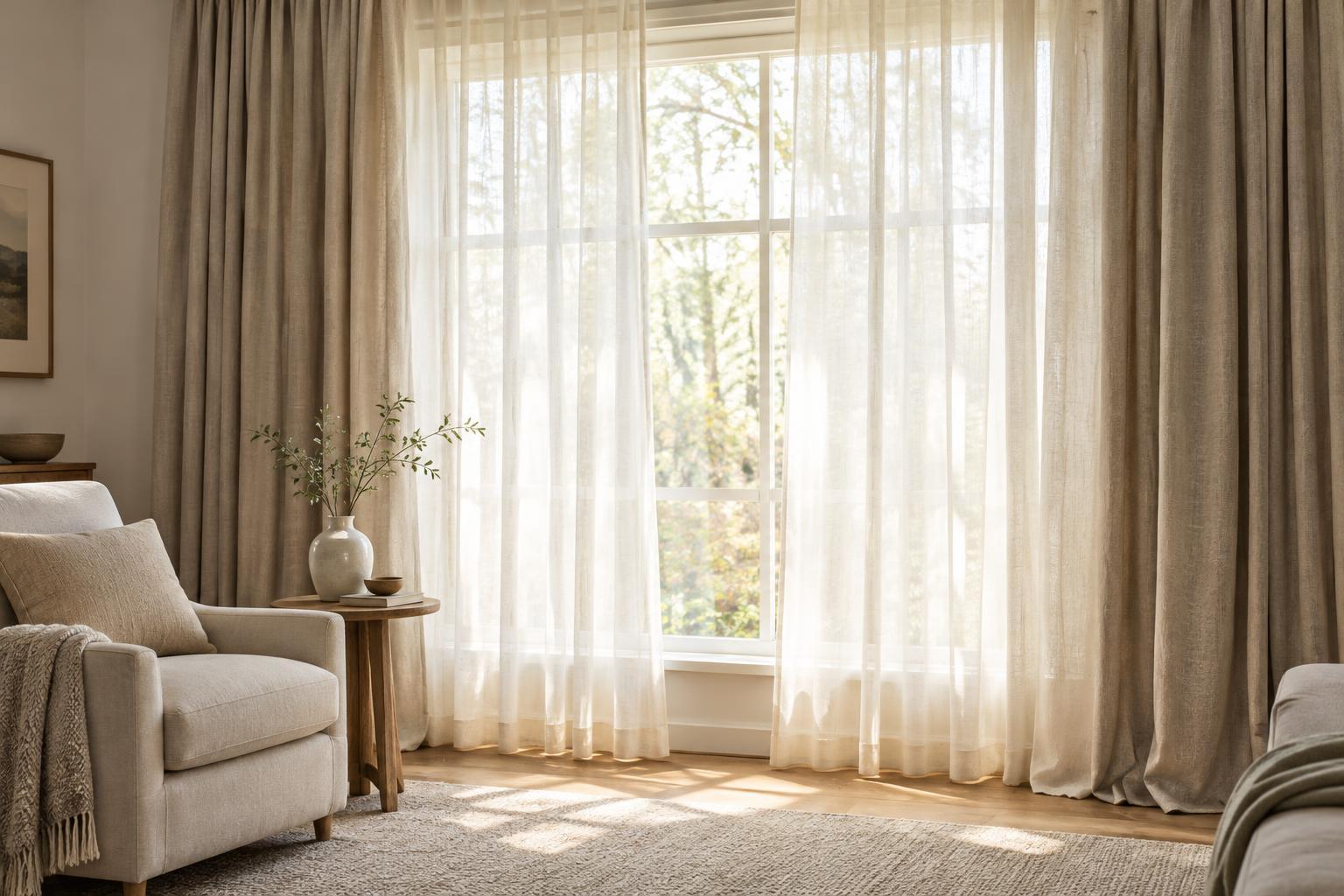
Sheer curtains soften the view and diffuse daylight without making a room feel closed off. They can offer some screening during the day, but they are not a dependable choice for privacy at night, especially when the room is lit. If you like their airy appearance, pair them with a second layer that you can close after dark.
Light-filtering curtains offer a middle ground: they reduce glare and soften the view while allowing some daylight through. Heavier fabrics or lined curtains provide more coverage and can make a room feel quieter and more enclosed, though the effect depends on the fabric and how fully the panels cover the window. If sleep is the priority, look for curtains described as room-darkening or blackout, and remember that light can still enter around the edges.
Color matters as much as weight. A pale fabric often keeps the room looking bright even when drawn, while a darker or denser one can feel more restful. If possible, hold a fabric sample at the window at different times of day. The same cloth can look quite different in direct sun, shade and lamplight.
Use layers for flexibility
Layering is useful when one fabric cannot meet every need. A sheer panel close to the window can stay drawn for soft daytime light, with a more opaque curtain ready for evenings. A blind or shade behind curtains is another option if you want a simple way to adjust privacy without moving full-length panels each time.
Think about how you will operate each layer. Curtains that are difficult to reach or that catch on furniture may be left in one position, no matter how versatile they look. Keep the arrangement easy to open, close and clean. If you already have a shade that works well, adding curtains for texture may be more useful than replacing the whole setup.
Measure for coverage and softness
Curtains affect the shape of a room as well as its light. Mounting a rod above the window can draw the eye upward; extending it beyond the window frame gives panels somewhere to rest when open, leaving more glass clear. Check the available wall space first, especially near corners, radiators or built-in shelves.
For a relaxed look, choose panels wide enough to retain some folds when closed. Panels pulled completely flat may leave gaps at the sides and look less generous than expected. Measure the window and the proposed rod, then check the total width of the panels you are considering. Decide where the hem should fall before buying: just above the floor is tidy and easy to maintain, while a slight break at the floor feels softer but may collect dust.
Make sure the rod and fixings suit the weight of the curtains and the type of wall. In a rental, check what installation is permitted before making holes. If you use blinds or shades with cords, keep the cords secured and out of children’s reach.
Choose something you can live with
Curtains are a large visual surface, but they do not need to be the most noticeable feature in a room. A color close to the wall can create a calm backdrop; a contrasting tone or gentle pattern can give a plain space more character. Texture is another way to add warmth without introducing a busy design.
Before purchasing, check the care instructions and consider how often the fabric will need cleaning. A washable option may suit a busy room better than a delicate one. Start with the window’s everyday purpose, then choose the simplest combination of fabric, coverage and placement that meets it. The result should make the room easier to enjoy, whether the curtains are open to the morning light or drawn at the end of the day.