Start with your usual day
The best everyday earrings are not necessarily the smallest or plainest pair in the shop. They are the ones you can largely forget about while working, walking, changing clothes and going about your usual routines. Before choosing a style, think about what your earrings will meet during the day: headphones, a scarf, a high collar, long hair or a phone held against your ear. A pair that feels comfortable in front of a mirror may be less pleasant once those details come into play.
It helps to have more than one version of an everyday pair. A low-profile stud might suit a day with headphones, while a short drop could be comfortable when your ears have more space. Choosing for the day ahead is often more useful than expecting one pair to work for every outfit and activity.
Pay attention to weight and movement
Weight is one of the easiest things to overlook. An earring can feel fine when you first put it on but start to tug after several hours. If you like a bold shape, look for designs made with open forms or lightweight materials rather than assuming a larger earring must be heavy. Hold a prospective pair in your hand, then try it on if you can. Notice whether the lobe pulls downward or the earring swings into your neck when you turn your head.
Length matters too. Long earrings may catch on a collar or become noticeable when you lean over a desk. Short drops and small hoops can offer movement without getting in the way, though their comfort depends on the particular design. If a favorite pair is tiring by midday, keep it for shorter outings rather than treating discomfort as something you need to get used to.
Choose materials with your ears in mind
If certain earrings leave your ears feeling itchy or uncomfortable, the metal that touches your skin may be worth examining. Material descriptions can help you compare pairs, but broad labels do not tell the whole story. A decorative front may be made from one material while the post, hook or plating is different. If you know a material works well for you, look for clear information about the parts that actually touch your ear.
Some people prefer materials such as titanium, niobium or particular grades of solid gold, but individual responses vary. Plated pieces can also change with wear, potentially exposing the material beneath. A label such as “nickel-free” is useful only to the extent that it accurately describes the finished earring. When product information is vague, asking about the post and backing can be more helpful than relying on the appearance of the earring alone.
Check the post, backing and closure
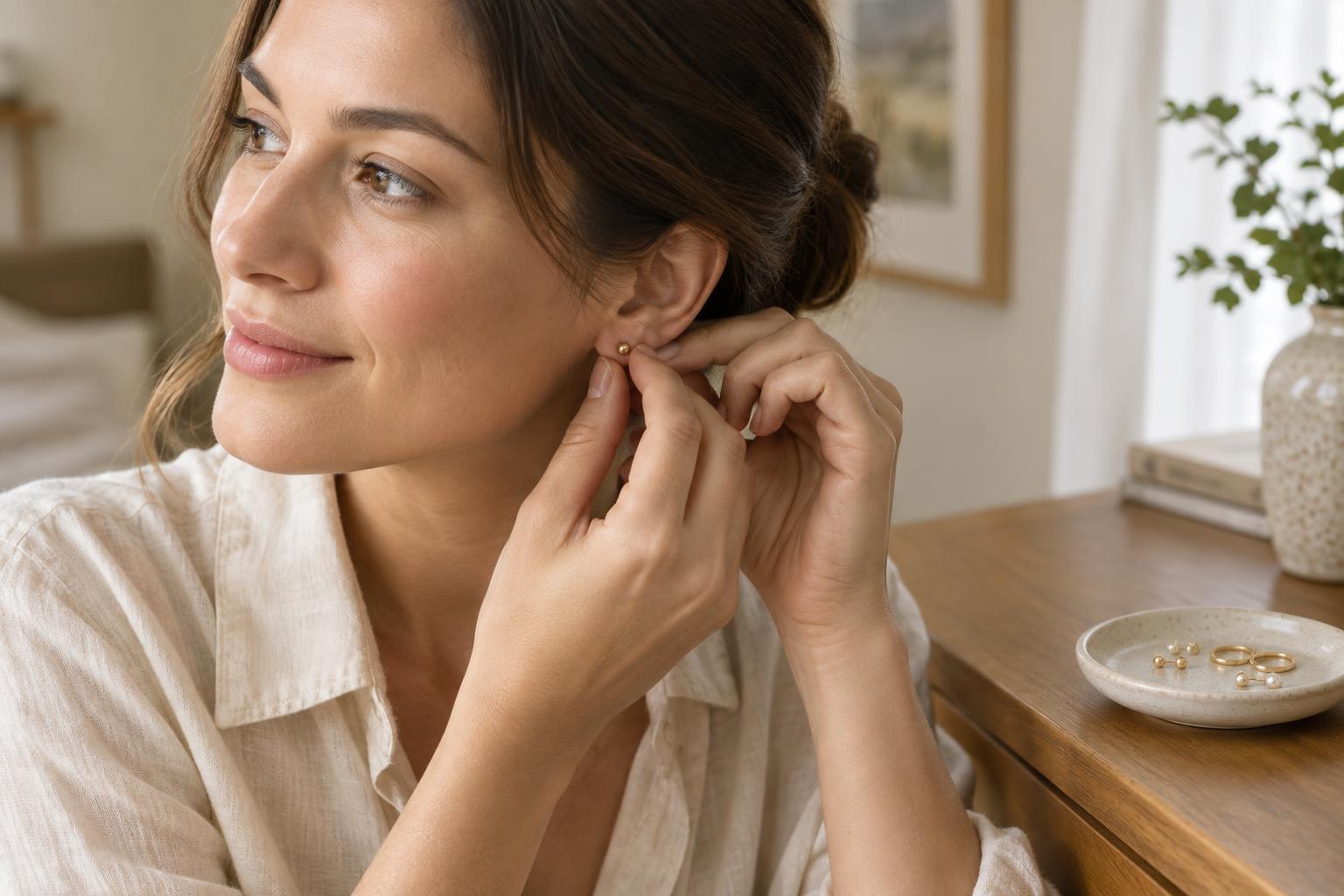
Comfort is also about how an earring sits. A post that presses against the side of your head can bother you during a phone call or when you rest against a chair. A backing that is pushed on too tightly can pinch, while one that is too loose may leave you checking the earring throughout the day. The aim is a secure fit with a little room for the lobe, not a clamp.
If you wear studs, compare the size and shape of their backs. A wider backing may help support some designs, while a smooth, low-profile back may suit someone who dislikes a point behind the ear. With hoops and drops, check that the closure opens and fastens without a struggle and that no rough edge rubs against your skin. These small details often make a bigger difference than the style name on the label.
Try a new pair gradually
A quiet day at home is a good time to test earrings before wearing them for a full day out. Put them on for a short stretch, then notice how they feel after moving around, using your phone and taking off a sweater. If you become aware of pressure, tugging or rubbing, take them off and check the fit. A pair that only works when you keep adjusting it is probably not your easiest everyday option.
Keep earrings and backs clean according to their materials, store pairs so posts do not get bent, and avoid forcing a closure that no longer fits properly. Remove earrings when an activity is likely to snag them. Over time, you may find that a few dependable pairs cover most days: perhaps simple studs, a lightweight hoop and a short drop. That small rotation gives you room to change your look without making comfort an afterthought.