Start with what your outfit reveals
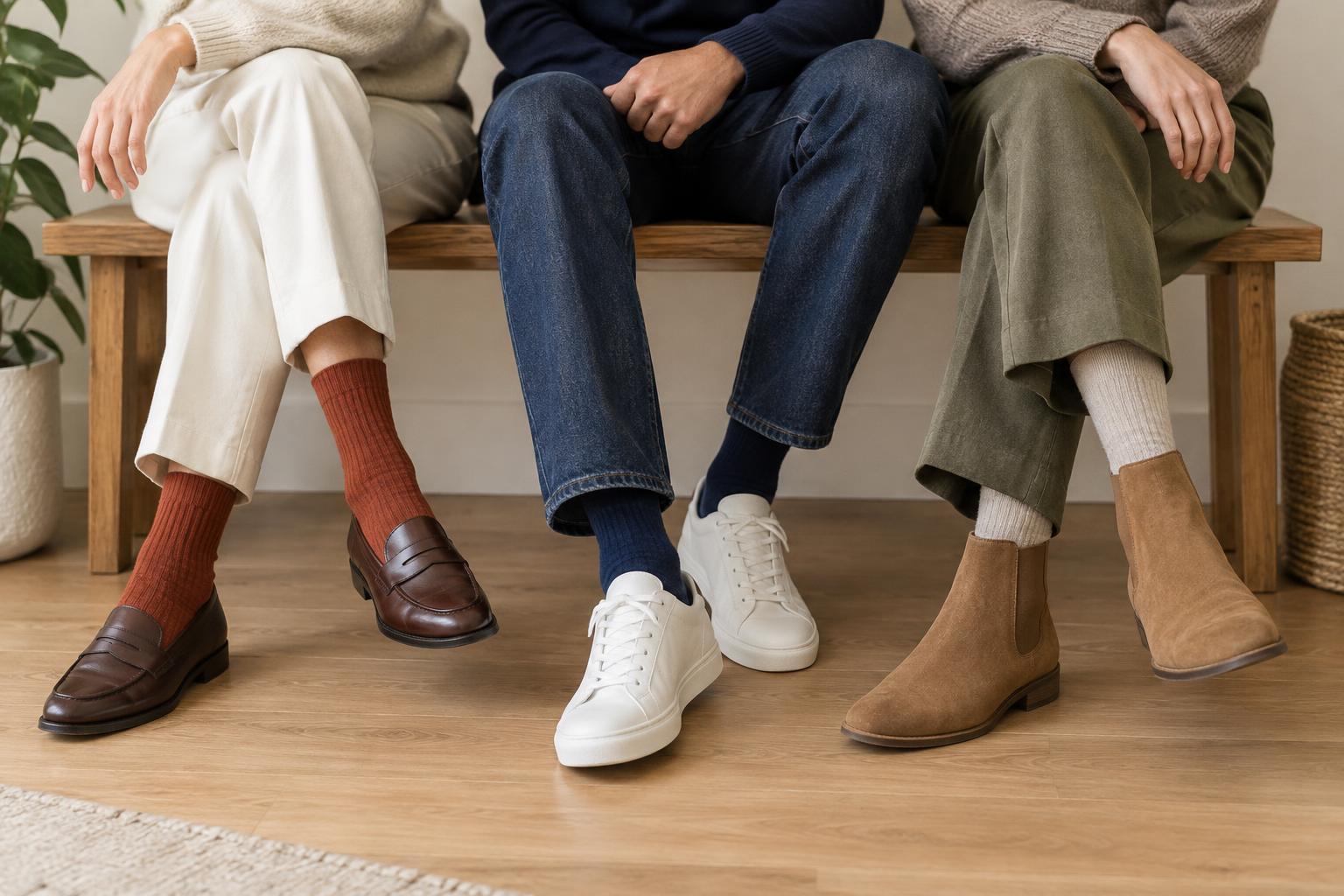
Before choosing a color or pattern, put on your shoes and trousers and notice how much sock shows when you stand, walk and sit. A full-length trouser may cover most of the sock while standing but reveal several inches when you sit. A cropped hem keeps the sock in view throughout the day. Neither calls for a particular look; the difference simply tells you whether the sock will be a quiet detail or a visible part of the outfit.
Trouser shape matters too. A wide leg may fall over the top of a shoe, making a subtle sock the easiest choice. A tapered or straight leg often leaves a clearer gap, especially with low-profile shoes. If you want a continuous line, choose a sock close to the color of your trousers. If you want a deliberate break, use that gap for a contrasting color or texture.
Match the sock’s height to the shoe
With trainers and other low shoes, first decide whether you want the sock to show. A no-show sock can create a bare-ankle look, though it needs to fit securely to stay in place. An ankle sock gives a small visible edge. A crew sock is more noticeable and can balance roomier trousers or add an easy accent to a simple outfit.
Loafers, lace-up shoes and ankle boots offer different opportunities. A fine crew sock can sit neatly above a loafer without bunching at the opening. With lace-ups, choose a height that covers the skin your trousers expose when you sit. For boots, a sock tall enough to rise above the top edge can help keep the shaft from rubbing against your leg. Check the result while moving: a pairing that looks tidy in a mirror may feel less comfortable after a few steps.
Consider weight, texture and fit together
Shoe space is a useful guide to sock thickness. A slim loafer or close-fitting trainer may feel crowded with a heavy ribbed sock, while a roomy boot might feel better with a little more cushioning. If a shoe already fits snugly, start with a finer sock rather than assuming a thicker one will be more comfortable. Pay attention to the toe seam and whether the sock slips down, twists or gathers under your foot.
Texture also changes how a pairing looks. Smooth socks give tailored trousers and polished shoes a cleaner finish. Ribbed cotton can feel relaxed with denim, chinos or casual lace-ups. A softly textured wool blend may suit boots and heavier trousers when you want warmth. These are starting points, not rules: the best combination is one that fits inside your shoe and feels comfortable through an ordinary day.
Use color to connect or brighten the outfit
When you are unsure, try socks in a color similar to your trousers or shoes. Dark socks with dark trousers create an uninterrupted line, while socks that echo the shoes can make the lower half of an outfit feel connected. The colors do not need to match exactly; a nearby shade is often enough. For a softer result, try a muted color already present elsewhere in your clothes.
A visible sock can also be the playful part of an otherwise simple outfit. Try one accent color between neutral trousers and shoes, or a small pattern that picks up a color from your top. If the trousers are cropped, remember that more of the sock will show than it would with a longer hem. Look at the whole outfit rather than choosing the most interesting pair in the drawer: a sock can be appealing on its own without being the one you want for that day.
Build a small selection you will actually wear
You do not need a different sock for every pair of shoes. A few dependable options can cover most outfits: fine socks for close-fitting shoes, everyday crew socks for casual pairs, and warmer socks if you regularly wear boots. Within those groups, choose colors that work with the trousers you reach for most often. If you prefer visible socks, add one or two colors or patterns you enjoy wearing rather than buying a large assortment at once.
When trying a new pairing, give it a brief test at home. Walk around, sit down and check whether the sock stays up, the shoe still feels roomy enough and the exposed section looks the way you intended. That small check is more useful than a strict matching rule. Socks work best when they support the outfit without demanding attention from you all day.