Start with the tasks your hands need to do
Before comparing materials, picture an ordinary cold-weather day. Do you mostly walk with your hands in your pockets, or do you need to unlock a door, carry shopping, hold a dog lead and find your keys? A glove that feels wonderfully warm on a quiet walk may feel awkward when you need to use your fingers. The right choice depends as much on those small tasks as it does on the temperature.
For occasional outdoor errands, a flexible everyday glove may be enough. Longer periods outside, wind or wet weather can call for more protection. If your days vary, it can be more useful to keep two pairs for different conditions than to expect one pair to do everything. A light pair can handle quick trips, while a more insulated pair is ready for colder outings.
Find a fit that leaves room to move
Try gloves on with your fingers relaxed, then spread your hand, make a gentle fist and pick up a small object. Your fingertips should reach close to the ends without being pressed against them. Excess material can bunch up and make keys or zips harder to handle, but a glove that pulls tightly across your knuckles can feel restrictive and leave little room for insulation to work.
Notice the thumb as well as the fingers. If the thumb seam pulls when you grip something, routine movements may become tiring. Check the cuff, too: it should stay in place when you move your wrist without digging in. If you plan to wear a liner underneath, try both layers together rather than buying a larger size by guesswork.
Balance warmth with flexibility
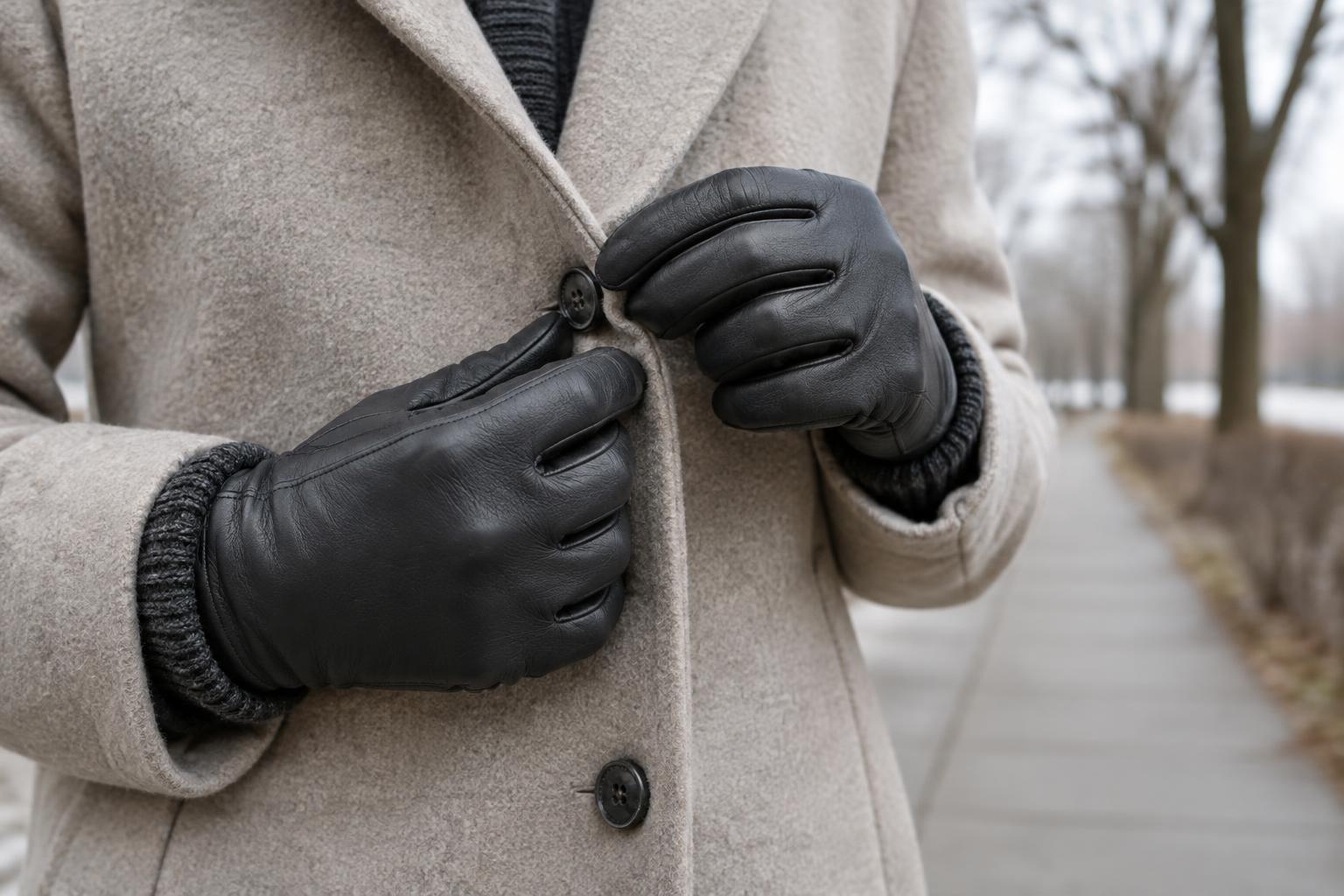
Warm gloves generally rely on some combination of insulation, a lining and protection from moving air. More bulk can add warmth, but it may also make fine movements difficult. For everyday use, look for a glove you can bend easily at the fingers. A soft lining can feel comfortable against the skin, while a well-shaped outer layer may let you grip objects without fighting the fabric.
Materials have different strengths. Knit gloves often stretch comfortably but may let wind pass through. Leather can offer a supple grip once it fits well, though its warmth and weather performance depend on the lining and construction. Synthetic shells can be light and flexible, with some designed to block wind or resist moisture. Rather than choosing by material name alone, think about how the whole glove feels and performs for your usual activities.
Match weather protection to real conditions
A dry, chilly morning and a damp, windy afternoon place different demands on gloves. If you often face wind, a closely woven or wind-resistant outer layer may feel more comfortable than an open knit. For rain or wet snow, look for a glove intended to keep moisture out; water-resistant and waterproof are not interchangeable descriptions. If a glove gets soaked, even generous insulation may feel less comfortable.
Cuffs also make a difference. A snug knit cuff can help keep drafts out beneath a coat sleeve, while a longer cuff may overlap more securely with outerwear. Try the gloves with the jacket you usually wear and move your arms around. A gap at the wrist is easy to miss in a fitting room but noticeable when you are outside.
Check the details before deciding
Small features are worthwhile only if they work for you. Textured palms can make a steering wheel, bag handle or phone easier to hold. Touchscreen-compatible fingertips are convenient in principle, but their responsiveness can vary by glove and device, so test them if you can. If you regularly need precise finger work, a thin glove may be more practical for short outings than a thick pair with extra features.
Finally, consider how you will care for the gloves. Check the care label, particularly for leather, wool or gloves with a protective finish, and make sure drying them properly fits your routine. Choose a colour and style you will actually reach for, then give yourself a moment to test the fit. Gloves earn their place by making cold days easier, not by promising the most warmth on a label.