Start with what catches your eye
You do not need a special trip or a box of paint samples to find an appealing color combination. Look at the things you pass each day: a patterned tea towel, the books on a shelf, fruit in a bowl, or the view from your window. When a scene makes you pause, take a moment to notice which colors are working together. An ordinary object can be a better starting point than a blank page because it gives you a combination to respond to.
Choose one small area rather than trying to capture an entire room or landscape. A blue mug beside a pale wooden table might suggest only three colors, and that is enough. You can also look for combinations in places that do not initially seem colorful. A doorway may bring together warm white, faded green, and the deep brown of its handle. Collect what appeals to you, even if you cannot yet imagine where you would use it.
Record the colors in a way you can revisit
Keep the collecting process easy enough to repeat. Take a photograph, make a quick sketch with colored pencils, or write a short note such as “dusty pink wall, rust-colored pot, dark green leaves.” If you save photos on your phone, put the ones you want to keep in a dedicated album. A notebook works just as well if you prefer something you can flip through without a screen.
Add a few words about what you liked, not just what you saw. Was it the contrast between light and dark, the way several muted shades sat together, or one bright detail against a quiet background? This note will help when you return to the palette later. Photographs can shift colors depending on the light and the screen, so treat them as reminders of an impression rather than exact records.
Turn a scene into a usable palette
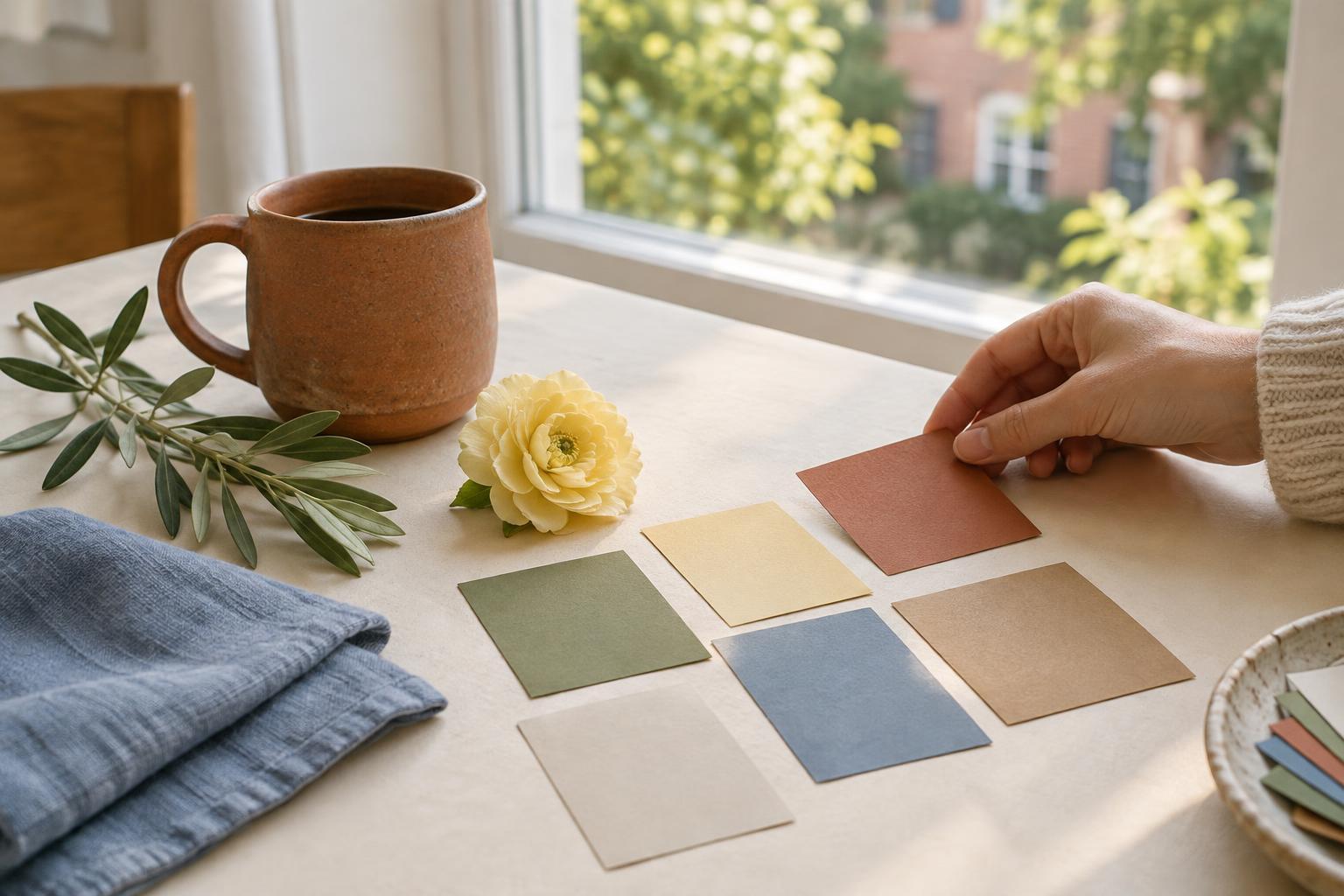
Begin by picking three to five colors from your reference. Choose a main color that takes up the most visual space, one or two supporting colors, and, if you like, a smaller accent. Imagine a bowl of oranges on a cream cloth beside a green glass bottle: cream could be the main color, green the support, and orange the accent. You are free to change those proportions; the object is to make the combination useful to you.
Pay attention to shades that sit between obvious color names. A wall might be warm gray rather than plain gray, while a leaf might lean yellow rather than blue. You do not need precise names or codes to begin. Lay out fabric scraps, colored paper, or objects you already own to see the colors beside one another. If the result feels too busy, remove a shade or use less of the strongest one.
Try the palette in everyday choices
A collected palette can guide a small change without becoming a rule. For an outfit, start with clothing you already wear and add one accessory in a color from your notes. For a room, try a cushion cover, flowers, or a few objects grouped on a shelf before considering anything larger. A palette might also help you choose colors for a greeting card, a table setting, or a simple drawing.
Think about materials as well as color. The same green can feel different on glossy ceramic and soft cotton; a warm wood surface may make a cool blue stand out. If your first attempt does not look like the scene that inspired you, that does not mean you chose badly. Adjust the balance, change a texture, or keep only two colors. The palette is a starting point, not a set of instructions you must follow.
Build a collection that stays useful
Set aside a few minutes now and then to look through what you have gathered. You may notice that you repeatedly save gentle neutrals with one vivid accent, or that you prefer several close shades of the same color. These patterns can help you make choices that feel familiar to you. They can also show you when you are ready to try something different.
Keep favorites where you can find them, and let the rest go. A small collection of palettes you enjoy using is more helpful than an album you never open. As your surroundings change, keep adding new combinations: a different season, a rearranged shelf, or a borrowed book cover may give you another idea. The habit is simply to notice, save, and experiment with what is already around you.