Start with the garment you have
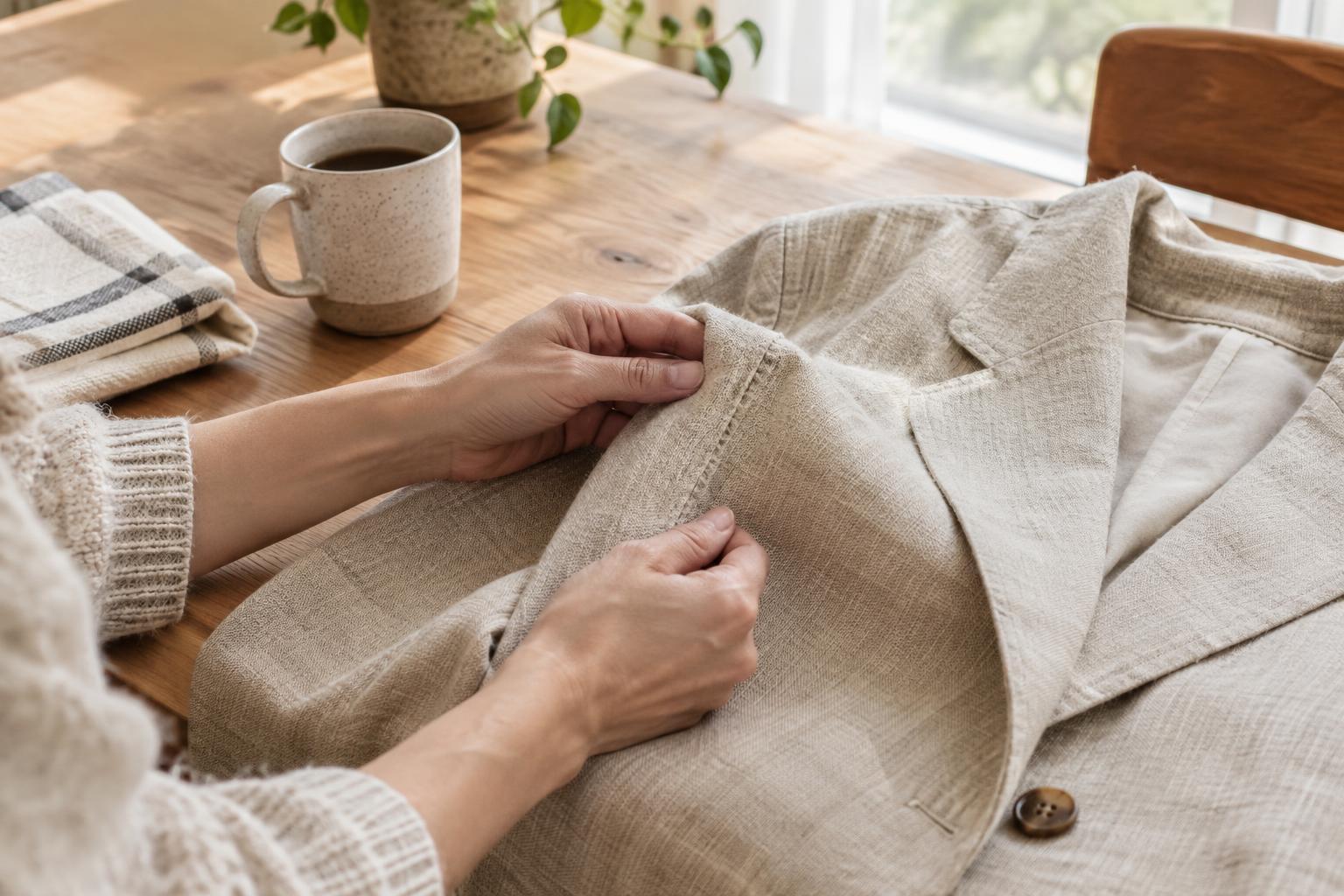
When you bring out clothes for a new season, it is easy to sort them into two piles: ready to wear and ready to discard. A closer look often reveals a third option. A coat with a loose button, trousers with a fallen hem or a sweater with a small snag may need only a modest repair. Before deciding, set the garment in good light and check its seams, closures, fabric, lining and areas that rub during wear.
Then try it on. Notice whether it still fits, feels comfortable and works with the clothes you reach for now. A beautifully repaired item is unlikely to earn its place if you avoid wearing it because the cut feels restrictive or the fabric irritates your skin. The goal is not to save every piece. It is to make a choice that supports the way you actually dress.
Look at the type and extent of damage
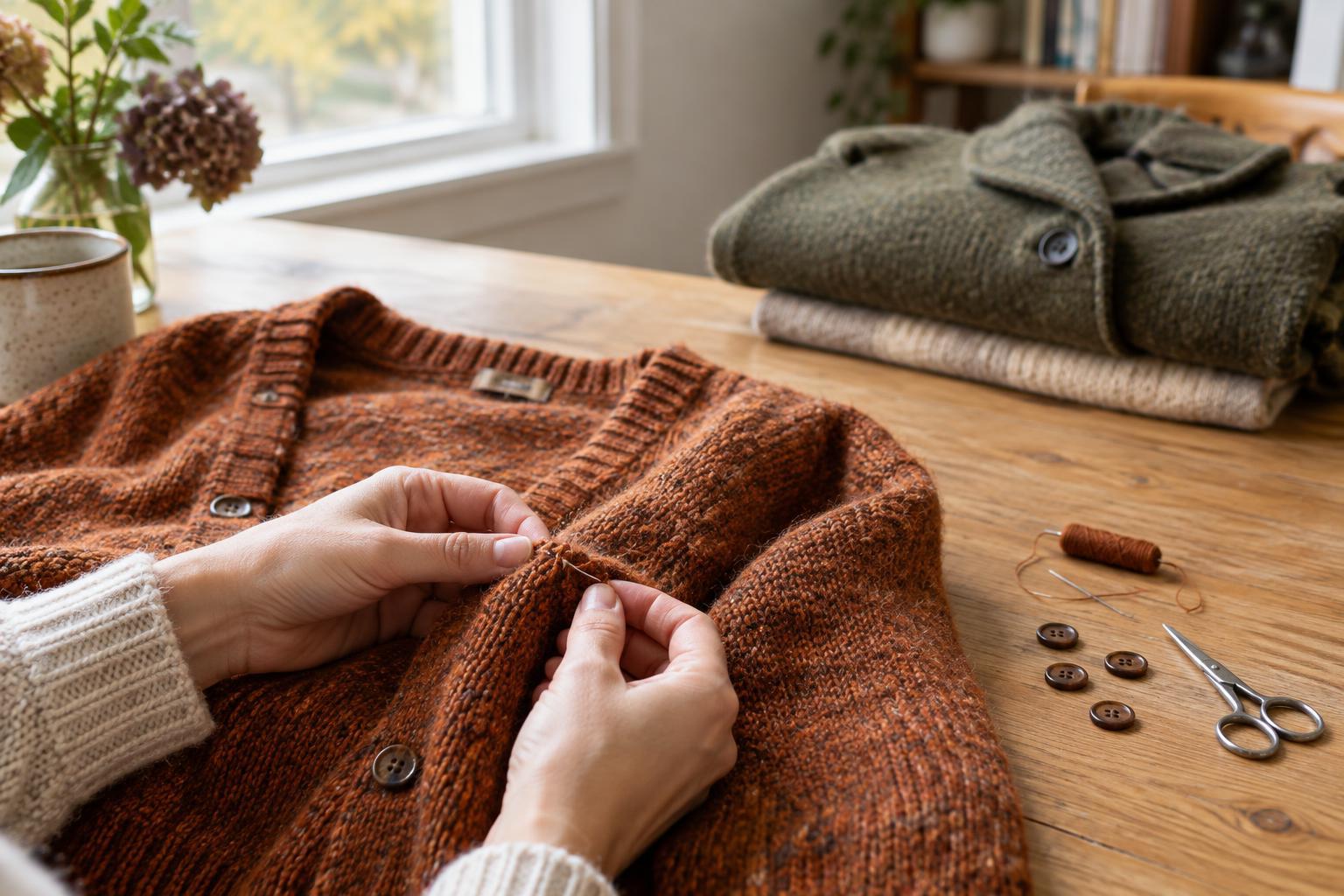
Small, contained problems are often good candidates for repair. A missing button can be replaced, an open seam can often be stitched, and a hem can be reset. Some knitwear snags can be drawn back to the inside rather than cut off. If the surrounding fabric is sound, fixing one weak point may give the garment more useful wear.
Widespread wear calls for a different judgment. Fabric that has become thin across the elbows, seat or inner thighs may develop another hole soon after the first is patched. A rain jacket whose protective finish no longer performs as you need it to, or boots with several failing components, may require more than a simple fix. If a garment is deeply stained or holds an odor that ordinary care has not resolved, consider whether you would feel comfortable wearing it after a repair. Check the care label before trying a new cleaning method, particularly on delicate fabrics.
Weigh effort, cost and comfort
A repair makes sense when its likely result matches the effort involved. Ask what the fix requires: a few minutes at home, a tool you already own or help from someone with the right skills. If you are considering a paid repair, describe the damage and ask what the finished result is likely to look and feel like. A strong repair can still be visible, which may be perfectly welcome on a casual layer but less appealing to you on another piece.
Think about comfort as well as price. A patch inside a sleeve might rub your arm; a shortened hem might change how a skirt moves; a repaired shoe might still lack the support you want. You do not need to compare the repair only with the price you originally paid. Compare it with the cost and effort of finding a replacement you would genuinely enjoy wearing. If neither route feels worthwhile, it is reasonable to pause rather than make a rushed purchase.
Consider the season ahead
Seasonal clothes have particular jobs to do. Before repairing a winter coat, ask whether it can still keep you comfortable in the conditions where you wear it. Before replacing a summer shirt, consider whether a small alteration would make it breathable and easy to reach for again. A decorative detail may be flexible; a closure that must stay secure or a sole that needs reliable grip deserves closer attention.
Timing matters, too. If you need an item next week, a repair you cannot arrange until much later may not solve the immediate problem. On the other hand, mending a sweater before storing it gives you time to find the right materials without the pressure of a cold morning. Put items that need attention in a visible, separate place, along with a brief note about the problem. That makes it easier to act before the next season arrives.
Make a decision you can follow through on
A useful final test is to finish this sentence: “If this were fixed, I would wear it for…” If you can picture specific outfits and occasions, a repair may be worth pursuing. If the answer depends on changing your taste, routine or tolerance for an uncomfortable fit, replacement may serve you better. You can also leave an uncertain item aside for a short, defined period, then see whether you miss it.
When replacement is the better choice, use the old garment as a guide. Note which features worked, where it wore out and what you would change. When repair wins, decide on the next action before putting the item away: thread the needle, find a suitable button or arrange help. Either choice is thoughtful when it leaves you with seasonal clothes that are comfortable, dependable and likely to be worn.