Start with the warmest part of the day
When you get dressed in a cold bedroom or step outside into brisk morning air, it is tempting to choose an outfit that feels perfect for that moment. If the afternoon will be much warmer, though, those same clothes may feel uncomfortable by lunch. A useful approach is to dress for the warmest part of your plans first, then add what you need for the morning.
Think about where you will spend the warm hours. Will you be walking in the sun, sitting indoors, or moving between the two? Choose a base outfit you would be happy to wear in that setting on its own. A breathable shirt with trousers, a dress with comfortable shoes, or a light top and skirt can all work. The aim is not to predict every change in temperature, but to make sure removing a layer leaves you feeling properly dressed.
Build layers you can actually take off
The most useful layers are separate pieces that do not depend on one another to make the outfit work. A button-front shirt can sit over a simple top; a cardigan can go over a shirt or dress; a light jacket can finish either combination. When each piece looks and feels good without the one above it, adjusting your outfit takes little thought.
Pay attention to ease of movement. Several close-fitting layers can feel restrictive even when each piece is comfortable alone. If you expect to wear a cardigan over a shirt, try them together before leaving. Sleeves should move without bunching, and the outer layer should close comfortably if you need it to. A slightly roomier top layer often makes the morning-to-afternoon transition simpler than a tightly fitted one.
Choose layers according to how long you will need them. If the cold part of the day is a short walk to transport, a removable scarf and light jacket may be enough. If you will be outdoors for hours, you may want a more substantial outer layer, even if it means carrying it later. Comfort in the morning matters too.
Let fabric and coverage do some of the work
Small choices can make an outfit more adaptable. A long-sleeved shirt with cuffs you can roll offers more range than a sleeve that stays in one place. An open neckline can feel less confining as the day warms, while a scarf adds coverage early on and comes off quickly. These adjustments let you change how an outfit feels without changing the whole outfit.
Fabric matters, but no single material is right for every person or day. Consider how a piece feels against your skin, whether it traps warmth when layered, and whether you are comfortable wearing it after a long walk. Lightweight pieces are not always cool, and heavier-looking pieces are not always too warm. Your own experience with the clothes you already own is a better guide than a label alone.
Footwear deserves the same attention. Shoes that feel right on a cold doorstep still need to be comfortable during the warmest, busiest part of your day. Socks can add morning comfort, but choose a thickness that will still feel good later. If you will be walking a lot, prioritize a familiar, comfortable pair over one chosen only to match the forecast.
Make a plan for the pieces you remove
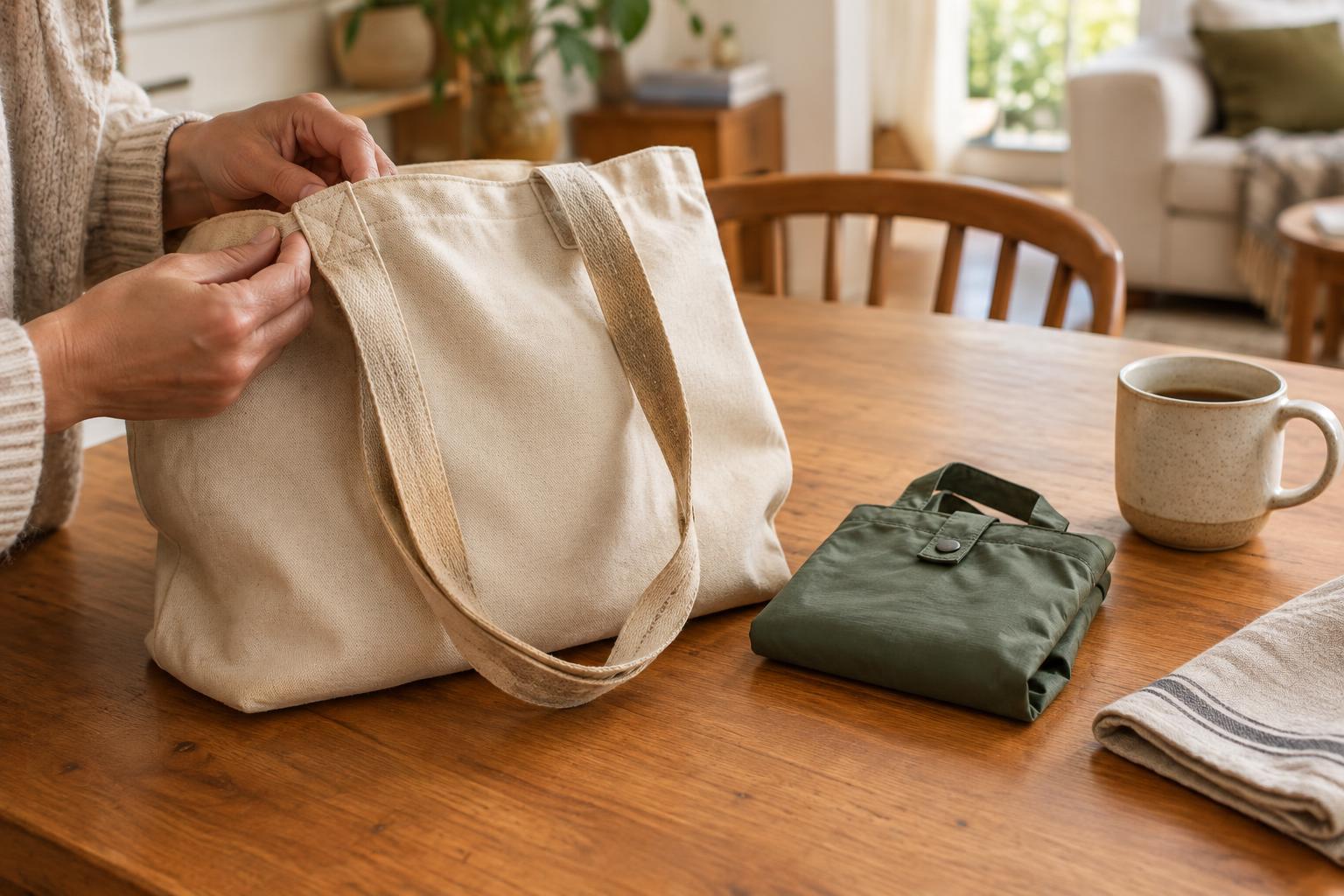
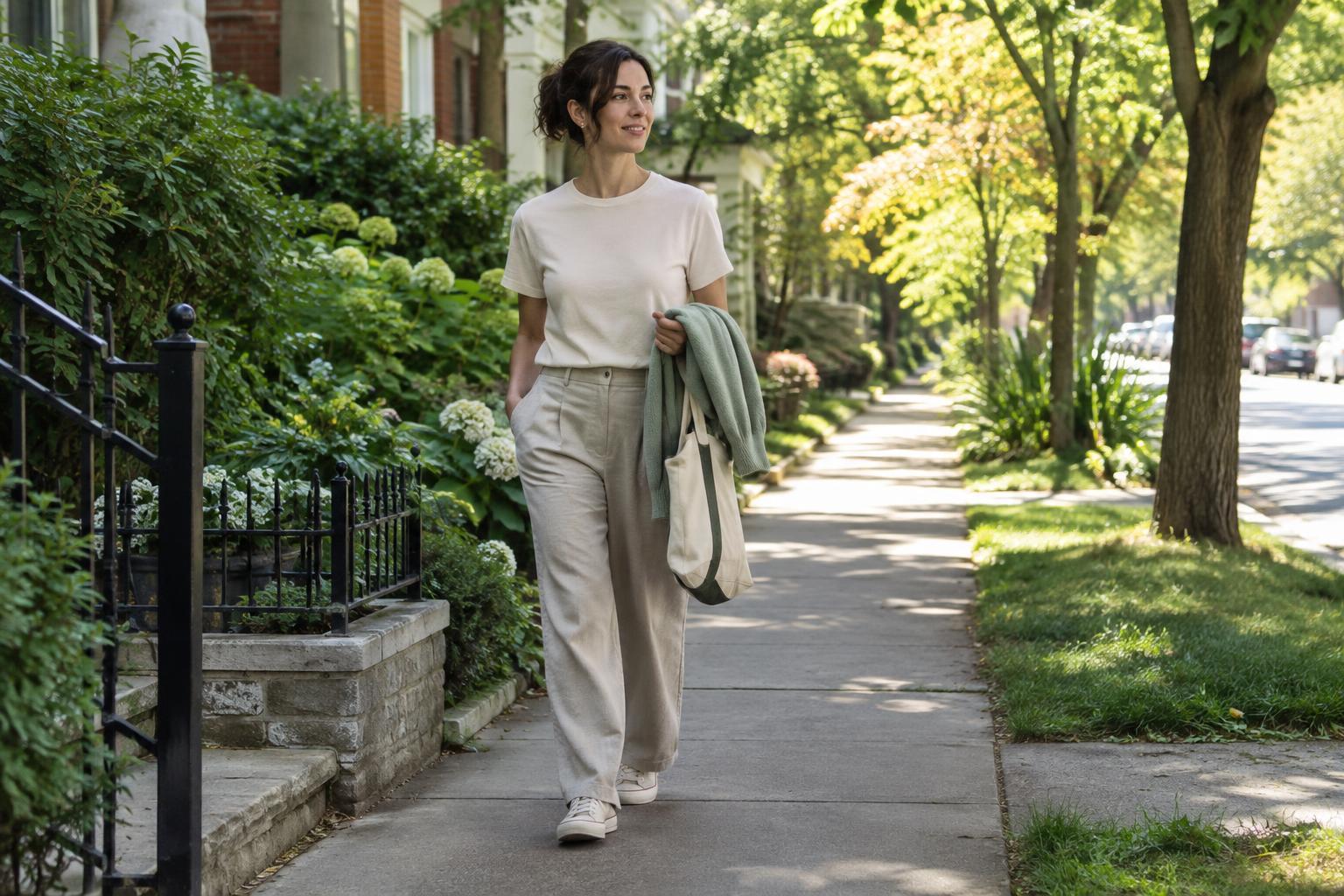
An outfit is only adaptable if you can carry the extra pieces without frustration. Before leaving, ask where your jacket, cardigan or scarf will go when you take it off. A bag with enough room for one folded layer can be more useful than a smaller bag that forces you to hold everything. If you prefer to travel light, choose a top layer you can comfortably carry over an arm or tie around your waist.
Keep the number of removable pieces realistic. A scarf, cardigan and jacket may feel wonderfully cozy at the start, but they become three things to manage by midafternoon. If your plans involve errands, public transport or a long walk, one well-chosen layer may be easier than several small ones. Checking your whole outfit before you leave, including your bag, helps you spot that inconvenience early.
Adjust the formula to your day
For a casual day out, you might start with a light top and trousers, then add a loose shirt or cardigan and a jacket. On a day when you want a more polished look, try a dress or simple separates under an unstructured jacket that still looks intentional when carried. These are starting points, not rules: the best combination depends on your plans and what feels like you.
Indoor temperatures can complicate the picture. A warm afternoon outside does not guarantee a warm workspace, café or shop. If you tend to feel chilly indoors, keep a light layer available rather than assuming you will remove everything by noon. Conversely, if you will be moving steadily for much of the day, you may want fewer layers than someone who will mostly be sitting.
Over time, notice which combinations you reach for again. A dependable base outfit, one comfortable layer and a practical way to carry it can take much of the guesswork out of changeable days. You do not need a separate wardrobe for every temperature; you need a few pieces that work well together as the day changes.