Start with the claim, not the color of the label
Soft green packaging, leaf symbols and words such as “conscious” or “planet-friendly” can make a product feel like a better choice. But those cues do not explain what changed or how much of the product the claim covers. Treat them as an invitation to ask questions rather than as a reason to buy.
First, identify the exact claim. “Made with recycled materials” could describe the whole item or a small component. “Less packaging” calls for a comparison: less than what? A useful claim names the feature, its scope and a basis for comparison. If the wording stays broad even after you check the product details, you can set it aside rather than trying to guess what the brand means.
Look for details you can understand
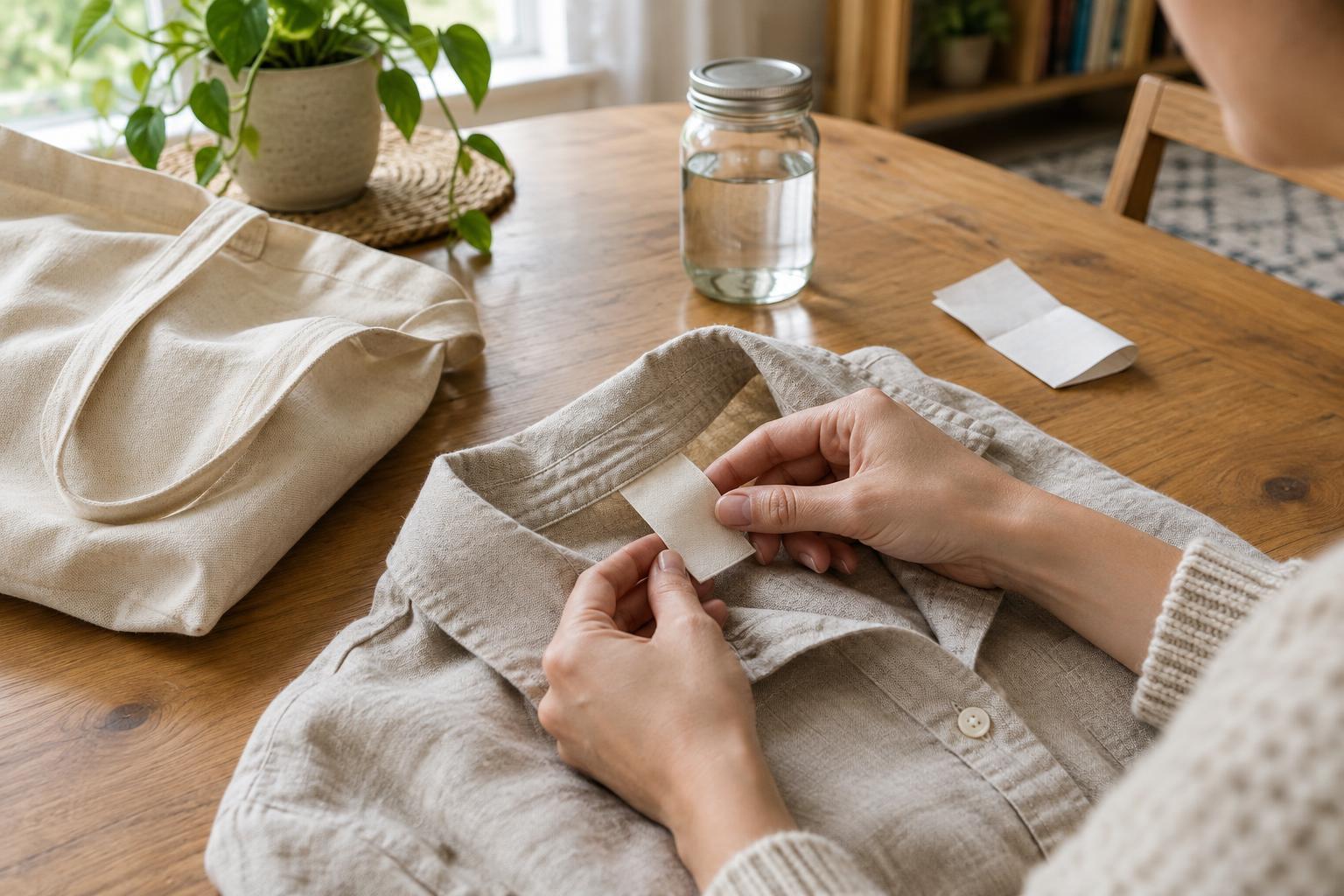
Specific information is more helpful than an impressive-sounding phrase. For clothing, look for a material breakdown and care instructions. For a home item, check whether a claim applies to the item itself, its packaging or both. If a product is described as repairable, see whether replacement parts or repair guidance are actually offered.
Evidence should be reasonably easy to find and relevant to the promise being made. A company may explain a production change clearly without providing every detail of its operations; that does not automatically make the change meaningless. At the same time, one positive feature does not establish that the entire product has a low impact. Keep the claim at its stated size: a recycled component is a recycled component, not proof that every part of the item is preferable.
Understand what a certification does—and does not—cover
A certification may offer more structure than a self-created badge, but its value depends on its criteria, who checks compliance and which part of the product or process it covers. Some standards focus on a particular material or production practice. Others address a wider set of requirements. A logo alone cannot tell you which questions it answers.
If a certification matters to your decision, look for the standard’s name and a plain-language explanation of its scope. Check whether it applies to the finished product, a component or a facility. You do not need to become an expert in every standard. The goal is to avoid treating a narrow assurance as a blanket endorsement—or assuming that a product without a familiar badge must be a poor choice.
Weigh the product against the way you will use it
Shopping thoughtfully is not only about comparing labels. A well-made item that you will use often and care for may serve you better than a replacement bought mainly for its appealing claims. Before buying, ask whether you need the item, whether something you own can do the job and whether the new option fits your habits. A delicate piece that requires care you cannot realistically give it may not be the most useful purchase for you.
When comparing options, consider practical qualities alongside stated environmental features: durability, comfort, ease of cleaning and the possibility of repair. There is rarely a single answer that applies to every household or budget. Buying fewer things, using what you have and choosing an item you can live with are reasonable approaches even when no product offers perfect information.
Use a simple pause-before-purchase routine
You can make the decision manageable with four questions: What exactly is being claimed? What evidence supports it? What does the claim leave out? Will this item work well for me? If the answers are hard to find, you can ask the seller, compare another option or decide that the claim is not important enough to influence your choice.
Thoughtful shopping does not require investigating every purchase at length. Save the deeper questions for items you expect to keep for years or claims that strongly affect what you are willing to pay. Labels can point you toward useful information, but they are most valuable when you read them as specific statements—not as shortcuts to a perfect decision.