Start by noticing where the air moves
A draft and good airflow are not quite the same thing. A draft is a noticeable stream of air hitting one spot, such as a chair beside a window. Comfortable airflow lets air move through a room without making the places where people sit or sleep feel chilly. Before rearranging anything, spend a few minutes noticing where the room feels still and where you feel a breeze.
Check whether curtains hang over a vent, a large piece of furniture blocks a doorway, or a fan points straight at your usual seat. Small changes may help: pull a sofa slightly away from a vent, keep a doorway clear, or turn a fan away from your body. You do not need to remove everything that makes the room cozy; the aim is to give air a path around it.
Use windows in short, purposeful intervals
Opening a window can make a room feel fresher, but leaving it open beside your desk all afternoon may create the very draft you are trying to avoid. Instead, try airing the room for a short period when outdoor conditions are comfortable. A wider opening for a little while may feel less intrusive than a narrow opening that blows on one seat for hours.
If you can safely open windows on different sides of your home, try opening them together to encourage air to pass through, then close or adjust them when the room feels comfortable. If you have only one window, opening the room door may help air move between spaces. Keep window screens, security and the weather in mind, and leave windows closed when outdoor smoke, strong odors or other conditions make outside air undesirable.
Notice where the breeze lands. Moving a chair away from the direct path between a window and a door may be easier than trying to change the whole room.
Let a fan move air around you, not at you
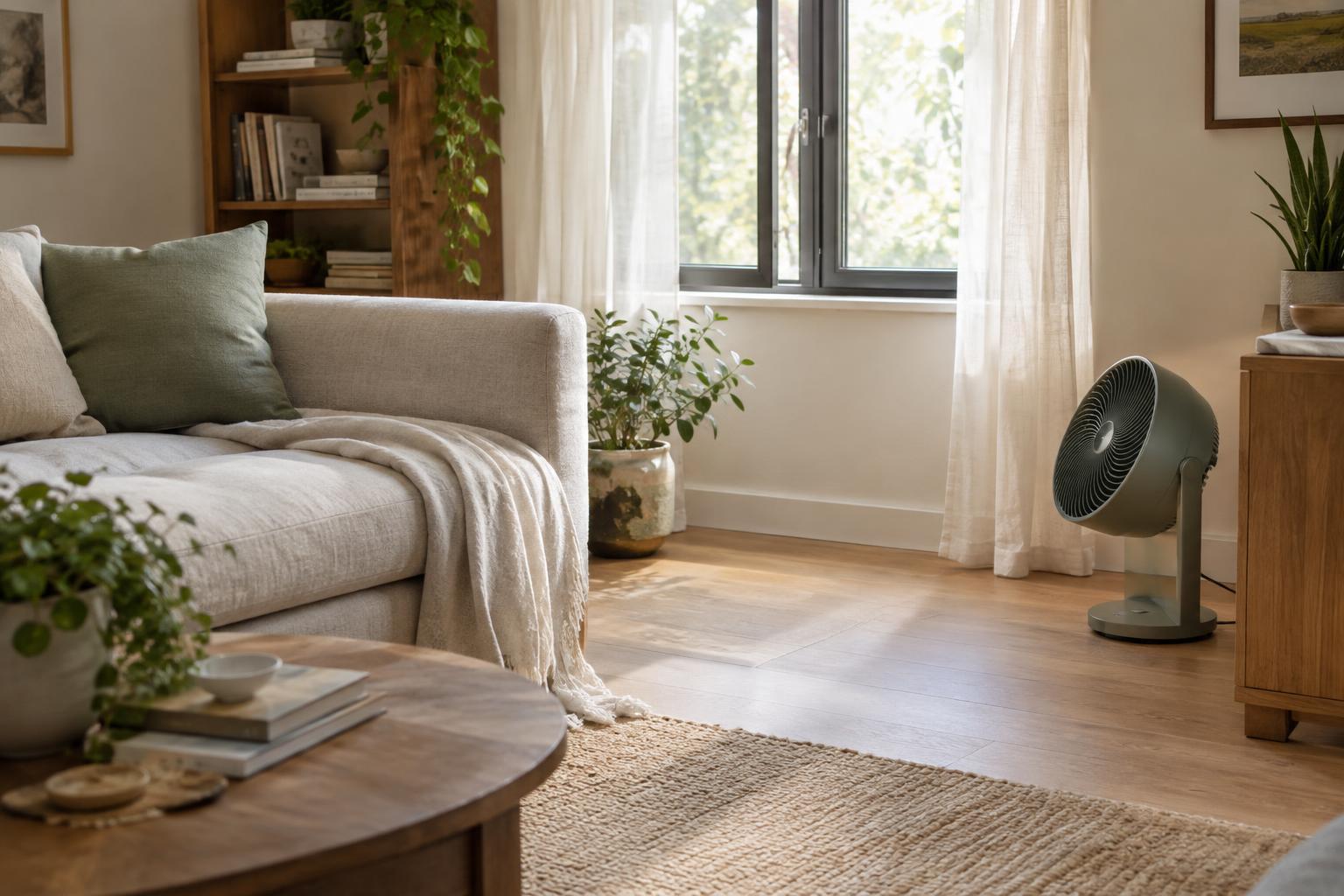
A fan does not have to point at your face to be useful. On a low setting, a fan angled toward a wall or across an open part of the room can keep air moving while softening the sensation of a direct breeze. Try a few positions before deciding that a particular corner of the room is simply stuffy.
For a room with an open window, you can experiment with placing a fan near—but not in the way of—the opening to help move stale-feeling air out. The best arrangement depends on the room layout and outdoor breeze, so use comfort as your guide. Keep cords out of walking paths and follow the fan maker’s placement and cleaning instructions. A dusty grille can also make a fan less pleasant to use, even when its position is right.
Keep everyday air paths open
Air needs a way into and out of a room. Avoid covering heating or cooling vents with rugs, curtains or furniture, and do not seal off designed ventilation openings to stop a draft. If air from a vent lands directly on your seat, rearranging the seat or adjusting an existing directional grille, where appropriate, is usually a more comfortable first step than blocking the vent.
Doors also affect how a room feels. An open door may help air circulate while you are working in a room alone; closing it later can restore privacy or quiet. In a home with a built-in ventilation or heating and cooling system, keeping its accessible filters clean according to the manufacturer’s guidance can help it operate as intended. If a persistent strong draft appears to come from a damaged window or door, address the gap rather than relying on a fan to disguise it.
Pair airflow with simple moisture and comfort habits
Sometimes a room feels stale because of what is happening in it, not just how the air moves. Cooking, showering and drying laundry indoors can add moisture and odors. Use available kitchen or bathroom exhaust fans when appropriate, and let them run long enough to clear the immediate buildup. If a room regularly feels damp or develops a persistent musty smell, look for the source of the moisture rather than trying to cover it with fragrance.
Comfort changes with the season. In cooler weather, brief airing may be preferable to sitting beside an open window. In warmer weather, a low fan setting and a clear path through the room may feel better than a strong stream of air aimed at one person. Make one change at a time, then sit in the places you actually use. The right arrangement is the one that keeps the room feeling pleasant without putting anyone in the path of an unwanted breeze.