Start with the way you come and go
An entryway does not need a separate room to feel inviting. It may be a short stretch of hallway, a corner beside the front door, or the first part of a living room. Before adding furniture, notice what happens there on an ordinary day. Where do you set down your keys? Which shoes tend to stay by the door? Does a bag catch on something as you leave? The answers can guide a setup that suits your routine rather than a picture of an ideal entryway.
Keep the route from the door into the home easy to use. Check that the door opens fully and that you can carry a bag or parcel through without stepping around storage. If the space is especially narrow, focus on the wall and the floor’s edge rather than its center. A welcoming entrance is often one where you can arrive, put things away, and move on comfortably.
Give everyday items a simple landing place
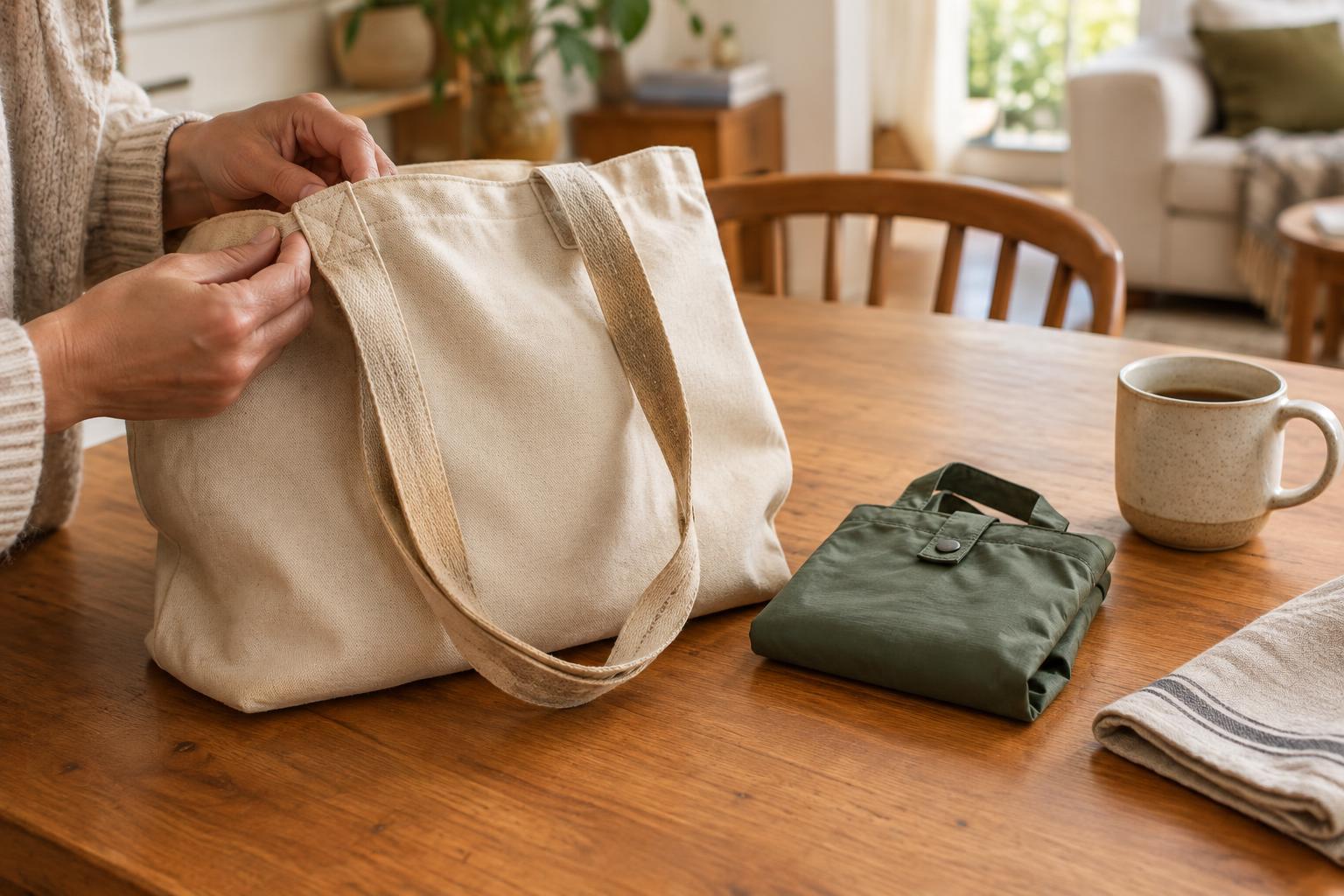
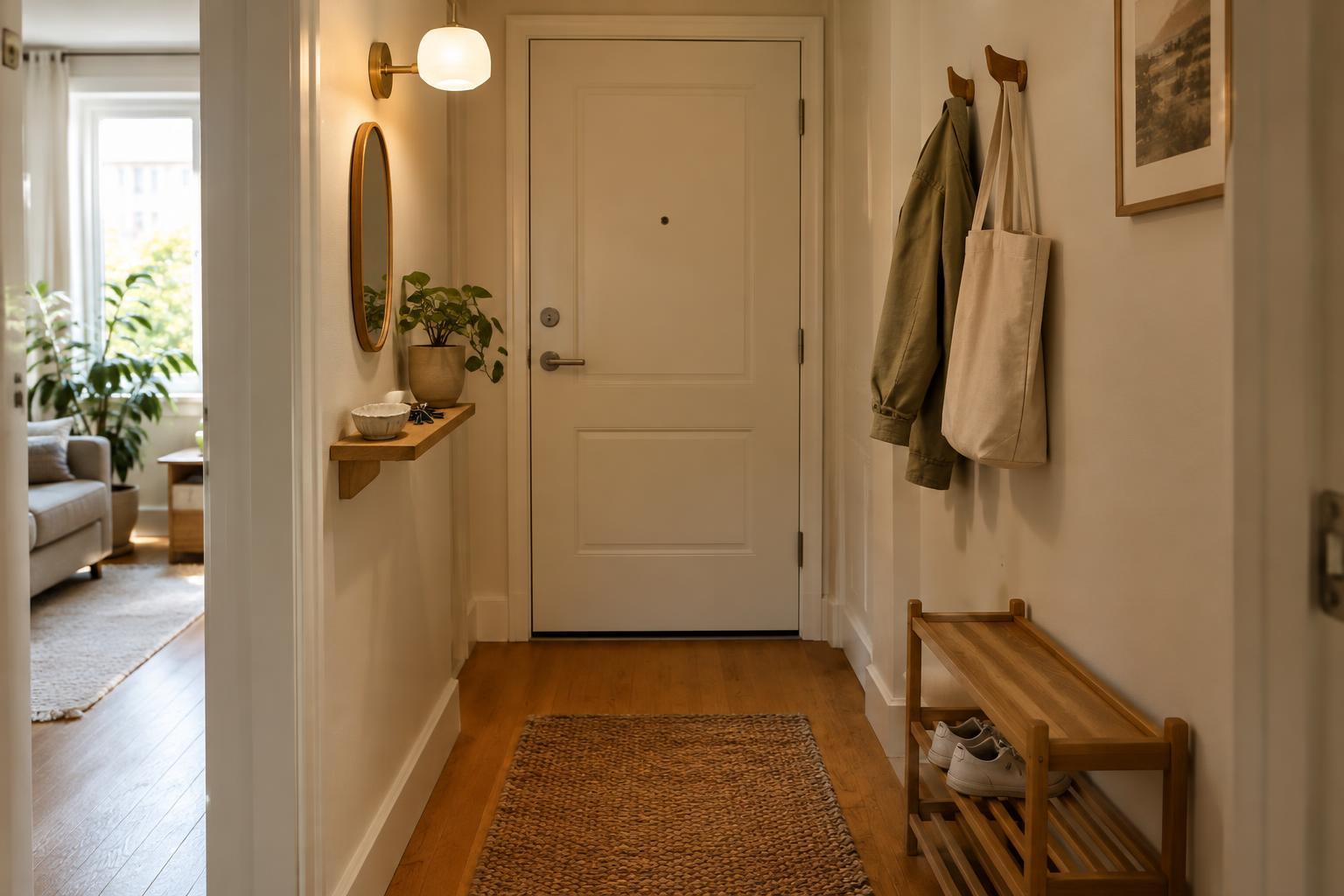
Choose storage for the things that actually collect near your door. A small tray or dish can hold keys, while a hook gives a frequently used bag a predictable home. If there is room for a shallow shelf, it can serve as a landing place without taking up much floor space. Keep its purpose narrow: when every spare item ends up there, even a useful shelf can begin to feel crowded.
Shoes often need the most attention because they spread beyond their storage spot. Consider a low rack, a slim cabinet, or one designated section of a closet nearby. Keeping only the pairs in regular use at the entrance makes it easier to tidy the area. For households with several people, a basket or clearly assigned spot for each person may be easier to maintain than a more elaborate system.
Choose pieces that fit the space
Measure before bringing in a bench, rack, or cabinet, and think about how it will feel with coats and bags in place. A narrow bench may offer a useful place to sit while putting on shoes, but it is not essential if it makes the entrance hard to pass through. Wall hooks can be helpful where floor space is scarce, provided they are installed appropriately and not overloaded. If attaching anything to the wall is not an option, a compact freestanding piece may work better.
Look for items that do more than one job without becoming bulky. A bench with storage underneath can hold shoes; a mirror can offer a last look before leaving and make a cramped corner feel less closed in. The best choice is not necessarily the one with the most features. It is the one you can use easily while still leaving space to open the door and walk through.
Add warmth without adding clutter
Once the practical pieces are in place, a little attention to light and texture can change how the area feels. If the entrance is dim, consider whether a nearby lamp or brighter, comfortable lighting would help you find what you need. A small, durable mat can give the doorway a defined place to land and catch some of what comes in on shoes. Choose one that lies flat and does not interfere with the door.
Personal touches work best when they leave the landing places usable. A small picture, a favorite bowl for keys, or a single plant suited to the available light can make the entrance feel like part of your home. You do not need all three. In a tight space, one detail you enjoy seeing may do more than several decorations that have to be moved each time you set down a bag.
Make upkeep part of the routine
Even a carefully arranged entryway will change as the week goes on. Mail arrives, shoes come out, and the weather calls for different layers. Give the area a quick reset when you have a natural moment, such as after coming home or before taking out the rubbish. Returning keys to their dish and putting away an extra pair of shoes can be enough to restore a sense of calm.
Revisit the setup when it stops working. A hook that is always buried under coats may need a different purpose, while a basket that collects unrelated items may need to move elsewhere. A small entryway stays welcoming not because it is always perfectly tidy, but because the things you use most are easy to find, put away, and take with you.