Start with a comfortable base
When an outfit feels bulky, the problem is not always the number of layers. It may be that the pieces bunch together, restrict movement or trap more heat than you need. A useful approach is to give each layer a job: the first feels comfortable against your skin, the next adds warmth, and the outermost helps protect you from wind or damp weather. You can then adjust one piece rather than rebuilding the whole outfit.
Choose a base layer that sits close enough to slip beneath other clothes without folding or twisting. It need not be tight. A long-sleeved top, fine knit or light thermal can all work, depending on the day and your preferences. Pay attention to how the fabric feels after you have worn it for a while, especially if you tend to get warm indoors. A top that feels soft, stays in place and lets you move freely is a better starting point than one you keep tugging back into position.
Add warmth without adding unnecessary volume
The middle layer is where you can make the biggest difference to warmth. Instead of automatically reaching for your thickest sweater, try a finer knit, a cardigan or a lightweight fleece. These can fit more easily under a coat and are simpler to remove when you go inside. If you are coldest around your torso, a vest can add warmth there while leaving your arms less crowded.
Look at the combined fit of your clothes, not just how each item fits on its own. A roomy sweater over a loose shirt may create folds beneath a narrow jacket. A smoother base and a thinner sweater might feel warmer in practice because you can move comfortably and keep the jacket closed. Before heading out, lift your arms, sit down and zip or button your outer layer. If any step is awkward, changing one layer is often more useful than sizing up the entire outfit.
Let the outer layer suit the weather
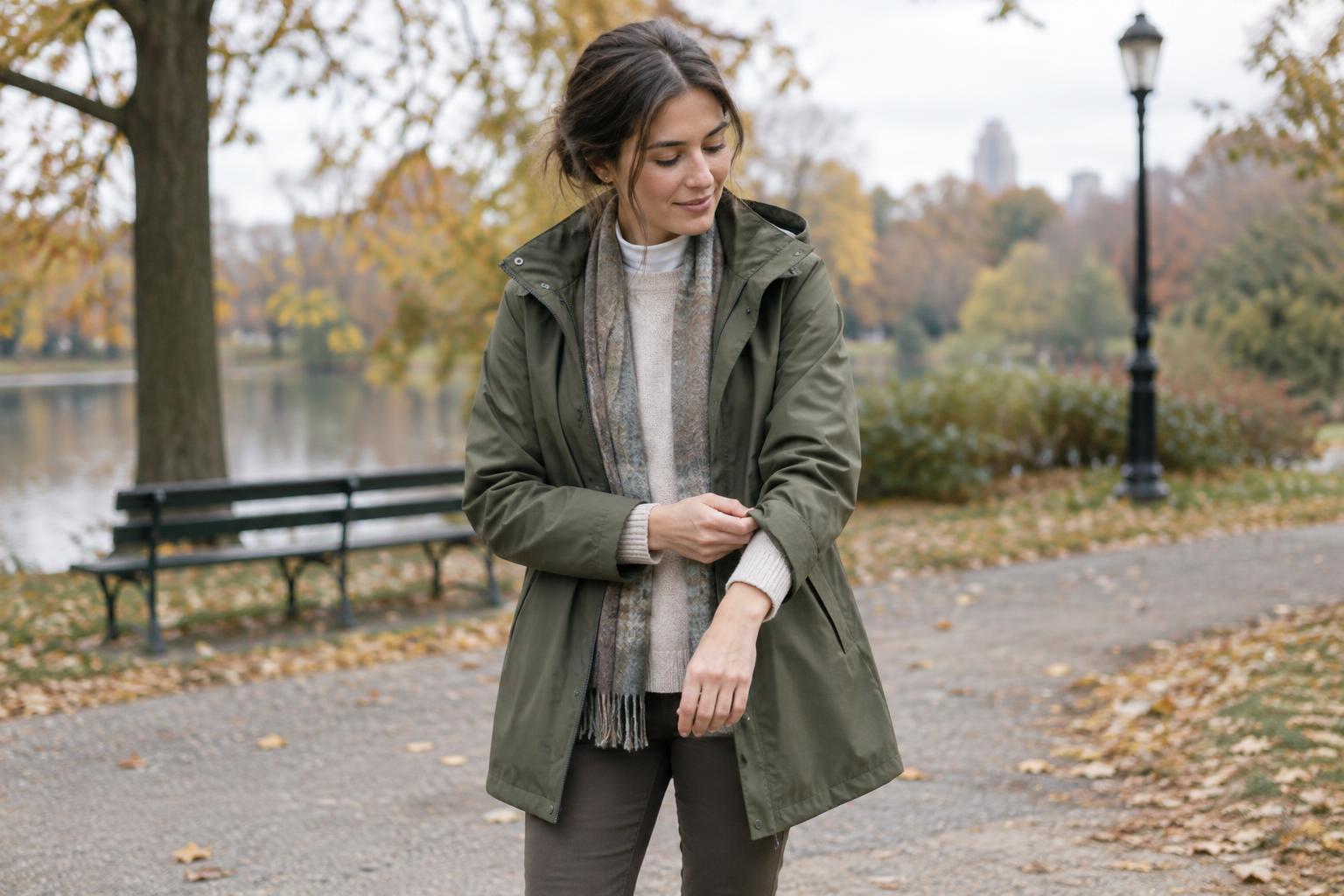
A coat or jacket should address what your indoor clothes cannot. On a windy day, an outer layer that closes securely may help more than another sweater. In damp conditions, consider how well your jacket handles the kind of rain you expect, and whether it has room for the layers beneath it. For a dry, milder day, a lighter coat may be enough. Dressing for the weather outside helps you avoid wearing heavy pieces you will have to carry once you are indoors.
Check the small details as well as the overall thickness. Cuffs that sit comfortably over sleeves, a collar that closes without pressing against your neck, and a hem that does not ride up can make an outfit easier to wear. If you regularly switch between chilly streets and heated rooms, choose an outer layer you can open or take off quickly. Being able to adjust is part of staying comfortable.
Use smaller pieces to fine-tune warmth
Accessories offer warmth without requiring another full layer. A scarf can cover the gap at your neckline, while a hat and gloves are easy to put on or remove as conditions change. Socks matter, too: a pair that fits comfortably inside your shoes may feel better than a very thick pair that makes footwear tight. Keep these pieces easy to reach so you can respond to a cold morning or a warmer afternoon.
Consider how your layers work with your plans. If you will be walking briskly, it may be more comfortable to start slightly cool and carry a removable layer than to overheat soon after leaving home. If you will spend time standing still, you may appreciate an extra midlayer or warmer accessories. The same outfit does not have to serve every part of the day unchanged.
Build a simple layering formula of your own
Try assembling two or three combinations from clothes you already own. For a cool, dry day, that might be a long-sleeved top, a fine cardigan and a light jacket. For a colder outing, you might choose a comfortable base, a warmer midlayer and a coat with room to close properly. Test each combination while moving around the house, then notice what you actually want to remove or add during the day.
Those observations are more useful than a rigid rule about how many layers to wear. If your sleeves bunch, look for a smoother or shorter midlayer. If you feel chilly only when the wind picks up, reconsider the outer layer before adding another sweater. Small adjustments can leave you feeling warm enough outdoors and comfortable indoors, without making getting dressed feel complicated.