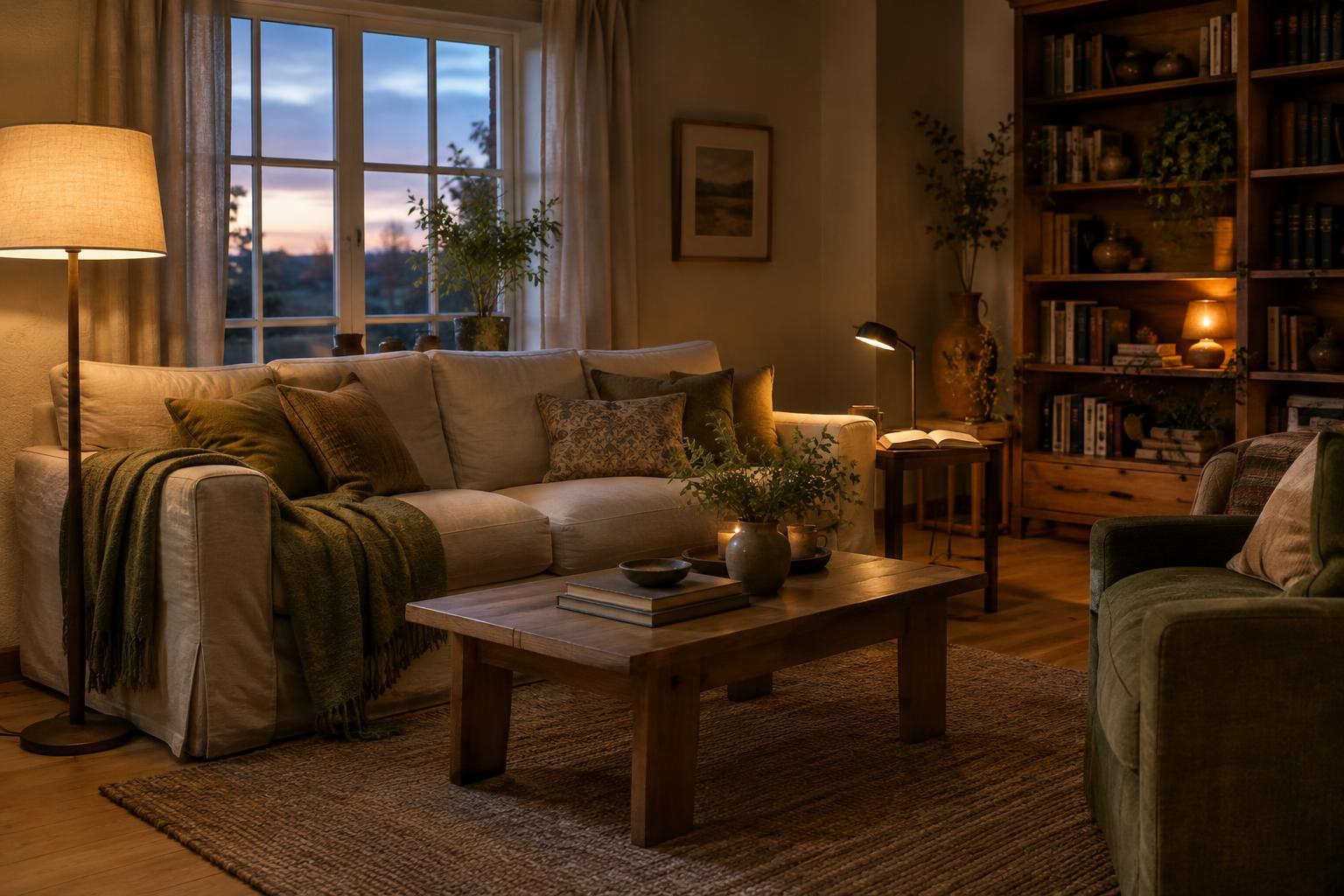
Start with what you do in the room
An overhead fixture can make a room visible, but it rarely makes every corner equally useful or inviting. A softer approach is to put light where life happens: beside the chair where you read, near the counter where you prepare food and within reach of the place where you settle in at night. This is layered lighting—several sources with different jobs, rather than one source trying to do everything.
Before buying anything, notice how the room changes from morning to evening. Which areas receive daylight? Where do you reach for more light after sunset? Identify the activities that need clear visibility and the spots where you would prefer a gentler glow. This small survey helps you make choices for your actual routines instead of arranging lamps only for appearance.
Give each layer a purpose
Think of lighting in three overlapping layers. General light lets you move comfortably through a space. Task light helps you see what you are doing, whether that is reading, chopping vegetables or sorting laundry. Accent light draws attention to a shelf, a plant or a textured wall. You do not need a separate fixture for every category: a well-placed floor lamp, for example, might brighten both a seating area and the surrounding room.
If you want to use the overhead light less often, begin with general light from lamps at different points in the room. A floor lamp near one wall and a table lamp on the opposite side can spread light more pleasantly than a single bright source in the middle. Then add focused light where a general glow falls short. An adjustable reading lamp is often more helpful beside a sofa than making every bulb in the room brighter.
Place light at different heights
A room can feel flat when all its light comes from the ceiling. Varying the height of your sources gives it more depth. Try a table lamp at seated eye level, a floor lamp that sends some light upward and a small light on a lower shelf. Reflected light from a pale wall can soften a corner without shining directly into your eyes.
Placement matters as much as the lamp itself. Set a reading light to fall on the page rather than across your face, and check for glare on screens or shiny surfaces. If a lamp leaves a harsh pool of light, move it closer to a wall or try a shade that diffuses the bulb. In a small room, you may only need two carefully placed lamps to make the space feel balanced.
Choose bulbs and shades for the feeling you want
Brightness and color affect how a room feels. A warm-toned bulb can suit a bedroom or evening sitting area, while a clearer, brighter light may be more useful at a desk or work surface. If two lamps are meant to light the same area, bulbs with similar color tones can help the room feel more cohesive. A dimmable lamp or bulb, where compatible, makes it easier to shift from a practical setting to a quieter one.
Shades also change the result. An opaque shade directs light more deliberately; a translucent one lets a gentler glow pass through. Consider what you see when seated as well as when standing: an exposed bulb that looks attractive from the doorway may be uncomfortable from the sofa. Check the fixture’s bulb and wattage requirements, and keep cords out of walkways.
Build the arrangement gradually
You do not have to replace every fixture at once. Start with the area where the overhead light bothers you most. Move a lamp you already own into that spot and use it for a few evenings. If the room still feels uneven, add a second source farther away rather than increasing the brightness of the first. Living with each change for a little while can show you what is missing.
A good final test is to move through your usual evening: make a drink, sit down, read or tidy up, then get ready for bed. Can you see clearly where you need to, without lighting the whole room the same way? When each lamp has a purpose and the switches are easy to reach, layered lighting becomes a simple daily comfort rather than another decorating project.