Begin with your neckline
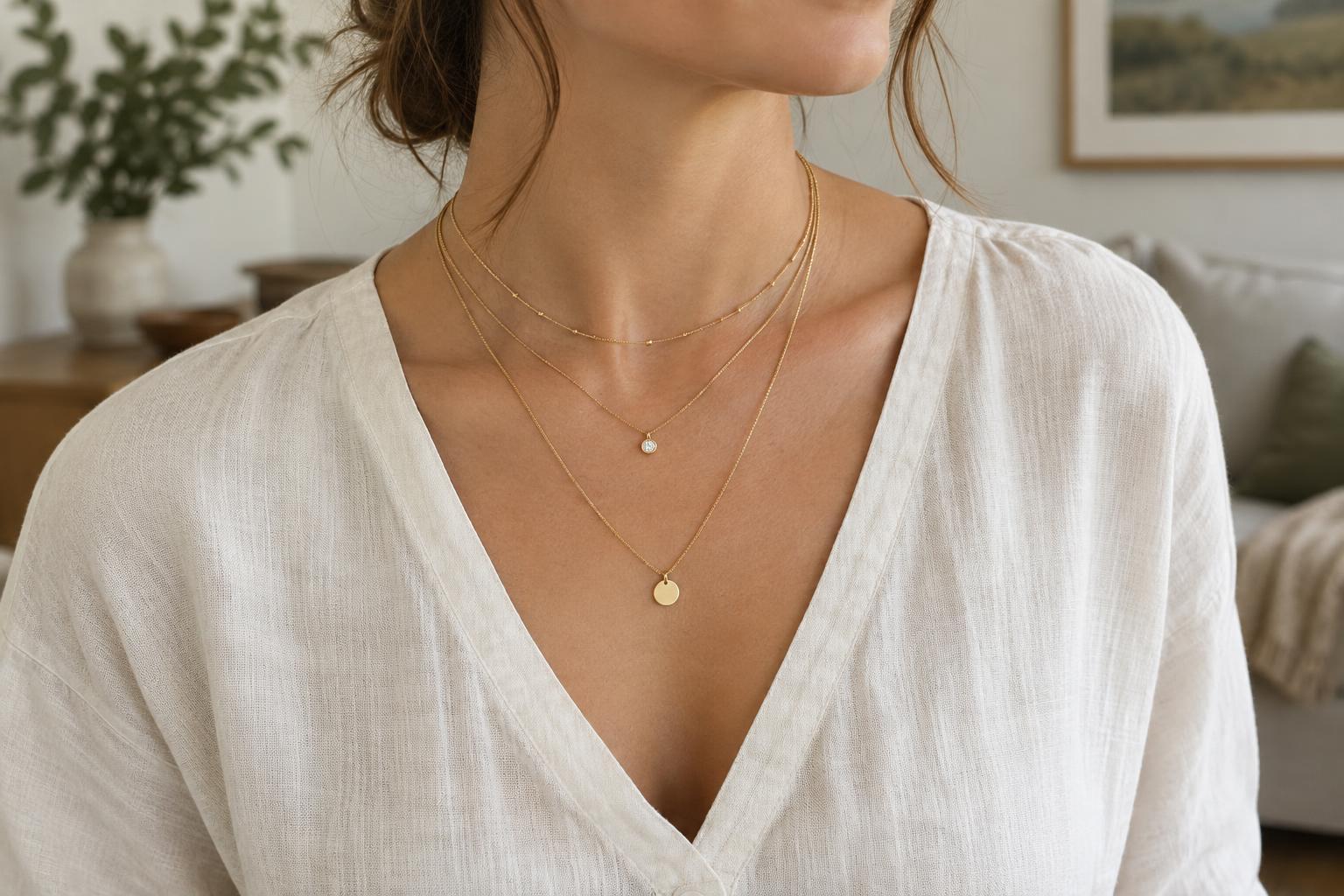
Before choosing necklaces, look at the shape and detail of your top. A plain crew neck gives you room to build a stack above the fabric, while an open collar or V-neck can frame a longer pendant. If your neckline already has embroidery, a tie or a row of prominent buttons, one simple necklace may feel more comfortable than several. The aim is not to fill every available space; it is to give each piece a place to be seen.
Start with the necklace you most want to wear. It might be a small pendant you reach for often or a chain that suits the day's outfit. Treat it as your focal point, then add one piece at a time. Looking in a mirror after each addition makes it easier to notice when the layers feel finished. Two necklaces can create as much interest as four, especially when their shapes are distinct.
Give each chain its own space
Necklaces worn at nearly identical lengths tend to sit on top of one another. Instead, try a shorter chain near the collarbone, a middle layer that falls a little lower and, if you want a third, a longer piece with a clear drop. You do not need exact measurements: put the necklaces on together and check whether their details remain visible when you move. Adjustable chains are useful because a small change in length can separate two pendants.
Varying the shape of the layers helps, too. A short, unadorned chain can sit above a modest charm, while a longer pendant can provide a clear endpoint. If every layer has a large charm, the details may gather in one busy area. Likewise, several very fine chains can blur together instead of reading as separate pieces. Try changing the texture or scale of just one layer rather than making every necklace a statement.
Make tangles less likely
Some twisting is normal when necklaces move against clothing and skin, but a few choices can make a stack easier to manage. Chains with noticeably different lengths have less opportunity to cross at the front. A pendant with a little weight may help its chain hang steadily, though a heavy charm is not necessary. Pairing chains of different textures can also make them easier to separate than several similar, delicate chains.
Pay attention to the back as well as the front. Check that each clasp sits comfortably and that one chain has not slipped through another before you leave. If clasps repeatedly travel toward the front, try wearing fewer layers or choosing a different combination. A necklace separator can keep clasps together at the back, but it is optional and may not suit every chain. Whatever you use, take the necklaces off one at a time rather than pulling the whole stack over your head.
Let the rest of the outfit breathe
A layered stack is most effective when it has some visual space around it. With a patterned shirt, bold collar or large earrings, consider keeping the necklaces light: perhaps two slim chains, with only one pendant. If your clothes are simple, you may enjoy a stronger mix of texture, such as a smooth chain beside one with more visible links. Mixing metal tones can work when the pieces share something else, like a similar finish or delicate scale.
Comfort matters as much as appearance. Notice whether a pendant catches on a knit, whether a short chain rubs at the neckline or whether the stack needs constant adjustment. A combination that looks lovely standing still may be inconvenient during a busy day. Swap one piece, shorten a chain or remove a layer until you can move without thinking about your jewelry.
Keep a few reliable combinations ready
Once you find a pairing you enjoy, remember which pieces and lengths worked together. You might keep a simple everyday combination and a slightly more expressive version for outfits with an open neckline. Having a starting point makes layering feel less like a puzzle, while leaving you free to change one necklace when you want a different look.
After wearing your necklaces, unclasp and store them separately so the chains do not settle into knots. Laying them flat or hanging them individually can make the next time easier. If a tangle does form, set the chain on a flat surface and loosen it gently instead of tugging. A little care before and after wearing your layers helps the look stay relaxed, which is the point of an everyday accessory.