Start with how you actually eat
The most comfortable dining area is one that fits your ordinary meals, not just the occasions when guests come over. Notice when and how you use the space. Do you usually sit down with a quick breakfast, share a relaxed evening meal, or need the table to serve as a work surface between meals? Those routines can guide your choices more usefully than an image of a perfectly set table.
Give everyone enough room to sit down and get up without a shuffle. If the area feels cramped, try moving the table before replacing anything. Pull it a little farther from a wall you need to pass, or turn it so chairs can slide out along the clearest side. In a small room, a bench tucked under the table or fewer chairs kept out day to day may free up valuable space. The goal is a setup that feels easy to approach, even when you only have ten minutes to eat.
Choose seating you want to use
A dining chair can look lovely and still be uncomfortable by the middle of a meal. Pay attention to whether your feet rest comfortably, your back feels supported, and you can sit close enough to the table without hunching. If you are choosing new seating, try it with a table of similar height when possible. If you are working with what you have, small changes can help: a secure seat cushion can soften a firm chair, while moving a bulky cushion may give you more room to sit upright.
Think about who uses the area, too. A chair that is easy to move may be more helpful at a busy family table than a heavier upholstered one. If a bench suits your space, consider keeping a chair available for anyone who prefers individual back support. Comfortable seating is less about making every seat match and more about giving people a pleasant place to settle.
Layer light for the time of day
Lighting affects whether a dining area feels inviting at breakfast and comfortable after dark. Daylight is lovely when available, but a table should also have enough light for serving food and seeing one another clearly in the evening. If an overhead fixture feels harsh, try a warmer-toned bulb that works with the fixture, or add a nearby lamp to soften the room. Keep lamp cords out of walking paths and place any light where it will not shine directly into someone’s eyes.
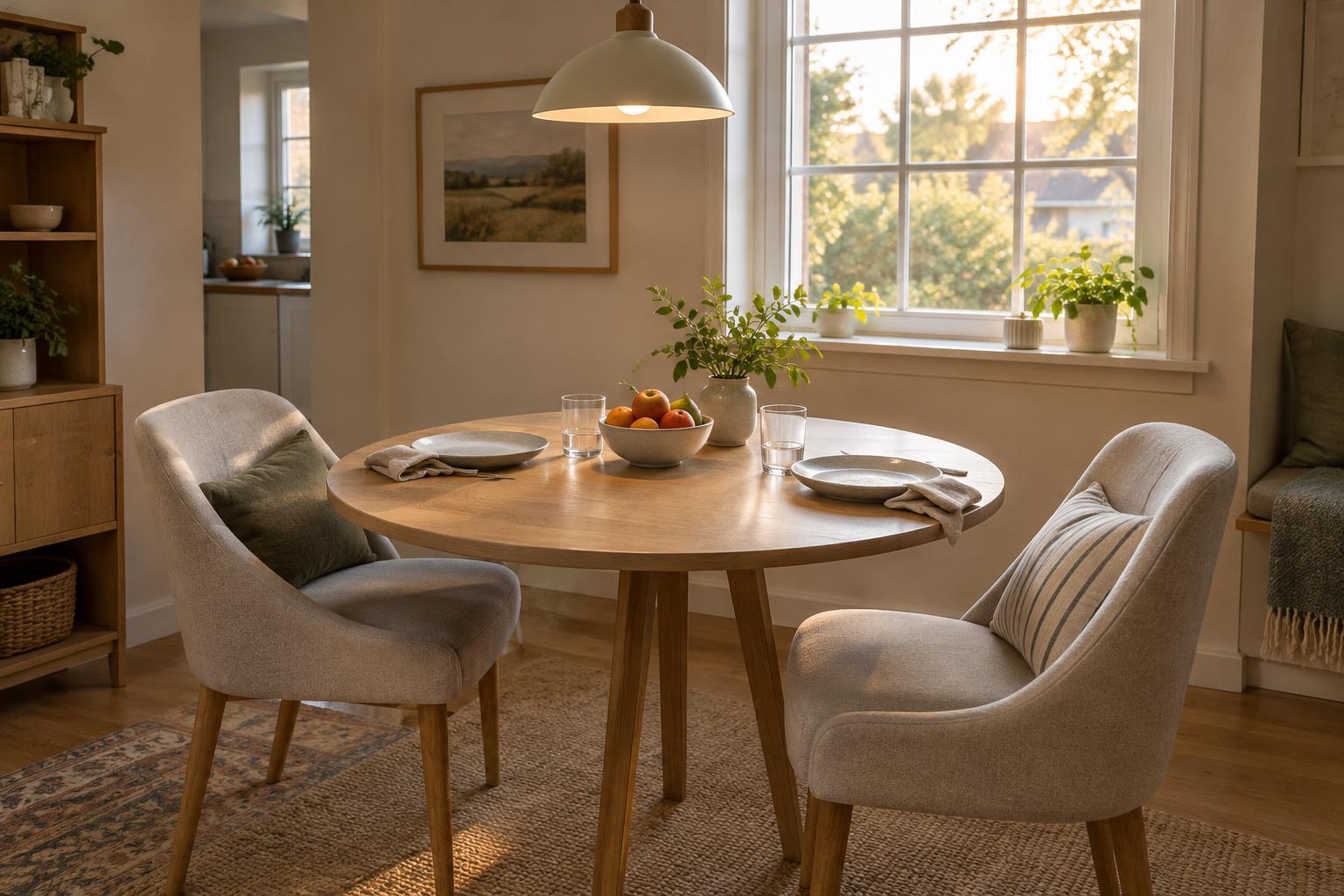
A pendant over the table can make the dining area feel distinct, especially in a room shared with a kitchen or living space. If changing fixtures is not practical, a small lamp on a sideboard can create a similar sense of welcome. Whatever you choose, test it during an ordinary meal. Light that looks appealing from the doorway should still feel useful when you are sitting down.
Leave room for the meal itself
An everyday table is easier to enjoy when plates, glasses, and serving dishes have somewhere to go. Decorative objects can add warmth, but a large centerpiece may become one more thing to move before every meal. Try a low bowl, a small vase, or a tray that you can lift away in one motion. A wipeable placemat or tablecloth can make cleanup simpler if it suits the way you eat; a bare, easy-care surface works just as well.
If the table regularly collects mail, bags, or projects, give those items a nearby landing place. A basket, shelf, or drawer can make clearing the table a short task rather than a daily search for somewhere to put everything. You do not need to keep the space spotless. Aim to make it simple to set two places, or however many you need, without first reorganizing the room.
Add comfort without adding clutter
Finishing touches can make a dining area feel like part of your home rather than a place reserved for special meals. A washable rug may soften a hard floor, provided chairs can move easily over it and its edges do not catch underfoot. Curtains can make a room feel calmer, while a plant, framed picture, or favorite serving bowl can bring in personality. Choose details you enjoy looking at and can maintain without fuss.
Finally, consider what makes meals pleasant beyond the furniture. Keeping napkins within reach, setting out water before sitting down, or clearing the table soon after a meal can make the next one easier to begin. Comfort often comes from these small, repeatable decisions. When the dining area supports the meals you already eat, it becomes a welcoming place to return to every day.