Start with a walk you can repeat
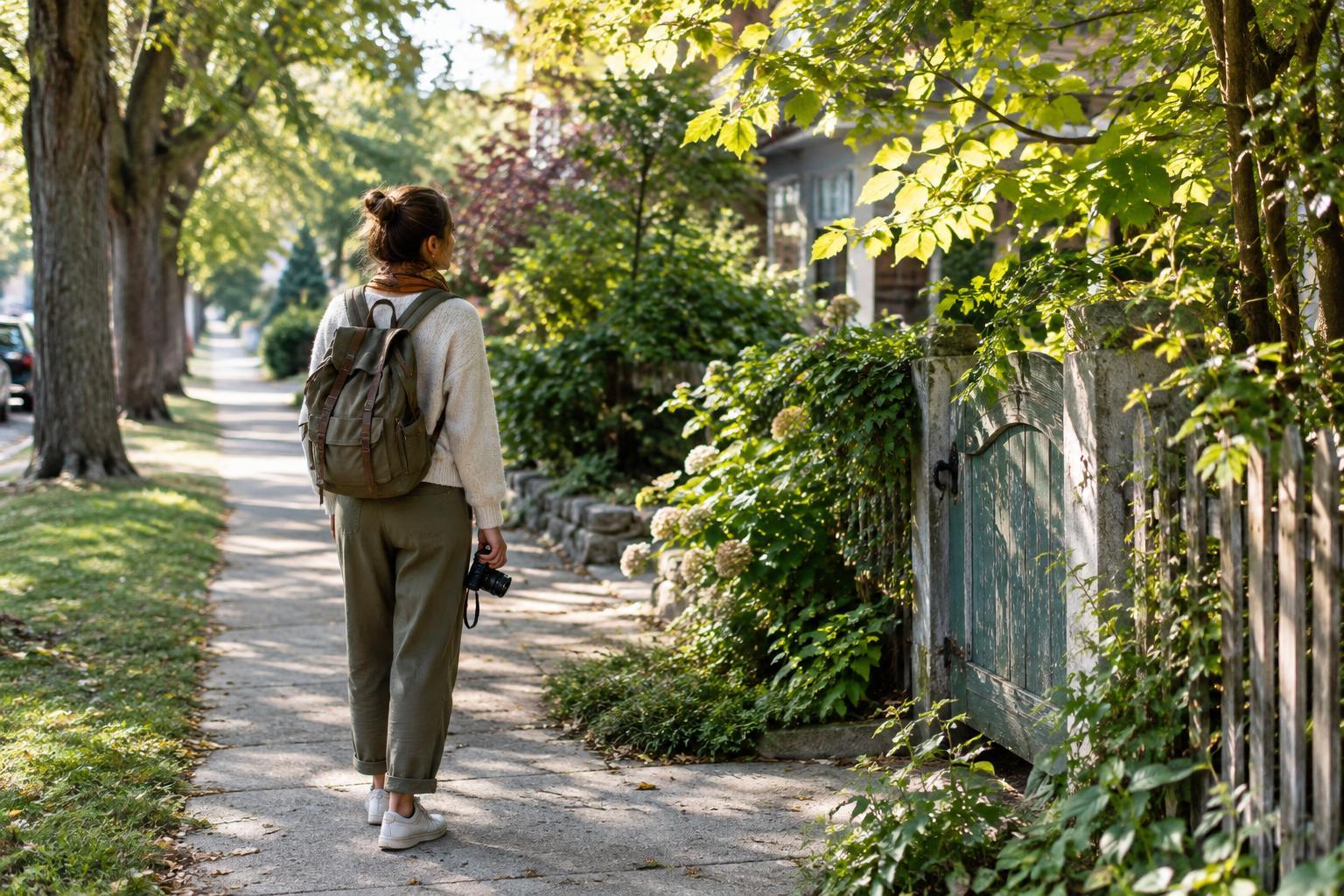
A photo walk does not need a scenic destination or a free afternoon. It can be a short loop around your neighborhood, the route to a familiar errand, or a slow turn through a nearby park. The point is to give your attention somewhere to go. When you look for an image, you may notice the shape of a doorway, a patch of color or the way light falls across an ordinary wall.
Choose a route and length that fit your actual week. Ten minutes before an errand may be easier to repeat than an ambitious weekend outing. Decide what will count as a completed walk: perhaps going outside, taking a few photographs and returning without rushing. A modest definition leaves room for days when the weather changes or your energy is limited. Repeating the same route is not a failure of imagination; familiar places can offer different details each time you visit.
Prepare lightly, then pay attention
Use the camera you already have, whether it is a phone or a dedicated camera. Before leaving, check that it has enough charge and space for a handful of images. Dress for comfort, bring what you normally need for a walk, and keep your hands reasonably free. If getting ready becomes a project of its own, the exercise may be harder to return to.
Once you are out, try pausing before you take a picture. Look at what drew you in: a repeated line, an unexpected contrast, or a small scene that feels calm. Move a step closer or farther away and see what changes. You do not need to photograph everything that catches your eye. Sometimes noticing a detail and walking on is enough to strengthen the habit of looking.
Give each outing one small prompt
A prompt can make a familiar walk feel fresh without turning it into a scavenger hunt. Pick one idea before you leave, such as reflections, soft edges, signs of the season or objects in pairs. You could look for one color in several places, or photograph how people have made practical spaces more welcoming with plants, curtains or a painted door. Keep the prompt loose enough that you can follow an unexpected subject.
If you feel stuck, use a simple set of three: take one wide view, one close detail and one photograph that shows a transition, such as a path meeting a doorway. This gives you a starting point without asking you to produce a perfect set. On another day, photograph the same corner at a different hour. Comparing your images later may reveal how much the light, your framing or your attention has changed.
Make room for the place and the people in it
A thoughtful photo walk includes awareness of your surroundings. Stay on permitted paths, avoid blocking entrances and leave plants and other objects as you found them. If a person is recognizable, consider whether you need that image at all, especially if you might share it. You can often tell a story about a place through shadows, textures or objects instead.
It also helps to put the camera away for a few moments. Notice sounds, temperature and the pace of the street or path. These details may shape what you photograph next, even if they never appear in an image. A photo walk is still a walk; it can be restorative without needing to produce a collection worth showing anyone.
Close the loop with a simple review
The exercise becomes more satisfying when your photographs have somewhere to go. After each walk, choose one or two images that hold your attention. Save them in a folder, add a short note about what you noticed, or place a favorite in a private album. You can leave the rest unedited. A brief review is easier to sustain than a backlog of photographs waiting for a major sorting session.
Every few walks, look back for recurring interests. Perhaps you keep noticing window light, handmade signs or quiet corners. Let those patterns suggest your next prompt, a small print for your home, or a page in a personal journal. There is no need to improve on a schedule. A regular photo walk works best as an invitation to look closely, go outside when you can and bring a little curiosity back into everyday life.