Start with what you actually carry
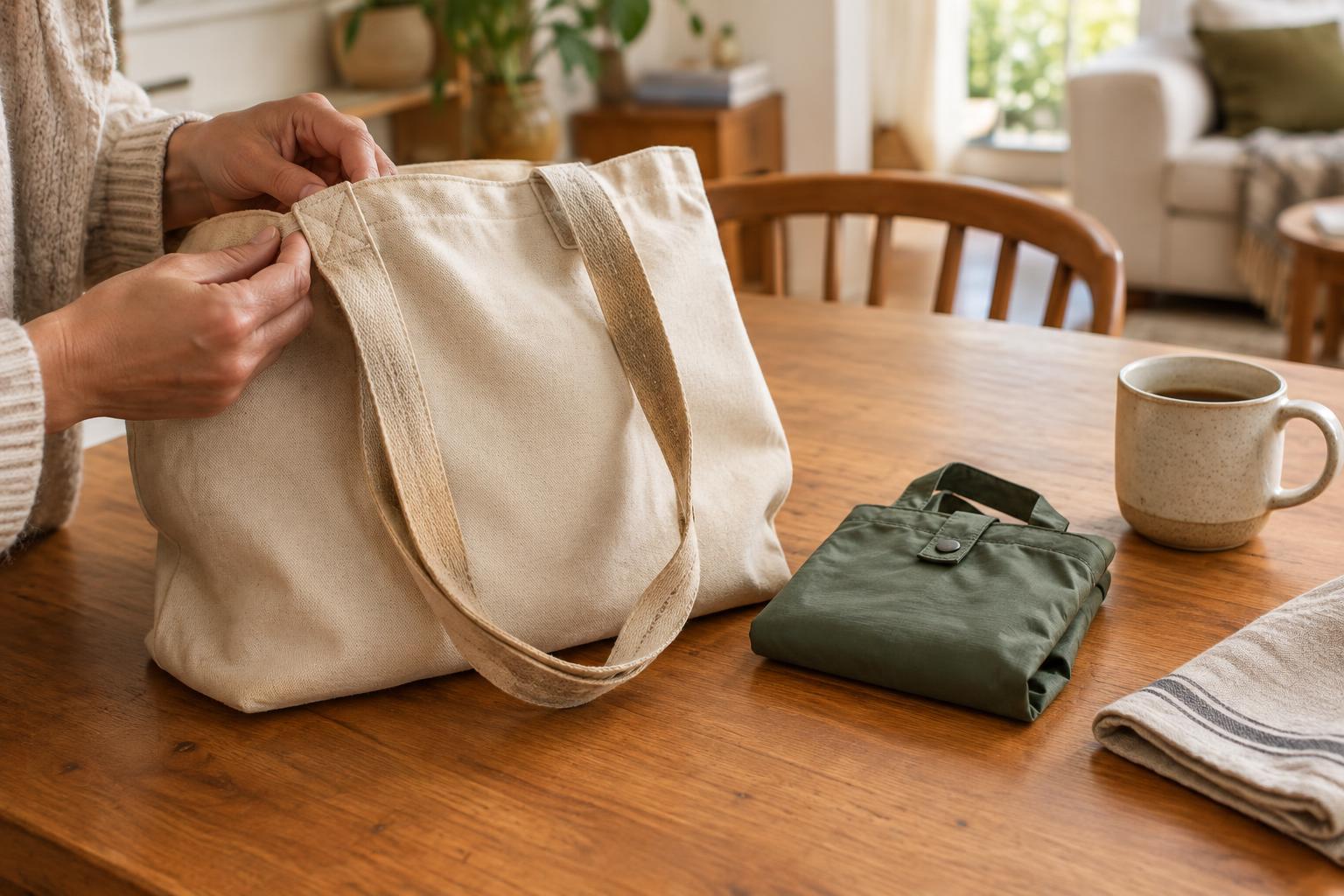
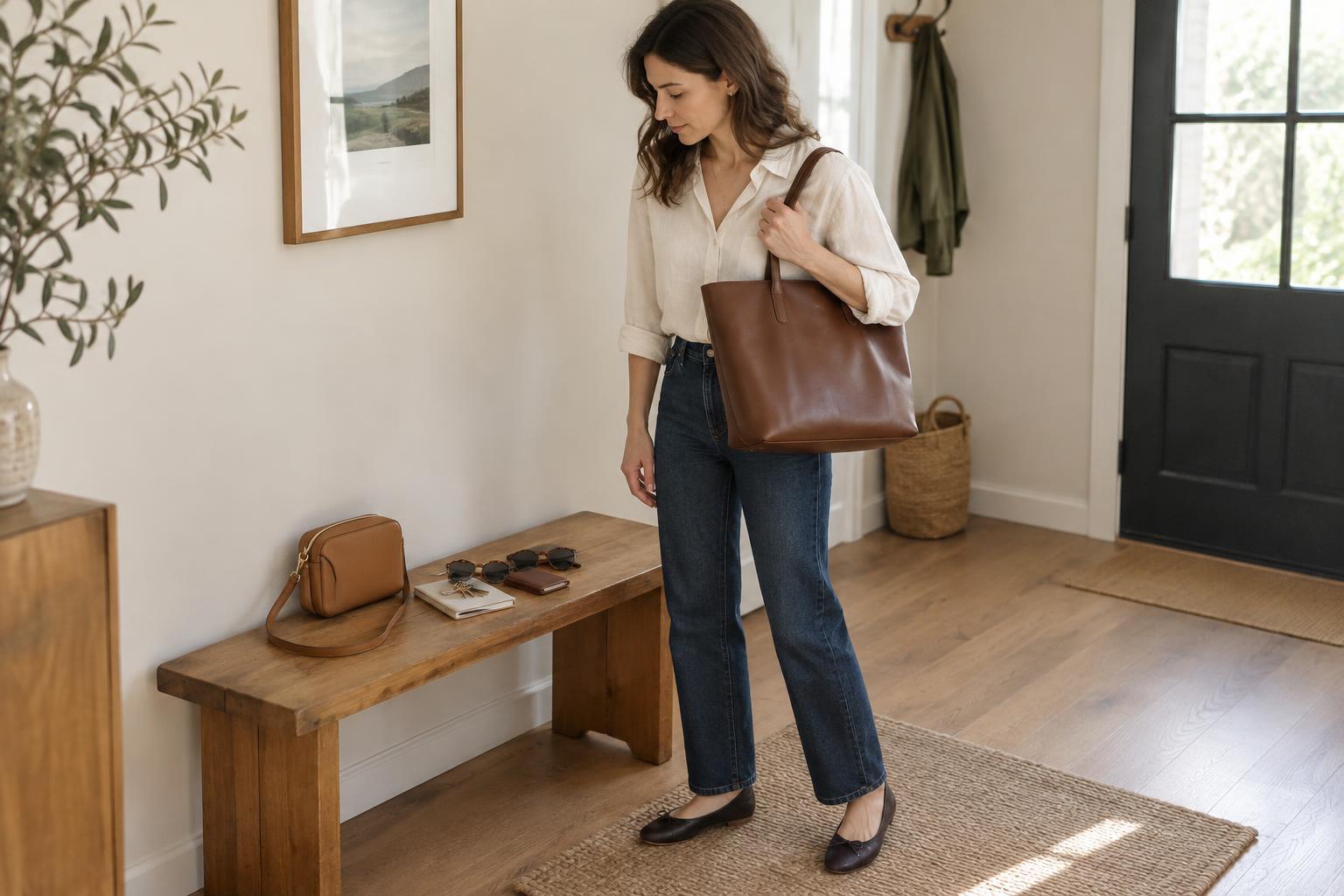
Before considering how a bag looks with an outfit, lay out what needs to go inside it. On an ordinary day, that might be a phone, keys, wallet and a few small personal items. Other days call for a water bottle, book, lunch or an extra layer. Seeing everything together makes it easier to choose a bag for the day you have planned, rather than the day you imagine having.
Allow a little space beyond the exact volume of your belongings. A bag that closes only when everything is arranged perfectly can become frustrating when you need to put something away quickly. At the same time, a much larger bag may invite you to carry things you do not need. A useful size lets you find your essentials without digging and closes comfortably once they are inside.
Consider the shape of your outfit
Bag size affects the overall shape of a look. With a loose shirt, wide trousers or a generous coat, a medium or larger bag can feel in keeping with the outfit’s volume. A small bag can work just as well, but it creates a more noticeable contrast. With close-fitting or neatly tailored clothes, a compact bag often continues the clean lines, while a larger one adds a relaxed element.
Pay attention to where the bag sits, not only how wide it is. A crossbody bag that rests at the hip draws attention to that part of the outfit; a shoulder bag tucked under the arm sits higher and may leave the waistline more visible. If a coat has bulky pockets or a top has a striking detail, try the bag on with the full outfit. A small change in strap length may make the combination feel easier.
Choose for the journey, not just the destination
Think through the whole day before reaching for a bag. A small bag may be enough for a short outing, a meal or an event where you will carry little. A medium bag can be a flexible choice for errands or a day with several stops. If you are bringing work materials, a change of shoes or other larger items, look for a bag that holds them without straining at the closure.
How you travel and move matters too. If you expect to walk for a while or need your hands free, a crossbody bag or backpack may be more comfortable than a bag you must hold. Check whether the straps feel secure and whether the filled bag rests comfortably against your body. Size on its own does not guarantee ease: a narrow bag may fit your essentials but make them awkward to reach.
Let the bag support the mood of your clothes
A bag does not have to match your outfit exactly to belong with it. A small, structured bag can give a simple jeans-and-knit combination a more finished feel. A roomy, soft-sided bag can make a crisp outfit feel more relaxed. If you enjoy a coordinated look, consider repeating a shape or texture already present in your clothes, rather than searching for an exact color match.
When you are unsure between two sizes, try both while wearing the shoes and outer layer you plan to use. Look at the outfit from the front and side, then pick up the bag and move around. The better choice is often the one you can carry naturally. A bag that looks appealing on a shelf may feel quite different once it holds your belongings and becomes part of your day.
Build a small, adaptable rotation
You do not need a bag in every size for every outfit. If you want a practical starting point, identify the gap between what you own and what you regularly carry. Perhaps your everyday bag is too small for a book, or perhaps you keep using an oversized tote for a phone and keys. A second bag that solves that specific problem may be more useful than one chosen for a single outfit.
Keep switching simple by gathering your most-used small items in a pouch or checking the same pockets before you leave. Empty bags occasionally so receipts and forgotten extras do not become part of the load. Over time, you may notice which size you reach for most often. Let that experience guide your choices: the best bag size is one that suits both your clothes and the way you actually spend your day.