Start with what is already nearby
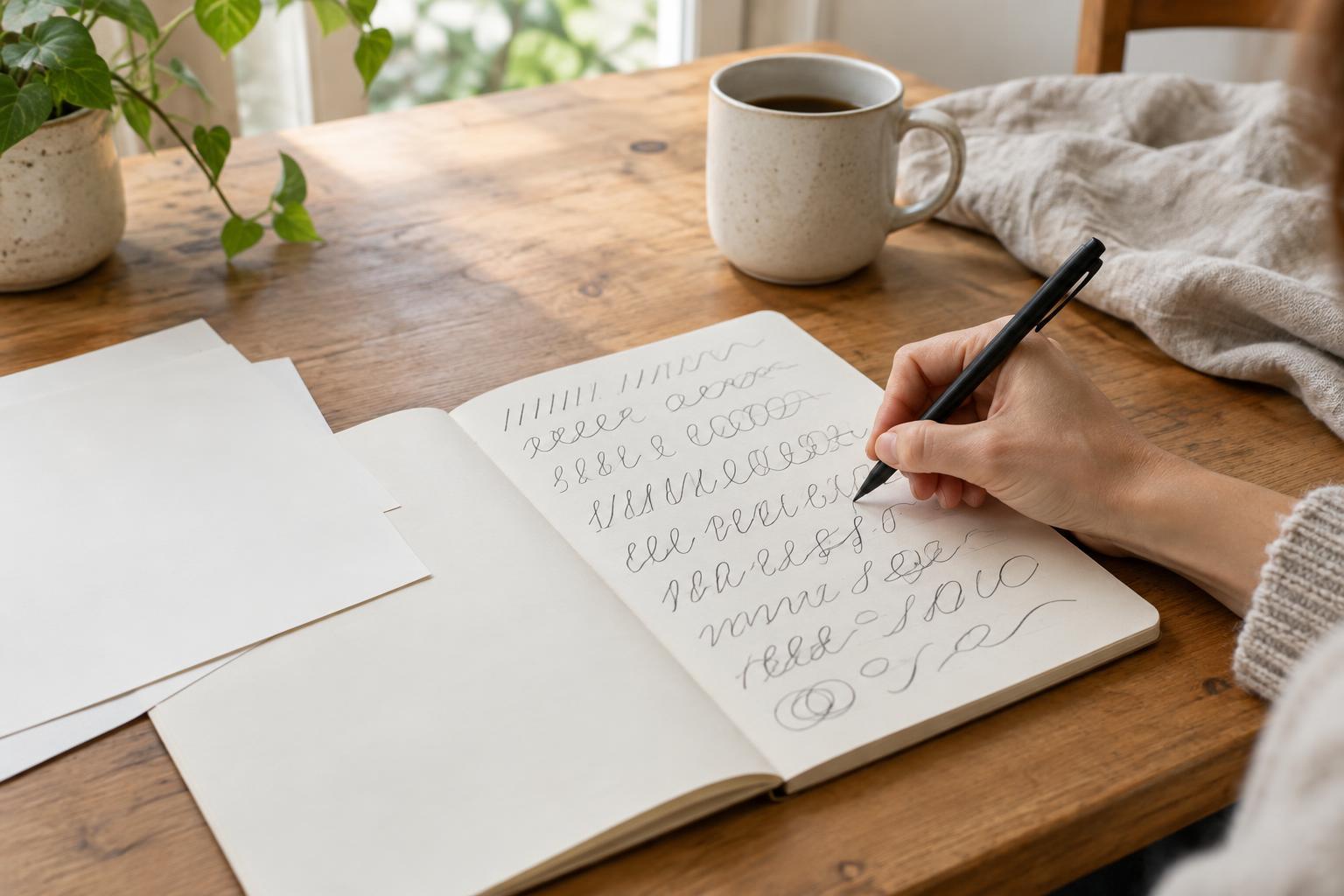
You do not need a brush pen or a fresh notebook to begin hand lettering. A ballpoint pen, pencil or felt-tip pen and any paper you can write on are enough to explore how letters look and fit together. The back of a printed page, an old envelope or a partly used notebook can become practice space. Starting with ordinary materials makes it easier to experiment without worrying about wasting a beautiful page.
Choose a word you would enjoy seeing in your own handwriting, such as “hello,” “garden” or the name of someone you love. Write it once as you normally would. Then write it again more slowly, changing one feature: make the letters taller, give them more space or round their corners. Hand lettering is about drawing and arranging letters deliberately, so there is no need to master a new script before you can make something pleasing.
Make one small change at a time
A simple way to practice is to draw the same short word across a page in several styles. Try narrow letters on one line and wide letters on the next. Compare a word with generous spaces between its letters to one with tight spacing. You can also change the height of the first letter or extend the tail of the last one. Looking at the versions side by side helps you notice which choices suit the word.
When you find a version you like, draw it again instead of moving immediately to a new idea. Repeating a shape gives your hand another chance to understand it. If a letter feels awkward, sketch it separately a few times, then put it back into the word. You are not trying to produce identical copies. The aim is to learn which movements and proportions feel comfortable to you.
Create bold effects with an ordinary pen
You can explore the look of thicker strokes without using a special nib. Write a word in a single, relaxed line. Then add a second line beside the downward strokes of each letter and fill the narrow space between them. This is often called faux calligraphy, but you can treat it simply as an exercise in noticing where your pen moves down the page. A pencil makes it easy to try the idea lightly before committing to ink.
For another approach, draw large outline letters and leave their centers empty. Add dots, short lines or a little shading inside one or two letters, rather than decorating every inch. If your pen makes an uneven mark on a particular paper, let that guide the design or turn the page over. An inexpensive setup gives you room to work around small imperfections instead of treating them as mistakes.
Build a routine that fits real life
A practice session can be as brief as writing the date and one word at the top of a scrap page. Keep a pen and a few sheets somewhere you naturally pause, such as beside a morning notebook or near your mail. If you have more time, choose a phrase and spend a few minutes testing different layouts. A short session you enjoy is more useful than an elaborate plan you rarely feel like starting.
Save a handful of attempts, including the ones that did not turn out as expected. They can remind you which letter shapes you want to revisit. When you sit down again, pick one detail to work on: spacing, curves, straight lines or keeping a word level. Giving each session a small purpose keeps the activity manageable and leaves plenty of space for play.
Put your lettering to gentle use
Everyday objects offer low-pressure places to try what you have practiced. Letter a name on an envelope, make a label for a storage box or add a heading to a recipe you use often. These projects do not need elaborate decoration. A carefully spaced word can feel considered on its own, especially when it is easy to read.
Before lettering something you want to keep, make a quick draft on spare paper. Check that the word fits and that long letter tails will not run into nearby text. Then copy the version you like, allowing it to retain the small variations that come from drawing by hand. The pleasure of this routine is not in owning the right equipment; it is in paying attention to familiar letters and finding new ways to make them your own.