Start with a place you will actually use
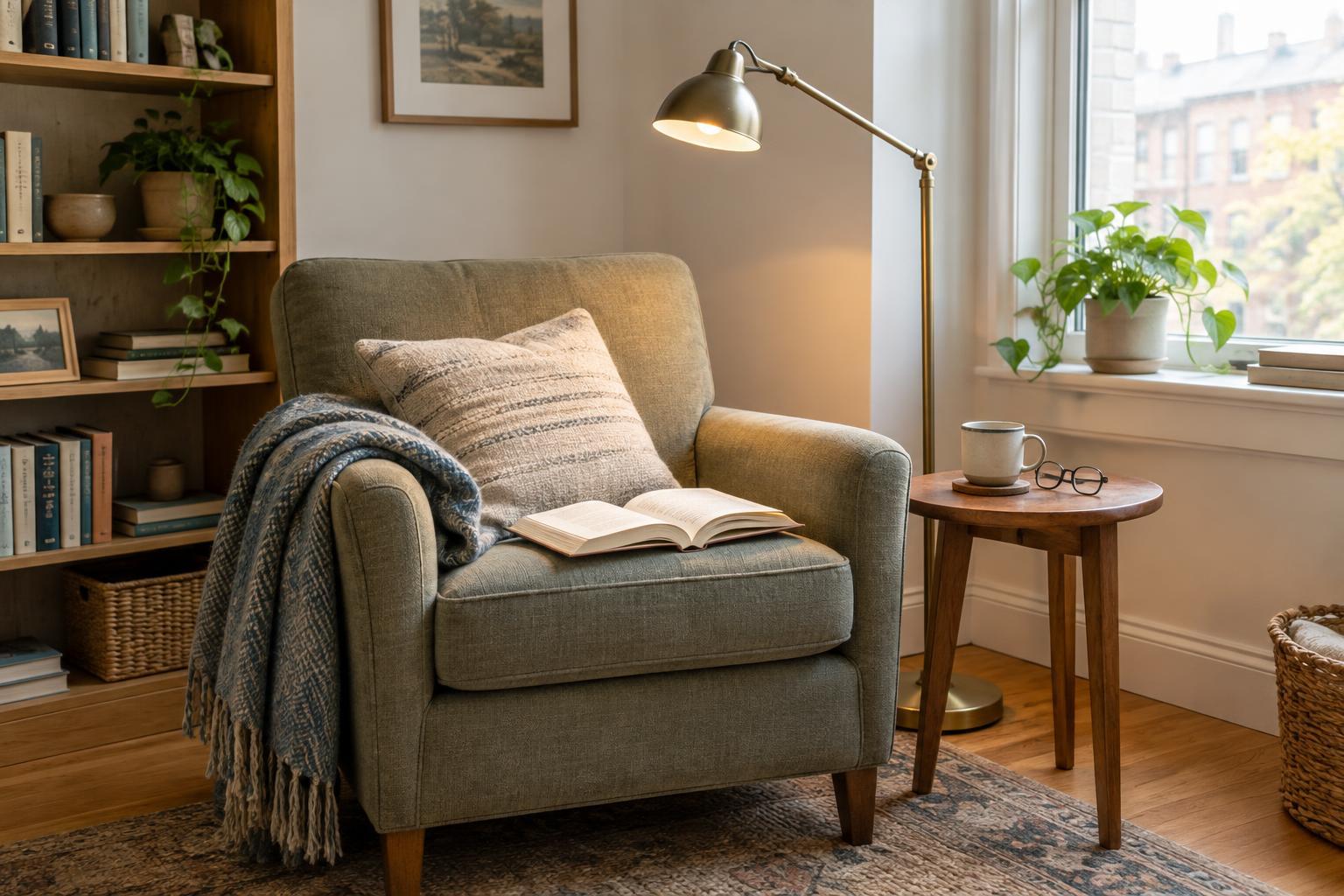
A reading spot can be a corner of the living room, one end of a sofa or a chair beside a bedroom window. Before moving furniture, think about when you usually read. A bright window may suit a quiet afternoon, while a corner near a lamp may be more useful in the evening. The best location is one you can reach easily and enjoy without having to rearrange the room each time.
Notice what happens around the spot, too. A chair beside a busy walkway may never feel restful, even if it looks appealing. If space is tight, try turning an existing seat slightly away from the busiest part of the room. You do not need complete silence or a separate room; a small change in orientation can help make familiar space feel more settled.
Make the seat comfortable for more than a few minutes
Choose a seat that supports the way you naturally read. Some people like to sit upright with a book on their lap; others prefer to tuck their feet up or lean against a sofa arm. Test a chair or sofa with a book before deciding it is the right place. If you find yourself shifting constantly, try a cushion behind your back or a firm pillow under your elbow.
Think about where your feet will go. A footstool can make a chair feel more inviting, but so can a low, stable surface you already own. Keep enough floor space to stand up without stepping over baskets or cords. A throw adds warmth when you want it, though it is easier to relax if you can put it aside without losing your place to sit.
Place the light where the pages need it
Good reading light should illuminate the page without shining directly into your eyes. Daylight is pleasant, but it changes throughout the day, so an adjustable lamp is helpful even near a window. Try placing the lamp beside or slightly behind your shoulder, then sit down and check whether your hands or the book cast an awkward shadow. Move the lamp until the page is comfortable to look at.
A movable floor lamp can work when there is no room for a side table. If you read on a sofa shared with others, a focused light may be more considerate than turning on every ceiling fixture. Keep cords out of walking paths and avoid covering a lamp with fabric to soften its glow. A different shade or bulb may give you a gentler effect without creating a hazard.
Keep useful things close, but leave breathing room
A small surface beside your seat makes it easier to settle in. It only needs room for a book, a drink and perhaps a pair of glasses. A narrow table, sturdy stool or existing shelf may do the job. If you use a mug, choose a stable place for it rather than balancing it on an armrest. Leave a clear spot to set down your book when you pause.
For books waiting to be read, try one basket or a short stack rather than building a collection around the chair. Keep a bookmark nearby, along with anything else you regularly reach for, such as a notebook. The aim is not to create a perfectly styled corner. It is to remove the small interruptions that make you get up just as you have become absorbed.
Let the corner change with your routines
Comfort is easier to maintain when the setup is simple. In a warmer season, you might move the throw away and make use of daylight; on darker evenings, you may rely more on the lamp. If a chair becomes uncomfortable or the room grows noisy at your usual reading time, you can move your books and lamp to another seat. Your reading place does not have to stay fixed to count.
Give the area a quick reset when you finish: put away cups, return the book to its place and straighten the cushion. These little habits keep the seat ready for the next time you have a few free minutes. A comfortable reading spot is less about filling a corner with special purchases than making it easy to sit down, see the page and stay awhile.