Make the starting point easy
A ten-minute sketching practice begins with permission to make small, unfinished drawings. You do not need to be good at drawing before you start, and you do not need to turn every page into something worth displaying. The aim is to spend a few minutes looking closely and putting marks on paper. Some days you may enjoy the result; other days, the time spent noticing will be enough.
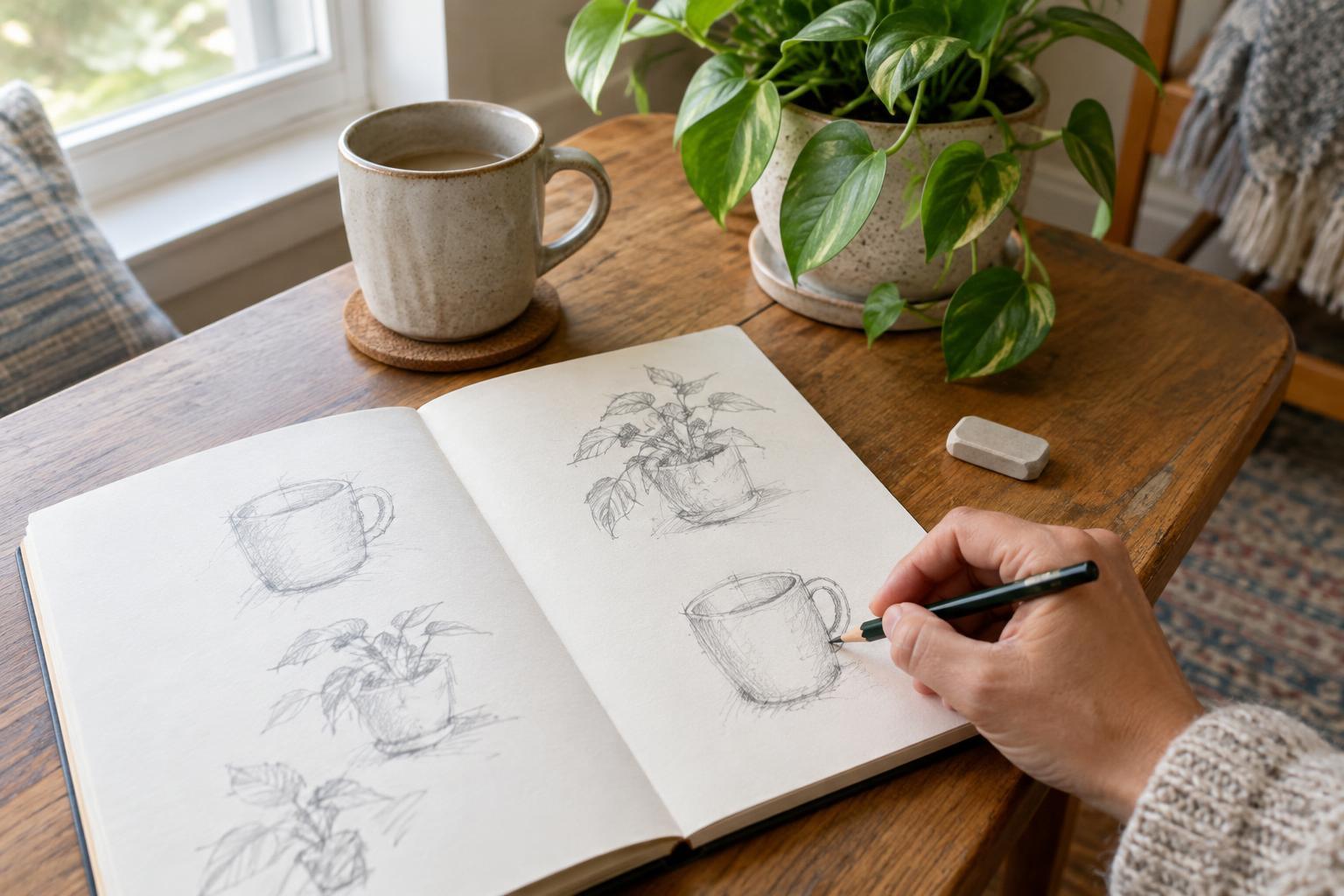
Keep your materials simple: a pencil or pen, a notebook and, if you like, an eraser. A small notebook is easy to leave beside a chair or tuck into a bag. Choose paper you feel comfortable using, rather than a beautiful book that makes every page seem precious. Put your supplies somewhere you already spend time, so beginning does not require a search for the right tools.
Give the ten minutes a gentle shape
It can help to attach sketching to an existing moment, such as after making your morning drink or before settling in for the evening. Pick a time that is usually available, not an ideal version of your day. Set a timer if it helps you stay focused, but let it be a boundary rather than a test. When the time is up, you are free to stop, even if the drawing feels incomplete.
Try spending the first minute choosing a subject and noticing its main shapes. Use the next seven or eight minutes to draw, then leave a minute to look at the page and add a date or a short note. You can change this pattern whenever it feels too rigid. The useful part is having a small way in: sit down, look, make a first line and continue until your time is over.
Draw what is already around you
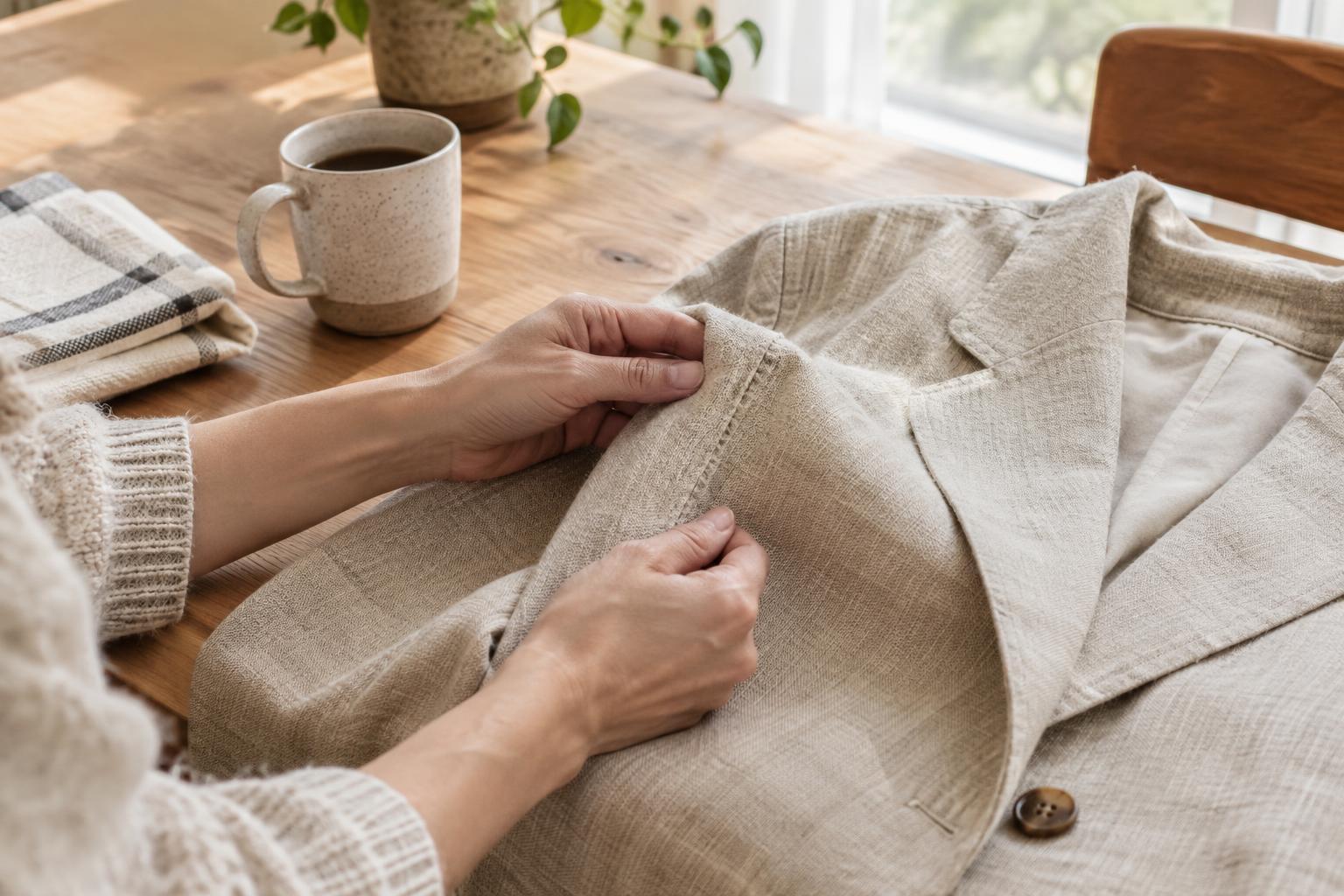
An everyday object makes a good starting subject because you can return to it without planning an outing. Try a mug, a pair of shoes, a folded jumper, a houseplant or the view through one window. Choose one thing rather than an entire room. If it looks complicated, draw just its outline or focus on a detail, such as the curve of a handle or the way fabric gathers at a seam.
You can also use a prompt when deciding what to draw takes longer than drawing itself. Try “something with a handle,” “three objects on a shelf” or “a corner of the room.” On another day, sketch the same object from a different angle. Repetition is not a lack of ideas; it gives you a familiar subject so you can pay attention to something new, such as shadow, proportion or texture.
Let rough pages be part of the practice
It is easy to spend all ten minutes trying to get one line right. If you notice yourself repeatedly erasing, try drawing with a pen for a few sessions. You can also make several quick versions of the same object on one page. A crooked shape or an awkward angle does not make the session a failure. It shows you what caught your eye and gives you a place to begin next time.
When you are unsure where to start, look for the biggest shapes before adding details. Ask yourself what is taller, what is wider and where the object sits on the page. You do not have to answer perfectly. Drawing from observation is a process of making a mark, looking again and adjusting. Keeping that process visible can make a sketchbook feel more welcoming than a collection of polished pages.
Keep returning without making up for missed days
A practice is easier to sustain when it can bend around ordinary life. If you miss a day, simply draw on the next day that works. There is no need to double the time or catch up on pages. On busy days, you might sketch one small object; when you have more space, you might linger with a scene. Both can belong in the same notebook.
Every so often, turn back through your pages and notice which subjects you liked drawing, not only which sketches you like looking at. You may discover that you enjoy drawing plants, clothing details or objects on your kitchen table. Let those preferences guide your next ten minutes. The routine can remain simple: keep your materials close, choose something you can see and begin with one line.