Start with what you actually reach for
A tidy drawer is not always a useful drawer. If your favorite earrings are hidden beneath a tangle of necklaces, you may keep wearing the same pair simply because it is easy to find. Good accessory storage does two things at once: it lets you spot your options and helps each piece stay in good condition. That does not mean every item needs to be on display.
Before buying organizers, gather the accessories you use regularly and notice where you put them on. Do you choose jewelry beside a mirror, pick up a bag at the door or add a scarf just before leaving? Give your most-used pieces a home near those moments. Keep occasional items in a separate drawer or box so daily choices have room to breathe. A small selection that is easy to see is often more helpful than a crowded display of everything you own.
Give small pieces clear boundaries
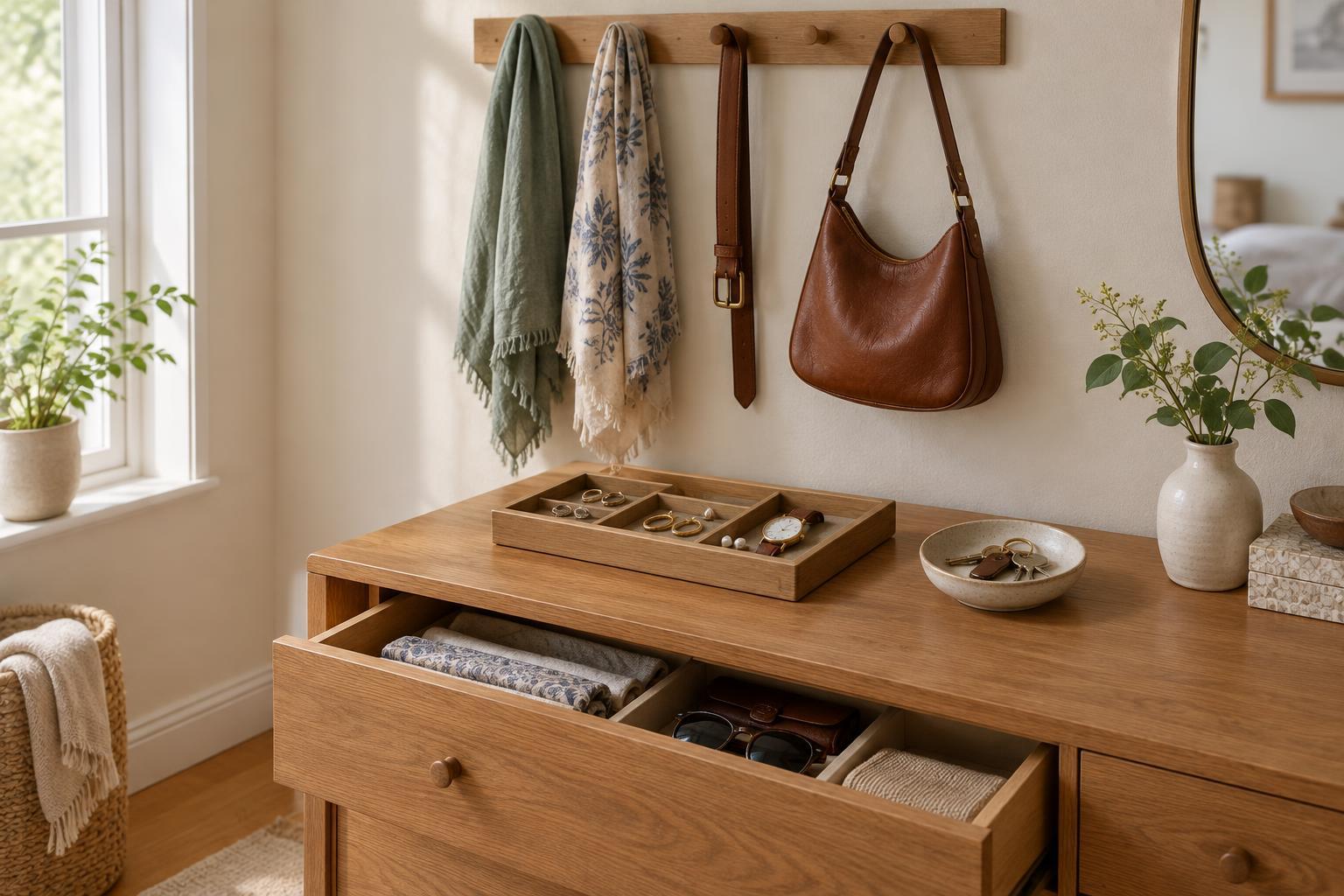
Jewelry benefits from storage that keeps pieces apart. A shallow tray with compartments can separate rings, earrings and watches without requiring much space. Small dishes work well for a few items you wear often, but they become less useful when everything lands in one pile. If you prefer a drawer, use dividers or a soft-lined insert so you can see each piece when you open it.
Necklaces are usually easier to choose when they hang separately rather than share a dish. A few hooks inside a wardrobe door or on a wall near your dressing area can make them visible while limiting tangles. Leave enough space between hooks for pendants to hang freely. For delicate or valuable pieces, a closed box may be a better choice than an open display, particularly in a room where dust, direct sun or damp air is a concern.
Make scarves, belts and bags easy to browse
Fold scarves loosely in a shallow drawer or place them upright in a basket, with one edge of each visible. This makes it easier to find a color without pulling out the whole stack. Hooks can suit scarves you use frequently, though lightweight fabrics may be happier folded if hanging leaves creases. Belts can be coiled individually in a drawer or hung by their buckles, provided they have enough space to avoid catching on one another.
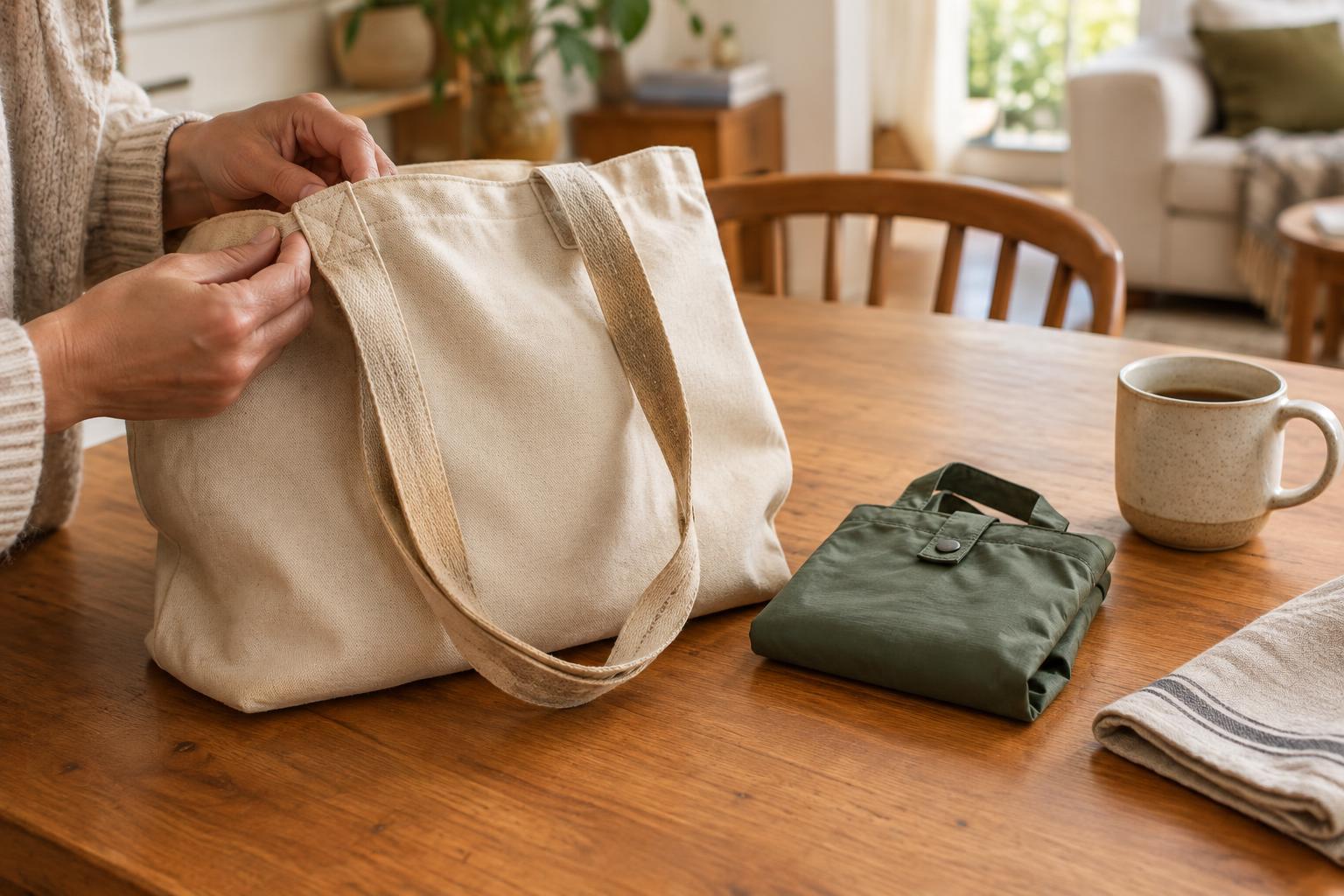
Bags need room as well as visibility. Place everyday bags on an accessible shelf or sturdy hook, and keep their contents from becoming a second storage problem by emptying receipts and stray objects regularly. Hooks are convenient for bags in active use, but heavier bags may be better supported on a shelf. If a bag tends to collapse, loosely fill it with clean paper or a fabric pouch before storing it. Keep long straps tucked in so they do not snag neighboring pieces.
Create a landing place for leaving and returning
Some accessories belong near the door rather than in a bedroom. A tray for keys and sunglasses, a hook for a frequently worn bag and a basket for seasonal extras can make departures smoother. Keep this area modest: it should hold the things you are likely to take with you, not become the final stop for every item brought into the house.
Think about what happens when you come home, too. A designated spot makes it easier to put things away before they disappear onto a chair or countertop. Sunglasses can go into a case to protect their lenses; a damp scarf or hat should have a chance to dry before being tucked into closed storage. If you share the space, give each person a distinct hook or small container so the system remains easy to use.
Display selectively and adjust with the season
Open storage can add warmth to a room, but it works best when you leave some empty space. Choose a few pieces you enjoy looking at and use often, then store the rest nearby in a drawer, box or closet. This keeps surfaces easier to clean and reduces the chance that delicate items will collect dust. Avoid placing accessories in prolonged direct sunlight if their color or materials may be affected.
As your routines change, swap what is most accessible. In cooler months, a basket might hold scarves and gloves; in warmer weather, it could make room for sunglasses and lighter accessories. Take a minute during each changeover to check for loose fastenings, empty bag pockets and put aside anything that needs care. The goal is not a perfect display. It is a small, dependable arrangement that helps you notice what you have and use what you love.