Start with what catches your attention
A creative prompt does not have to arrive as a grand idea. It might begin with the way afternoon light falls across a table, a phrase overheard on a walk or the different textures in a basket of clean laundry. The useful question is not “Is this interesting enough?” but “What made me pause?” That small reaction gives you somewhere to begin.
For a few days, try noticing one detail during an activity you already do, such as making breakfast or walking to the door. Look for a shape, sound, color, gesture or change. You do not need to record everything. Choose one detail you can describe clearly: the uneven rhythm of rain against a window, for instance, rather than simply “a rainy day.” Specific observations are easier to return to when you are ready to make something.
Keep a small, usable collection
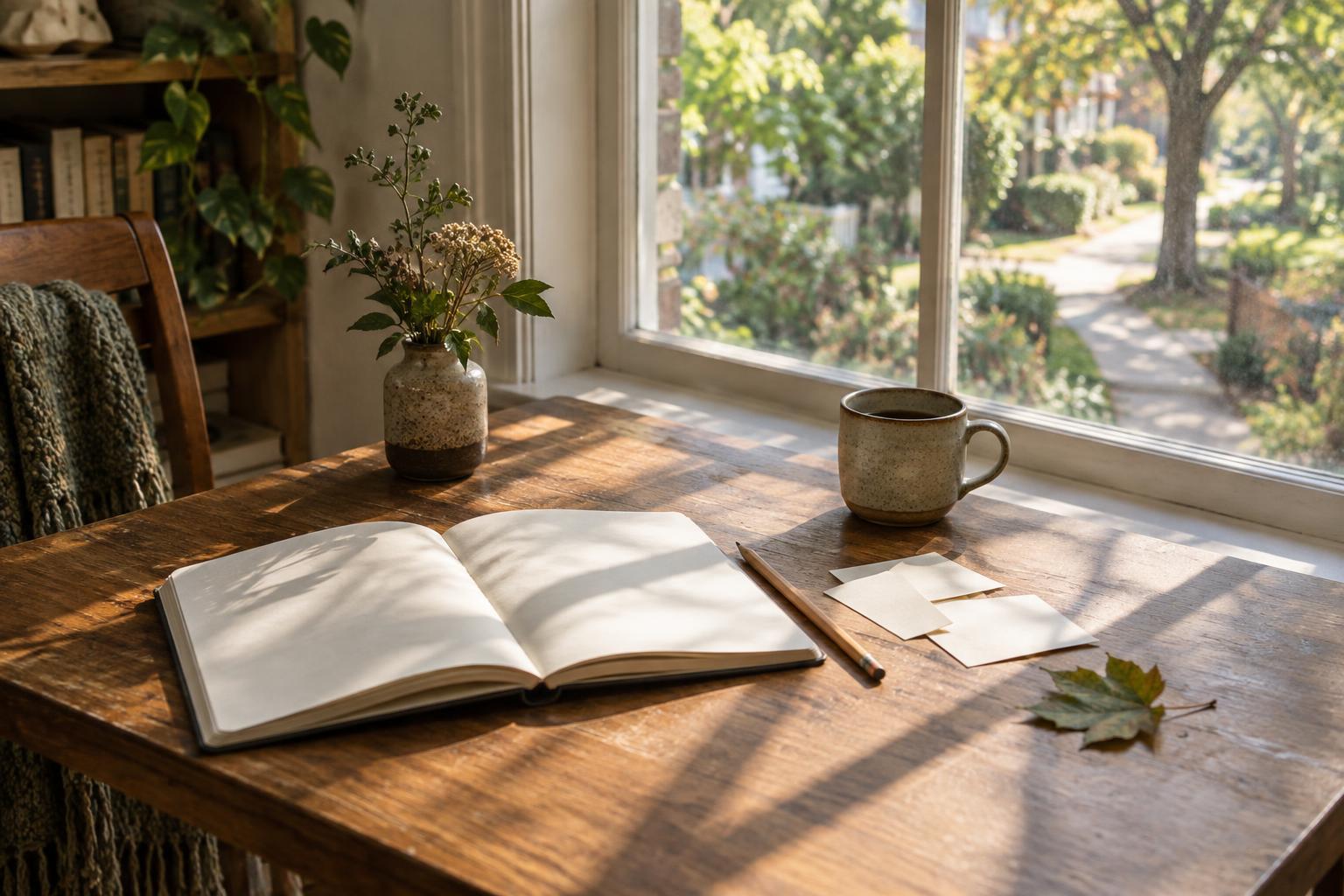
Give your observations a place to land. A pocket notebook, a note on your phone or a few index cards can all work. Keep the format light enough that you will actually use it. One or two sentences are plenty: what you noticed, where you were and what it brought to mind. If writing feels awkward, make a quick sketch or record a few descriptive words instead.
Collecting is different from assigning yourself a project. You are simply saving possible starting points. A note such as “three blue mugs in three different windows” could later become a drawing exercise, a color palette or the opening of a story. Leave room for those possibilities rather than deciding too early what an observation must become.
If your idea involves another person, focus on what you can respectfully describe without exposing private details. A gesture or the mood of a shared space may offer plenty to work with.
Turn a detail into a question
When you want to create, choose one observation and ask a question that changes your relationship to it. “What happens if I repeat this shape?” might lead to a pattern. “What would this place sound like at night?” could begin a short scene or a sound-based exercise. “How could I make this feeling more welcoming?” might inspire a small change at home.
You can also shift the detail into another medium. Describe a color using only words about temperature and texture. Arrange three household objects to echo the composition of a view outside. Write five lines from the perspective of an object you use every morning. These prompts are intentionally modest: they give you a clear action without demanding a polished result.
If a question feels too broad, add a boundary. Try ten minutes, four lines, two colors or one photograph. A limit can make it easier to begin, and you can always continue if the idea holds your interest.
Make noticing part of a gentle routine
A creative routine is easier to keep when it attaches to something familiar. You might write one observation while your tea cools, take a photo on a regular walk or choose a note to explore before putting away your supplies. The goal is not to turn every moment into material. It is to create a small opening for curiosity within a day that already has other demands.
Consider keeping two separate times: one for gathering and one for making. On a busy day, gathering may be all you do. Later, when you have a little space, read through your notes and choose the detail that still feels vivid. You are allowed to skip the rest. A collection is a resource, not a list of tasks waiting to be completed.
Follow the idea without judging it too soon
An everyday observation may lead somewhere unexpected. The shadow of a plant might suggest a drawing, then a fabric pattern, then a new way to arrange a corner of a room. You do not have to know the destination before you start. Make a rough first version and ask what you want to try next.
Some prompts will go nowhere, and that is useful information rather than a failure. Return to the original detail, choose a different question or let it rest. Over time, you may notice which subjects you keep returning to: certain colors, familiar spaces, snippets of conversation or changes between seasons. Those patterns can help you shape a creative practice that feels like your own, grounded in the life you are already living.