Start with the colours you already wear
Refreshing an outfit with colour does not have to mean buying something bright or abandoning your usual style. Start by looking at the pieces you reach for most often. Perhaps your wardrobe is built around navy and cream, or you feel most comfortable in black, denim and soft grey. Those familiar colours can be the foundation for seasonal changes rather than something to replace.
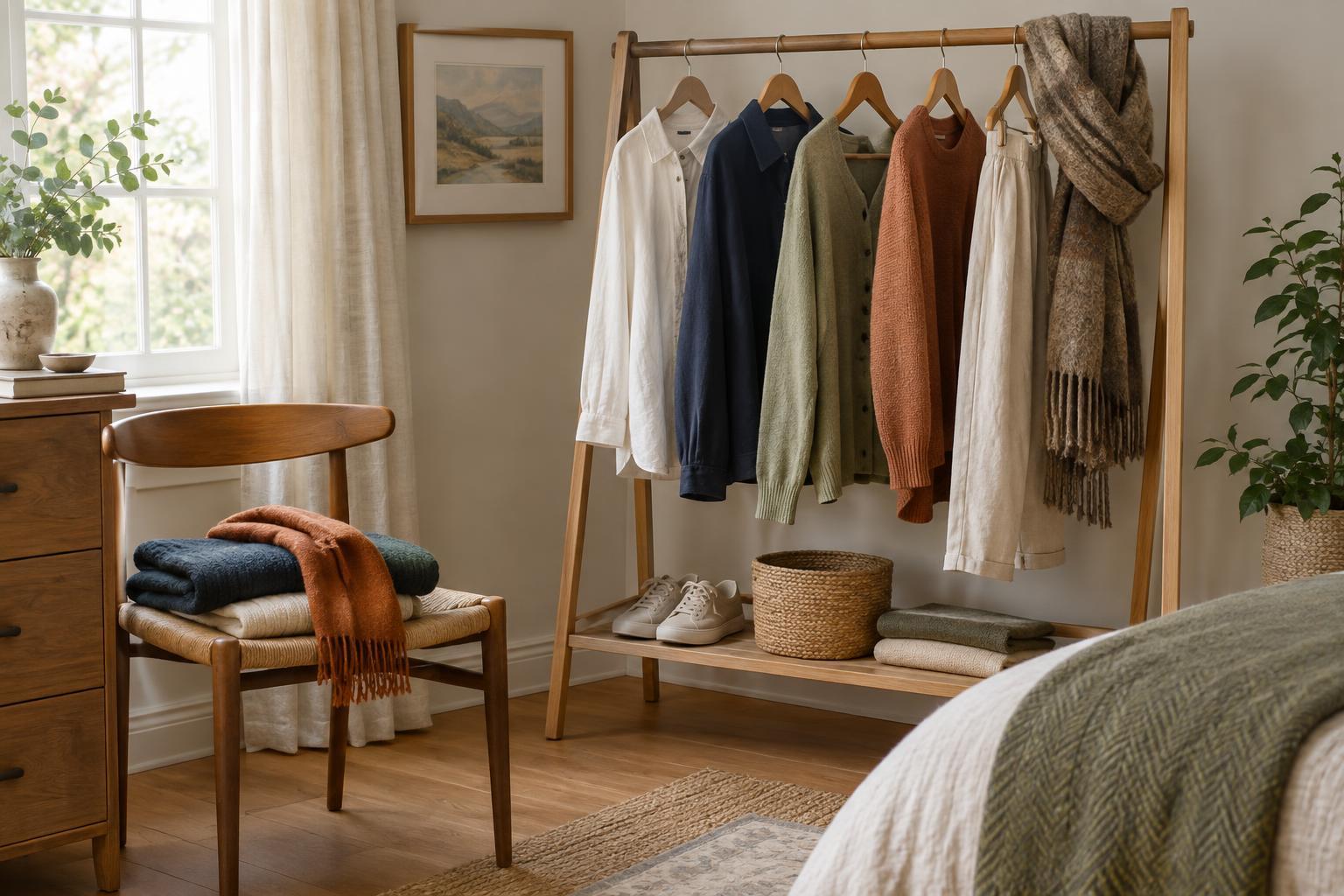
Choose two or three colours that work with several things you own. One might be a dependable base, such as olive or charcoal, while another is an accent you enjoy wearing near your face or on your feet. There is no need to follow a strict seasonal palette. The most useful colours are the ones that make getting dressed easier and feel like you.
Change the balance, not the whole palette
The same colours can feel different depending on how much of each you wear. In warmer months, a cream shirt and pale trousers might make a navy bag or belt feel like a crisp accent. When the weather cools, a navy knit and dark jeans can take the lead, with a cream collar or scarf adding a little light. Nothing in the palette has changed; only the balance has.
This is especially helpful when you wear a small range of colours. Try moving a lighter shade into the main part of an outfit in spring or summer, then using it as a smaller detail in autumn or winter. If you enjoy stronger colour, reverse the approach: make a colourful shirt the focus one day and let just its cuffs show beneath a jumper another day.
Before putting an outfit away for the season, see whether it works with a different layer. A summer dress might sit comfortably under a cardigan, while a shirt worn open over a vest can take on a different role when temperatures rise. Comfort and weather matter more than making every piece work year-round.
Use small accents to experiment
An accent colour gives you room to try something new without committing to a head-to-toe look. A patterned scarf, socks, a hair accessory or a bag can introduce a shade you are curious about. Begin with one accent at a time and repeat it elsewhere only if the result feels right. For example, a rust-coloured scarf may be enough on its own; it does not need matching shoes.
If you are unsure which accent to choose, look at the colours already present in a print you love. A patterned skirt or shirt may contain a quiet blue, green or pink that is easy to pick up with a plain accessory. Keeping the rest of the outfit simple lets the colour feel intentional without requiring precise matching.
You can also experiment without purchasing anything. Try wearing a scarf tied differently, showing a coloured layer at the neckline or pairing two items you normally wear separately. A quick outfit photo in ordinary daylight can help you see whether a combination works for you, but how it feels while you move through your day is the better test.
Let fabric and texture shape the mood
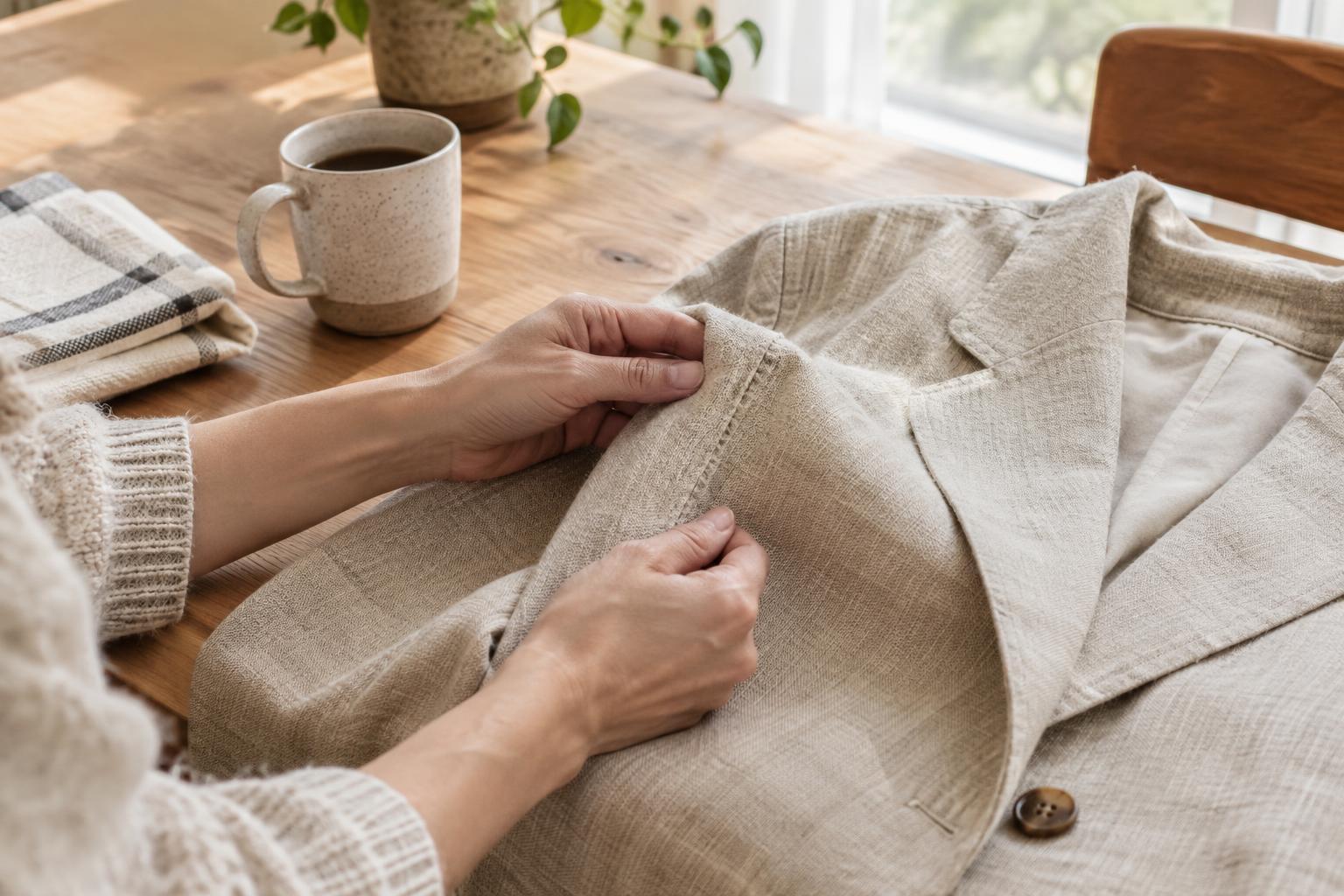
Colour does not act alone. A pale blue linen shirt can feel airy, while a pale blue chunky knit feels cosy. A deep brown cotton skirt may suit a mild day, and a similar shade in a heavier fabric can feel at home in colder weather. Paying attention to fabric helps you carry favourite colours across seasons without forcing an outfit to look or feel out of place.
Texture can also soften or sharpen a colour combination. A bright shade next to faded denim often feels more relaxed than it does beside a smooth, dark fabric. If a pairing seems too bold, try adding a familiar texture between the two colours: a denim jacket, a cotton shirt or a soft knit. The aim is not to follow a rule, but to find a version you would happily wear.
Build seasonal variety without starting over
At the start of a new season, set aside a few minutes to make three outfits from what is already in your wardrobe. Keep one in your usual colours, make one with a different balance of light and dark, and give one a small accent. Notice which combinations suit the weather, your routine and the shoes or outerwear you actually use.
If you discover a gap, name it precisely before shopping. You may need a lightweight layer that works with several outfits, rather than more colourful pieces in general. A considered addition should connect to clothes you already wear and serve a purpose beyond a single look.
Seasonal dressing can be a series of small adjustments rather than a wardrobe overhaul. By changing where a colour appears, how much of it you wear and what fabric sits beside it, you can make familiar clothes feel fresh while keeping your own sense of comfort at the centre.