Start with the garment, not just the fabric
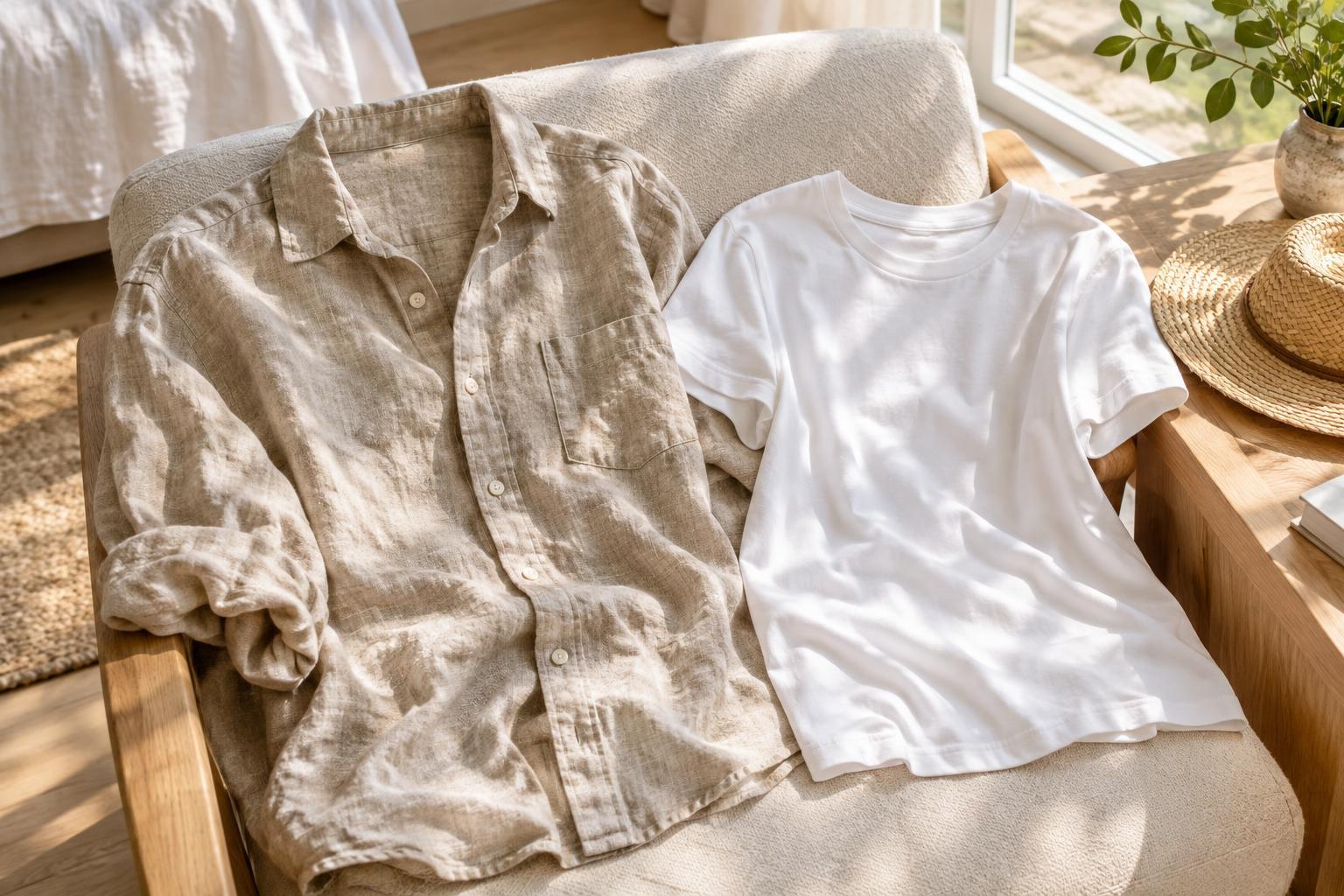
On a warm morning, a crisp linen shirt and a soft cotton T-shirt can both seem like the right choice. By afternoon, they may feel quite different. Linen often feels airy and less clingy, while cotton tends to feel softer against the skin. Neither is automatically the cooler option: the weight, weave and cut of a garment can matter as much as the fiber on its label.
A loose, lightweight shirt leaves room for air to move around your body. A close-fitting top may feel warmer, even when made from a fabric you usually like in summer. Before choosing between linen and cotton, hold the garment up to the light, feel its thickness and notice whether its shape gives you space to move.
When linen feels especially good
Linen has a textured, slightly crisp feel that many people enjoy on hot days. It can feel comfortable when the air is humid because a relaxed linen garment is less likely to sit smoothly against damp skin. Its natural creases also suit easy summer outfits: a loose shirt, simple trousers or an unfussy dress can look at home without being perfectly pressed.
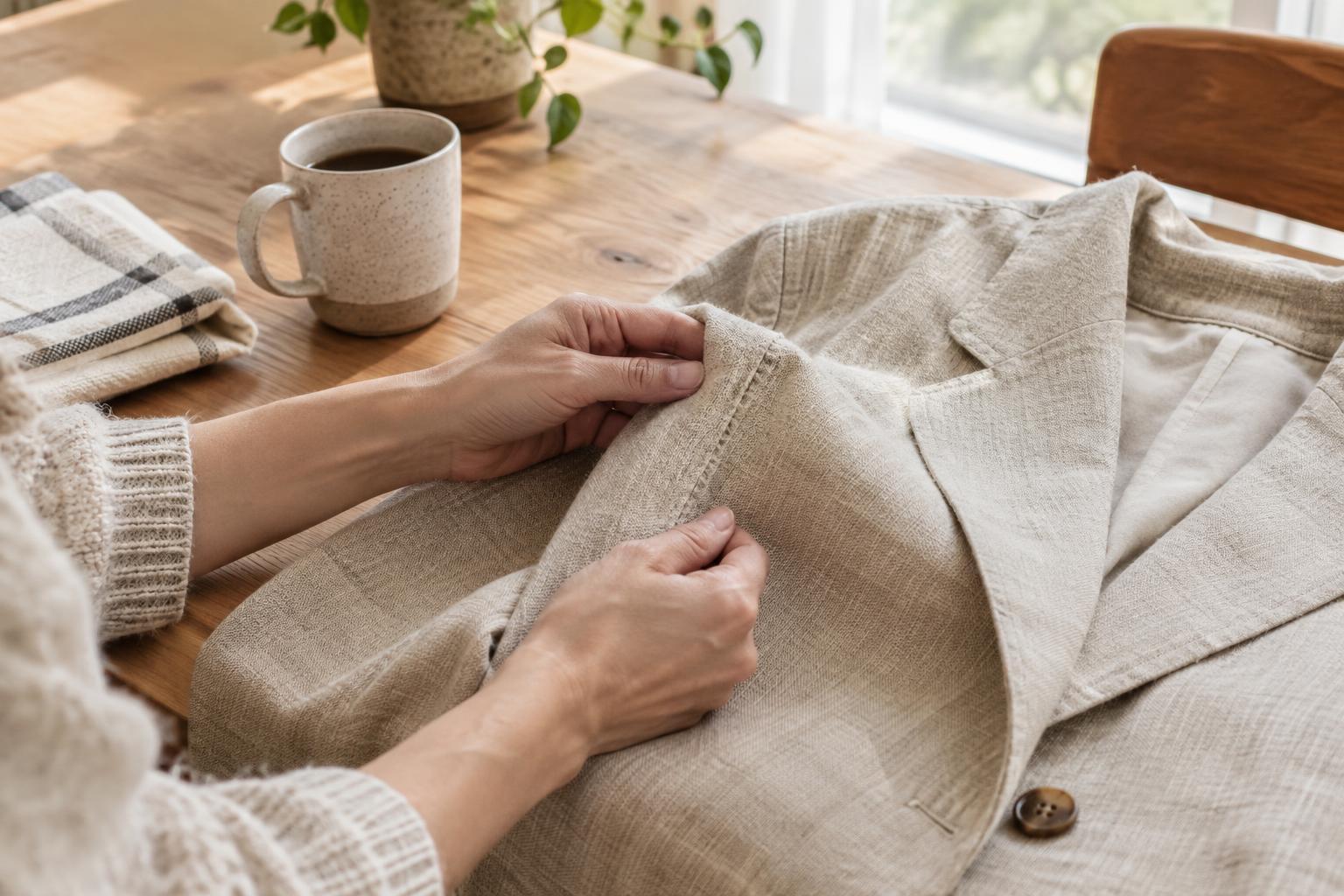
That texture is not for everyone. Some linen feels rough at first, particularly in a heavier or stiffer garment. If you have sensitive skin, try it on and move around before committing. Linen often softens with washing and wear, but it is better to choose a piece you can tolerate now than to rely on how it might feel later. Check the care label, too, since washing and drying instructions vary by garment.
Why cotton remains a summer favorite
Cotton is familiar, versatile and available in many different forms. A lightweight cotton poplin shirt may feel smooth and breezy, while a thin cotton jersey T-shirt feels soft and flexible. Cotton voile and other light woven fabrics can work well for loose summer layers. These options have different textures, so saying that cotton feels one particular way does not tell the whole story.
Cotton can absorb moisture, which may feel pleasant initially. A thick cotton garment, however, may stay damp and feel heavy during a sweaty afternoon. If that bothers you, look for a lighter fabric and a fit that does not cling. A substantial cotton T-shirt might be perfect for a mild day or an air-conditioned room, but less appealing for a long walk in sticky weather.
Let the day ahead guide your choice
For a hot, humid day with plenty of walking, a loose linen shirt or lightweight linen-blend dress may feel more comfortable than a fitted cotton piece. For a quiet day indoors, or whenever you want softness against your skin, a breathable cotton top may be the one you reach for. If your plans move between outdoor heat and cool indoor spaces, consider an easy layer that you can take off rather than asking one garment to suit every temperature.
Details can change the experience. Open collars, relaxed sleeves and roomy waistbands give you more flexibility in the heat. A lined garment may feel warmer than its outer fabric suggests, while a very sheer one may call for another layer. Color and coverage are worth considering for time outdoors, too: choose pieces that give you the coverage you want without assuming that a fabric name alone tells you how protective a garment will be.
A simple way to decide
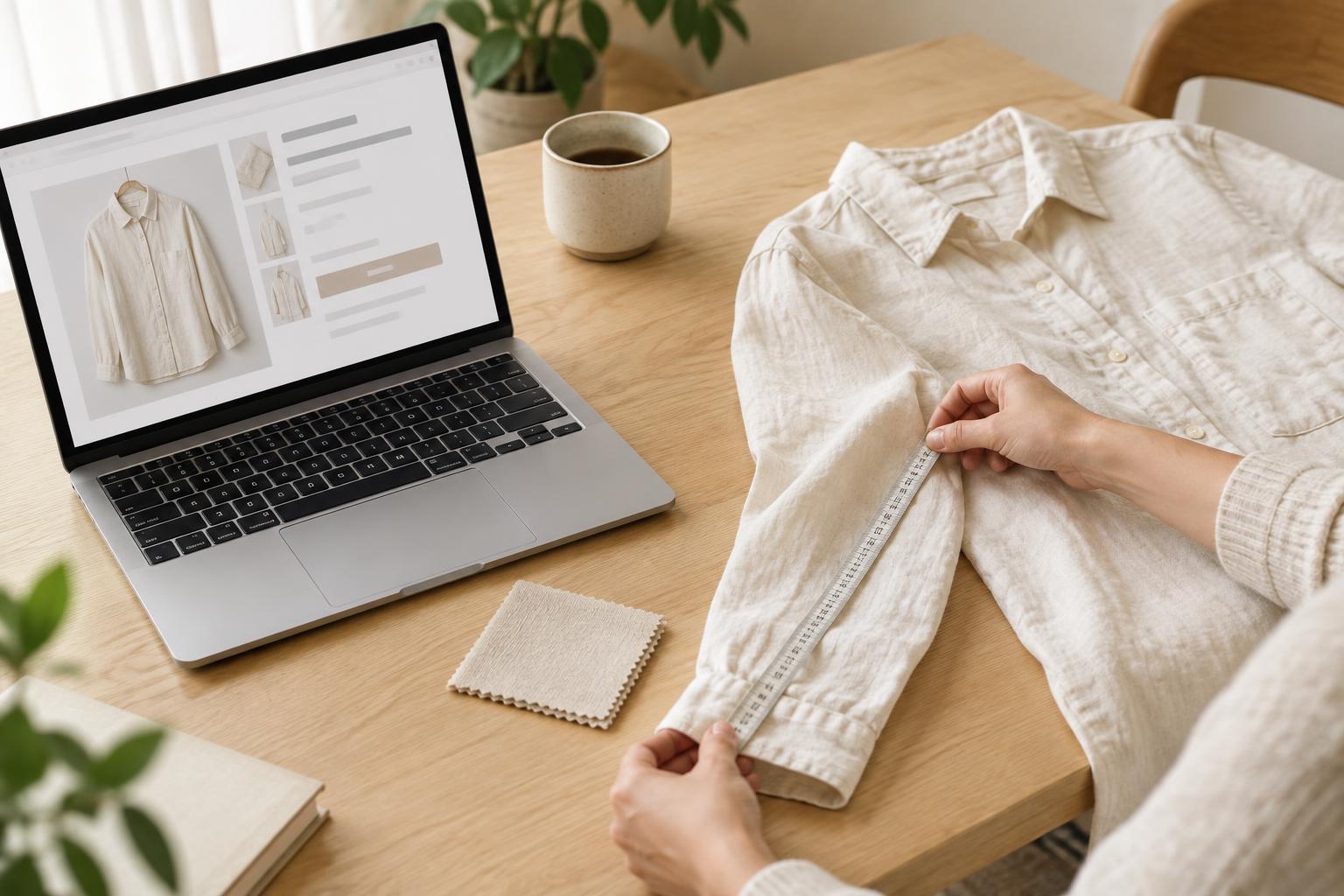
If you are shopping, compare garments rather than just labels. Touch the fabric, check whether you can move comfortably, and notice what happens when you sit or raise your arms. Read the care instructions and ask yourself whether you will be happy with the garment after a normal day of wear. If wrinkles bother you, linen’s creases may be a drawback; if a polished look feels less important, they may be part of its appeal.
You do not need to choose one fabric for the whole season. A soft cotton T-shirt and a loose linen shirt can serve different moods and plans, and a well-chosen blend may offer another balance of texture and ease. The best summer piece is the one that feels good on your skin, suits the weather you actually encounter and fits comfortably into your everyday routine.