Start with the work the room does
A shelf can make a room feel personal. A cupboard can make the same room feel calm. Neither effect tells you whether the storage will be pleasant to use on an ordinary Tuesday. Before choosing one, look at what the room needs to hold and when you need to reach it. A mug used every morning has different needs from spare candles brought out a few times a year.
It helps to sort belongings into three loose groups: things used often, things you enjoy seeing, and things you simply need to keep. Some objects belong to more than one group. A stack of bowls might be both useful and lovely to look at; a bundle of charging cables probably benefits more from a drawer. Thinking in groups makes it easier to choose storage for real habits rather than for an idealized photograph of the room.
What open shelves make easier
Open shelves make their contents visible and quick to reach. That can be helpful in a kitchen where familiar dishes are used every day, or beside a desk where notebooks need to be found at a glance. They also leave room for a few objects that bring warmth to a space: a favorite jug, a row of books, or a small collection gathered over time. When you can see what you own, you may also notice duplicates or forgotten supplies before adding more.
The trade-off is that the contents become part of the room’s appearance. Shelves can look busy when they hold many small items, even if everything is useful and neatly arranged. Exposed objects may need more frequent dusting, particularly in a room where they sit untouched for long periods. If you like rearranging things, that care may feel enjoyable. If you prefer to put things away once and move on, it may feel like another chore.
What closed storage takes off your mind
Cupboards, drawers and lidded boxes let a room have a quieter surface. They are especially useful for objects with awkward shapes, mixed packaging or several little parts. A door also gives you some freedom to organize by function instead of appearance. The sewing kit can live beside spare batteries without asking the two to look good together.
Closed storage is not automatically simpler, though. A deep cupboard can become a place where things disappear, and a drawer packed to the top can make a quick task frustrating. Give frequently used items an easy-to-reach position, and avoid stacking them behind belongings you rarely need. A small tray or divider can help loose pieces stay together. The goal is not a perfectly arranged interior; it is being able to find something and put it back without unpacking half the cupboard.
Choose a balance you can maintain
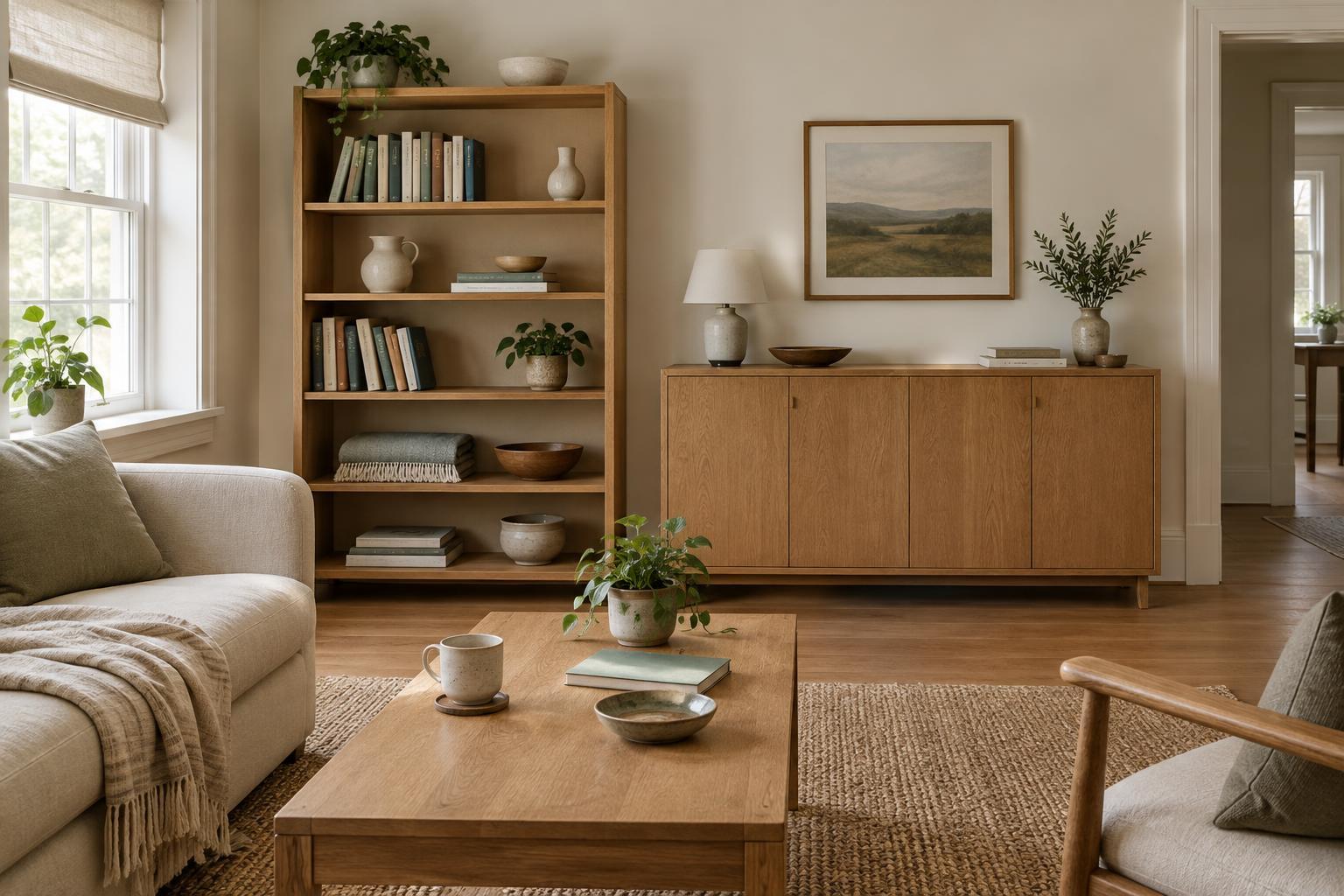
Many rooms work best with both kinds of storage. You might keep daily dishes on an open shelf and less attractive supplies behind a door. In a living room, a few books or meaningful objects can remain visible while games, cords and paperwork go into a cabinet. This gives the eye somewhere to rest without hiding everything that makes the room yours.
Consider the people who share the space, too. Visible storage may make it easier for someone to see where an item belongs, while a labeled drawer may be more useful for a household with many small shared supplies. If children or pets use the room, think about which objects need a more secure spot. There is no required ratio of open to closed storage. A useful balance is one that makes both taking things out and putting them away feel straightforward.
Try a small change before buying furniture
You can test the idea with storage you already have. Clear one shelf and place only a few frequently used or much-loved objects on it. Move the rest into an existing cupboard, drawer or box, keeping related items together. Live with the arrangement through your usual routine. Notice what you reach for easily, what collects dust, and what you repeatedly leave out because its assigned home is inconvenient.
If the open shelf feels crowded, remove a few items rather than buying matching containers immediately. If the cupboard becomes difficult to use, bring the most-used things forward or give them a separate drawer. These small adjustments reveal more than a rule about what every room should look like. The easiest room to live in is usually one where the things you need have sensible places, the things you love have breathing space, and tidying up does not require a special occasion.