Start with what comfort means in the room
A comfortable floor is not always the softest one. In a living room, comfort might mean somewhere pleasant to sit while playing a game. In a kitchen, it might mean a surface that is easy to clean after dinner. The better choice depends on how you use the room, what is already underfoot and which small irritations you would most like to solve.
Before shopping for a rug or deciding to leave the floor clear, notice where you actually walk, stand and sit. Do your feet feel cold beside the bed? Does a chair catch on the edge of a mat? Does the room seem noisy when several people are talking? These observations give you a more useful starting point than a rule that every room needs a rug—or that an uncovered floor is always simpler.
Where a rug earns its place
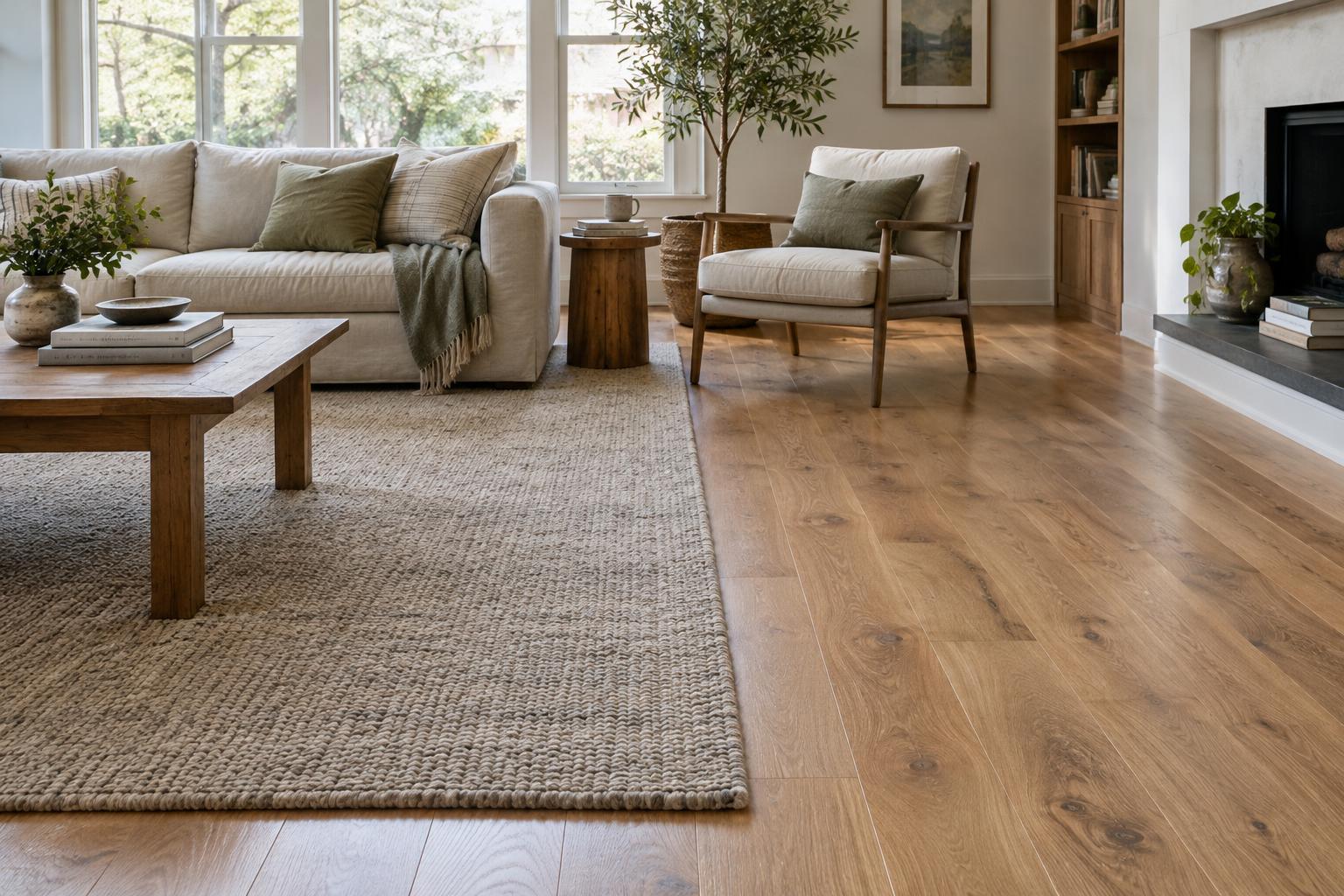
A rug adds a softer surface where bare feet, children’s play or floor cushions are part of daily life. It can make the first step out of bed more inviting and help define a seating area in a larger room. On hard flooring, a rug may also soften the sound of footsteps and reduce some of the echo that makes a space feel less settled.
Placement matters as much as texture. A rug beside the bed can address a cold landing spot without covering the whole floor. In a living area, choose a size that relates to the furniture rather than leaving a small island in the middle of the room. Check that doors open freely and that corners do not sit in busy walking paths.
Softness has trade-offs. A thick pile may feel pleasant underfoot but can make it harder to move chairs or roll a cart. If you want cushioning in a practical area, a lower-pile rug with an appropriate rug pad may offer a better balance.
When a bare floor feels better
A bare floor can be the more comfortable option when ease of movement and cleanup matter most. It leaves fewer edges to catch a foot, a wheeled chair or a vacuum, and it makes spills and tracked-in dirt easier to spot. A clear floor can also help a small or furniture-filled room feel less crowded.
Uncovered flooring is not automatically low-maintenance: dust and crumbs remain visible, and the care required depends on the floor material. Still, if washing rugs, lifting furniture or managing pet hair feels like an unwelcome extra task, keeping the floor bare may make the room more pleasant to live in.
You can add comfort without covering the floor. Warm socks, a padded seat or a softer throw can address the moments when you want warmth or softness while preserving an open walking surface. This can work especially well in rooms where you move furniture often.
Make safety and upkeep part of the decision
A rug is only comfortable if it stays where you expect it to. On a smooth floor, use a pad suited to both the rug and the flooring, and check its care guidance before use. Keep edges flat, avoid placing a loose rug where a door brushes it and be cautious with small mats in narrow routes. If someone in the household uses a walking aid or wheeled mobility equipment, a clear floor may be easier to navigate.
Think about what will land on the surface, too. An entryway rug needs to handle shoes and moisture; a dining rug needs to cope with crumbs and chairs. Consider how you would clean a rug before choosing its size and material. If a rug requires more care than you can comfortably give it, it may become a source of friction rather than comfort.
Try a room-by-room answer
You do not have to choose one approach for the entire home. A bedroom might benefit from a soft landing beside the bed, while a kitchen works better with an uncovered floor. A living room may call for one generous rug to anchor the seating area, with clear routes around it. The same room might call for a different arrangement if you regularly move chairs or spread out projects.
If you are unsure, test the idea before committing. Mark a proposed rug’s outline on the floor with removable tape, checking first that the tape is suitable for your finish. Live with that footprint for a few days. Notice whether it improves the layout or interrupts it. The most comfortable choice is the one that supports how your household actually moves, rests and cleans—not simply the one that looks coziest in a picture.