Begin with the days you actually have
The best place to start with everyday jewelry is not a trend or a list of essentials. It is your usual day. Think about the clothes you wear most often, whether you prefer a quiet or noticeable finishing touch, and what your hands and neck need to do. Someone who works with their hands may enjoy small earrings and a necklace more than a stack of rings. Someone who changes clothes between work and an evening out might prefer one piece that feels right with both outfits.
Take a look at what you already reach for, including accessories that are not jewelry. If you often wear patterned scarves or colorful glasses, a simple chain or pair of studs may offer balance. If your clothes are mostly understated, one distinctive pendant or pair of hoops can add interest. You do not need a signature style before you begin; noticing your preferences is enough.
Choose one or two easy starting pieces
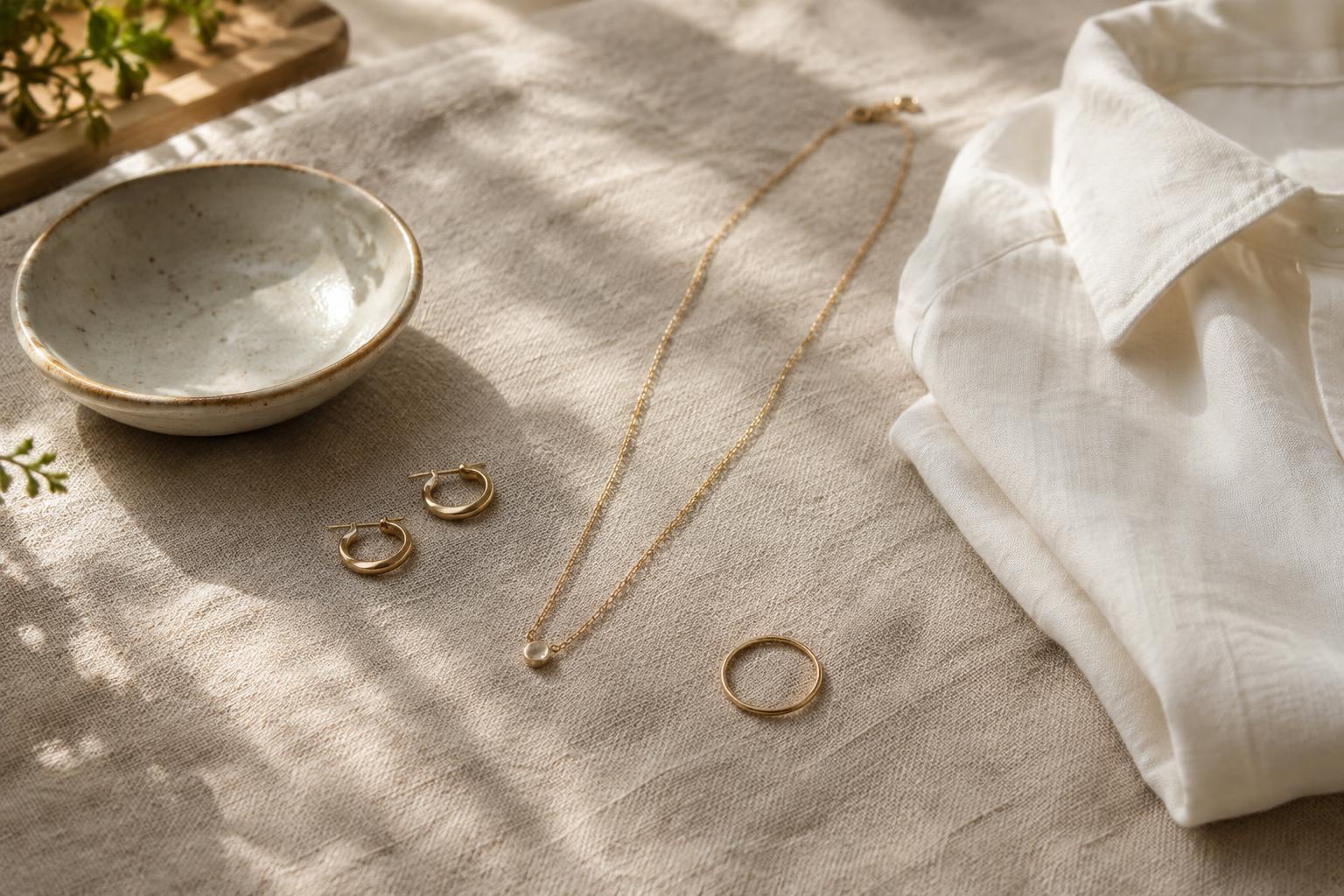
Rather than assembling a full set, choose one category you are likely to wear. Small studs or modest hoops can be easy to pair with many necklines. A simple necklace can bring detail to a plain top. A ring or bracelet may be especially satisfying if you like seeing your jewelry during the day. There is no rule that says these pieces must match, or that you need one from every category.
Picture each candidate with three outfits you already own. This small exercise makes a piece’s usefulness easier to judge than imagining an entirely new wardrobe around it. If you are unsure about size or shine, try a restrained shape first and wear it for a few ordinary days. You can always add a more expressive piece later, once you know what you enjoy reaching for.
Pay attention to comfort and fit
Jewelry that looks lovely in a box may feel distracting after several hours. Notice the weight of earrings, whether a bracelet catches on sleeves, and where a necklace rests against your usual tops. Check that clasps are manageable for you and that rings do not feel tight or slip off easily. If a piece needs constant adjusting, it may be better suited to occasional wear.
Materials matter, too, particularly if your skin reacts to certain metals. Product descriptions can help you identify what a piece is made from, but broad labels such as “gold tone” describe appearance rather than composition. If you already know which materials you tolerate well, use that knowledge when choosing. When possible, check a shop’s return policy before committing to an unfamiliar material or fit.
Build a small collection that works together
A useful everyday collection can be very small: perhaps earrings you forget you are wearing, a necklace that sits well with your favorite shirts, and one piece that feels a little more personal. Repeating a few shapes or finishes can make mixing pieces feel effortless, but mixing metals and styles is fine if you like the result. The goal is not perfect coordination; it is having choices that make getting dressed easier.
Try wearing one focal piece at a time if you want a quieter look. A pendant can stand on its own above a simple neckline, while a bolder pair of earrings might need no necklace at all. For a more layered look, vary necklace lengths enough that each can be seen, and check whether the chains tangle as you move. Let your comfort and your reflection, rather than a formula, make the final decision.
Shop slowly and make care part of the routine
Before buying another piece, ask what it would add to the ones you own. Does it fill a gap you have noticed, replace something worn out, or simply make you happy enough to wear it often? Consider the price alongside details you can assess, such as the clasp, finish, materials and care instructions. A thoughtful purchase does not have to be expensive, and a good deal is not useful if the piece stays in a drawer.
A simple routine can help everyday pieces stay pleasant to wear. Put jewelry on after applying products that might leave residue, and remove it before activities that could pull, scratch or soak it. Follow any care guidance that comes with the piece, since materials and finishes vary. Keeping pieces in a familiar, dry place also makes them easier to find tomorrow. Over time, the jewelry you choose most often will show you what is worth keeping close.