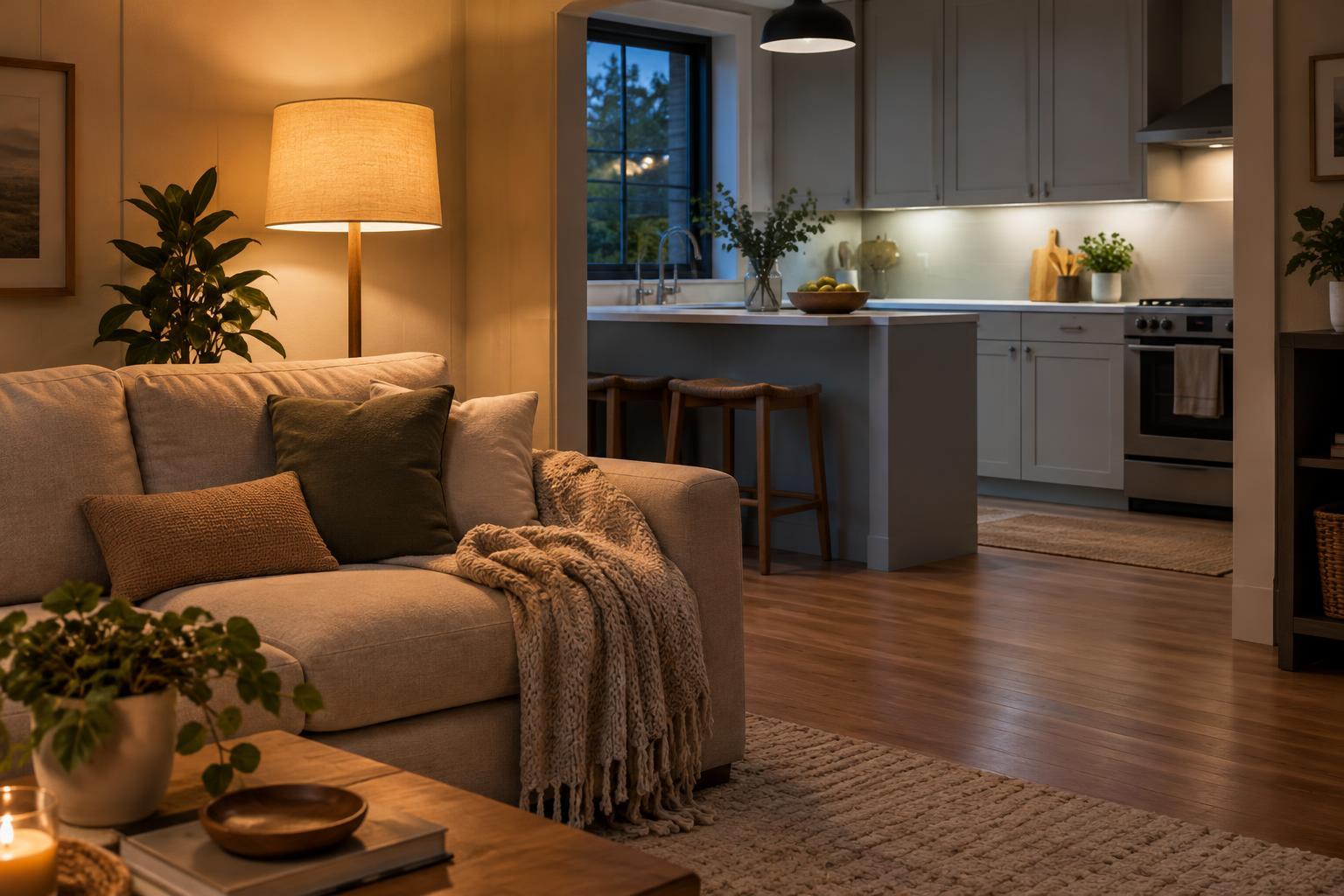
Start with what the room needs to do
A room rarely has just one purpose. A living room might be a place to read in the afternoon, share dinner with friends and unwind before bed. That is why choosing between warm and cool lighting is less about finding one perfect bulb and more about deciding what you want the light to help you do.
Warm light has a soft, golden appearance that often suits relaxed spaces. Cool light looks whiter and can make details easier to see during tasks. Neither is automatically better. The most useful choice depends on the activity, the amount of daylight a room receives and how its surfaces look under the bulb. Before buying anything, notice where you need clear visibility and where you would rather have a gentler atmosphere.
Understand warmth, brightness and placement
Bulb packaging usually describes light color in kelvins, marked K. Lower numbers look warmer: around 2700K is a common choice for a soft glow. Around 3000K still feels warm but may appear a little crisper, while bulbs around 4000K tend to look more neutral or cool. These numbers are a starting point, not a guarantee of how a bulb will feel in your room.
Color temperature is separate from brightness. Brightness is generally shown in lumens, so changing to a warmer bulb will not necessarily make a lamp less bright. If a room feels harsh, consider whether the bulb is too bright or exposed to view before changing its color. A shade, a different lamp position or a lower-brightness bulb may solve the problem.
It also helps to think in layers. An overhead fixture can light the whole room, a table or floor lamp can serve a particular activity, and a smaller light can add a welcoming glow. With more than one source, you can adjust the room without asking a single bulb to do every job.
Keep living areas and bedrooms flexible
For a living room, warm bulbs often provide a comfortable starting point, especially in lamps used after dark. Instead of relying only on a bright ceiling fixture, try placing light near the areas where people sit. A reading lamp can offer clearer, more directed light without making the entire room feel equally bright.
Bedrooms usually benefit from light that is easy to soften. Warm bedside lamps work well for winding down, while a separate, brighter light near a wardrobe or mirror can help when choosing clothes. If you use a dimmer, check that the bulb and fixture are compatible with it. Dimming can change the feel of a room, but it does not replace a well-placed light where you need to see clearly.
Give task-heavy rooms clear light without glare
Kitchens need light on work surfaces, not just in the center of the ceiling. A warm or neutral overhead bulb can provide general light, while lighting near a counter can make food preparation easier. If cupboards or your body cast shadows on the worktop, adding light in that spot may be more helpful than increasing the brightness of the main fixture.
In bathrooms, aim for even light around the mirror so your face is easier to see without strong shadows. A neutral-looking bulb may be useful there, though a warmer choice can feel more comfortable if the bathroom is also a place to relax. For desks, craft tables and laundry areas, a focused lamp lets you choose clearer light for detailed tasks while keeping the rest of the space softer.
Test one change before lighting the whole home
Light interacts with wall colors, lampshades, daylight and neighboring rooms. A bulb that looks pleasant in the shop may seem different beside a cool white wall or a warm wood floor. If you are unsure, try one bulb in a lamp you use often and look at it at several times of day. Notice both how the room feels and whether you can comfortably do the activities that happen there.
You do not need every bulb in your home to have the same color temperature. It can help, however, to keep nearby lights reasonably consistent when they are often on together; a strongly cool lamp beside a very warm one may be distracting. Start with the places where lighting bothers you most. A better-positioned lamp or a carefully chosen bulb can make an everyday room more useful and more inviting.