Start with the day you actually have
The best winter layer is not necessarily the thickest one. A walk to the shops, a cold office and an afternoon spent moving between home and outdoors all ask different things of your clothes. Before choosing wool or fleece, think about where you feel cold, how much you move and whether you need a piece that works under a coat or looks finished on its own.
Both materials can trap warmth, but the cut and weight of a garment matter as much as its name. A lightweight wool cardigan may feel less insulating than a substantial fleece jacket. A close-fitting layer can also behave differently from a loose one, especially when wind finds its way through. Treat the fabric label as a starting point, then consider the whole garment.
When wool feels like the right choice
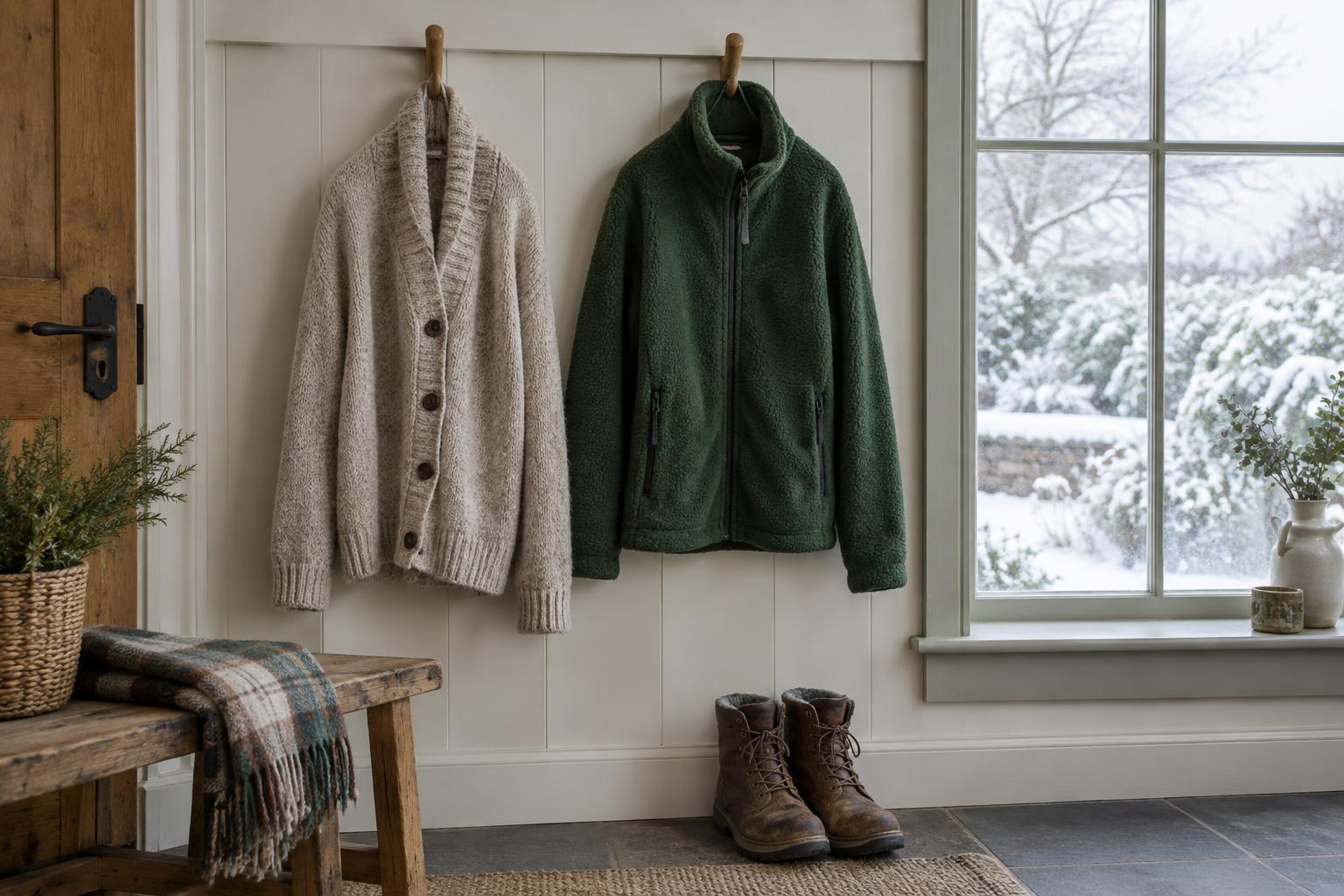
Wool is a useful option when you want warmth without dressing as though every day is an outdoor excursion. A fine-knit wool sweater can fit beneath a coat, while a heavier cardigan can serve as a comfortable layer at home. Wool can absorb some moisture without immediately feeling damp, which may be helpful when you move between chilly streets and heated rooms.
Its feel varies considerably. Fine wool may be soft against the skin; coarser knits may be more comfortable over a shirt. If you are sensitive to texture, try the garment at the neck and wrists rather than relying on how it feels in your hand. Blends may offer a different balance of softness, durability and care, so check the full fiber label.
Wool often makes sense if you want one layer that moves easily from casual errands to a meal out. The trade-off is care: some pieces need gentle washing, careful drying or occasional airing instead of frequent laundering. Follow the garment label, and allow room in your routine for those steps before investing in a piece you hope to wear often.
Where fleece earns its place
Fleece is often appealing for its soft feel, easy layering and straightforward everyday wear. It can be a practical choice for morning walks, relaxed weekends or a chilly room where you want to pull on something without much thought. Many fleece garments are machine washable and dry relatively quickly, though the label is still the best guide for a particular piece.
The texture and shape make a difference. A thin fleece can sit neatly under an outer layer, while a plush, roomy one may feel better as the layer you put on last. Fleece is not automatically windproof, so an exposed walk may call for a coat or shell over it. In a warm indoor space, a thick fleece may also feel like more insulation than you need.
Most fleece is made from synthetic fibers. If you are weighing the environmental side of a purchase, you may want to consider how long you will wear it and how you will care for it. Synthetic fabrics can shed small fibers during washing, so laundering only when needed and following care instructions are sensible habits. A well-used fleece you already own may be more useful than replacing it simply to change materials.
Match the layer to your winter habits
For a commute with indoor time at either end, a light wool knit or thin fleece may be easier to manage than a bulky midlayer. Choose a shape that lets you remove it without rearranging your entire outfit. If you spend time outdoors and expect to move briskly, fleece may appeal for its casual feel and easy care; add a wind-blocking outer layer when conditions call for one.
For quieter days, let comfort decide. Wool can offer a tidy look that carries from the sofa to a quick outing. Fleece can feel especially inviting when softness and low-fuss washing are priorities. Neither needs to win every situation. You might keep one lighter layer for indoor temperature changes and another, warmer piece for colder outings.
Make a choice you will keep wearing
If you are shopping, try the layer with the clothes it will sit over and beneath. Move your arms, sit down and check whether cuffs, seams or collars bother you. Look for enough room to layer without so much bulk that your coat becomes uncomfortable. Notice where the garment will live, too: a piece that is easy to reach often gets more use.
Choose wool if you enjoy its feel and want a versatile knit you are willing to care for gently. Choose fleece if softness, casual use and simpler washing matter more to you. The most useful winter layer is the one that fits your days, feels comfortable for hours and makes getting dressed on a cold morning a little easier.